


Key Takeaway
When an accidental fire caused by a tenant damages your rental, the tenant may be financially liable if their negligence caused the loss, but ‘accidental’ alone does not determine fault. Your lease terms, insurance policies, and an origin-and-cause investigation under NFPA 921 decide that. File your own property claim, protect the building immediately, and preserve all evidence before drawing conclusions about who owes what.
If an accidental fire caused by a tenant started in your rental, the tenant may be financially responsible if their carelessness caused the loss, but the word “accidental” does not decide fault. Negligence, your lease terms, and the insurance policies in play decide that. This guide is for the rental property owner standing in the aftermath, trying to figure out who’s on the hook and what to do first. Here’s the frame to hold onto: who pays and who must act are not always the same. Even if a tenant ends up liable, you can’t leave board-up, drying, permits, or reconstruction to them. And filing your own property claim doesn’t erase a valid liability claim against the tenant or their insurer. So don’t rush to assign blame. Protect the property, the evidence, the claim, and the tenancy first.
What a property owner should do in the first 24 hours

The early steps matter more than figuring out fault. Work through this order:
- Confirm everyone is safe. People first, always.
- Wait for the fire department to clear the building. The U.S. Fire Administration advises no one should enter until the fire department declares the structure safe.
- Notify your property or landlord’s insurance company promptly. The California Department of Insurance tells owners to report the loss right away, and most policies carry a notice obligation you don’t want to miss.
- Arrange emergency board-up and roof tarping to secure the building against weather and unauthorized entry.
- Photograph everything before anything is moved or cleaned.
- Preserve the suspected area of origin and any damaged items. Don’t clean or disturb the spot where the fire may have started.
- Make reasonable temporary repairs, save receipts, and do not throw damaged items away or authorize permanent demolition until the adjuster and investigators have inspected.
That last point protects your insurance claim. Disposing of evidence or starting a rebuild too early can cost you later, and it can give your insurance carrier a reason to question the scope of the loss.
Accident, negligence, and fire cause are three different questions
A fire can be unintentional and still result from negligence. To sort out responsibility, separate four questions: where did the fire start, what caused ignition, did someone fail to use reasonable care, and which policy or responsible party is accountable for each loss. An origin-and-cause finding answers the first two. It’s strong evidence, not a final verdict on fault or coverage.
Some acts can rise to tenant negligence. California’s landlord-tenant guidance uses leaving a portable heater on as an illustrative example of an accidental act that may still be negligent. Unattended cooking and an overloaded outlet fall in the same category. But the picture can shift toward the owner’s side too. A rental property fire can trace back to the landlord’s negligence: faulty wiring, a defective owner-supplied appliance, an unresolved maintenance request, or a missing or non-working smoke alarm can all matter, and landlords are generally required under California habitability laws to maintain working smoke detectors. That is part of a landlord’s obligations before anyone moves in and throughout the tenancy. Fire investigators document evidence systematically under NFPA 921 (2024 edition). Let that investigation finish before you accuse anyone.
Who pays for each part of the loss? Landlord responsibility and tenant’s insurance

Different losses fall to different policies or parties, and which one responds depends on the facts and the policy language, not on who seems at fault at first glance. Filing your own property claim does not cancel a valid liability claim against the tenant. Here’s a general map, all subject to the actual policy wording:
| Loss | Policy or party that may respond |
|---|---|
| Building and structural repairs | Owner’s property/landlord’s insurance policy |
| Tenant’s personal property | Tenant’s renters insurance policy |
| Tenant’s temporary housing | Renter’s policy loss-of-use coverage (or the tenant personally if uninsured) |
| Damage from tenant negligence | Tenant’s liability coverage or the tenant personally |
| Neighboring unit or property damage | Liability coverage and affected property owners’ policies |
| Lost rent | Owner’s policy, if covered |
| Deductible or uninsured gap | Possible recovery depends on fault, lease, and applicable law |
Your landlord’s insurance generally handles the building itself and may cover lost rental income while the rental unit is uninhabitable. A tenant’s rental insurance commonly covers their belongings, their temporary housing, and their personal liability. A tenant should never assume your home insurance covers their things, because it generally doesn’t. This is one reason many property owners now treat a tenants rental insurance requirement as a lease condition rather than a suggestion.
Can your insurance company pursue the tenant? Subrogation explained
Subrogation is when your insurance company, after paying your claim, seeks to recover that money from whoever caused the loss. California’s Department of Real Estate notes that a landlord’s insurance carrier may pursue a tenant whose negligence caused a fire. The word is “may,” not “will.”
Lease language complicates it. California appellate decisions have barred subrogation where the lease and insurance arrangement showed the landlord’s fire policy was meant to benefit the tenant as an implied insured, and the implied warranty of habitability can shape how these disputes play out. Other lease wording preserves the claim. So the outcome turns on your documents and the facts, not a blanket rule. For a significant financial loss, get coverage or legal advice before assuming anyone will be charged or before any legal action. Going forward, requiring renters insurance in your leases is a reasonable protective practice, and spelling out each party’s obligations in writing reduces the fights that follow a fire.
What documents should you collect?

Good records protect both your insurance claim and any later liability question. Gather:
- Fire incident report and the origin-and-cause report
- Photos and video of all fire damage and smoke damage
- The lease and any addenda
- Owner and tenant insurance information
- Maintenance requests and repair records
- Smoke-alarm inspection and testing records
- Witness names and contact information
- Board-up, drying, and emergency-service records
- An inventory of damaged owner-owned property
Keep these organized from day one. When your insurance company asks for proof, a clean file moves the claim along; a thin one slows it down and invites disputes over what was actually covered.
What happens to the lease and the rent?
It depends on how much was destroyed. California Civil Code §1933 says a hiring terminates when the thing hired is destroyed. Los Angeles County guidance explains that a unit completely destroyed generally ends the lease, while partial damage is more fact-dependent.
Two things catch owners off guard. First, landlords generally must repair structural fire damage regardless of who caused it. That duty to restore a house to habitable condition is a core landlord responsibility, and it is settled separately from who ultimately pays the repair costs. Second, causing a fire does not automatically strip a tenant of their housing rights. Rent abatement and habitability laws can still apply while a rental unit is uninhabitable. The specifics in California and Pasadena need case-by-case review, so if relocation and the right to return are in question, get those details confirmed rather than assuming.
Tenant rights after a rental property fire: can you evict a tenant for a fire they caused?

Not by locking them out. Self-help actions like changing locks or shutting off utilities are not lawful eviction in California. Removing a tenant requires formal written notice and the court process, and tenant rights remain in force throughout.
In Pasadena, nearly all rental units, including many single-family homes and condominiums, fall under local just-cause protections. Possible grounds can include breach of lease, nuisance, necessary and substantial repairs, or a government order, but the specific facts and notice requirements govern the outcome. An accidental fire by itself does not automatically permit eviction. If you’re weighing this, contact Pasadena’s Rent Stabilization Department before taking any step.
From emergency stabilization to fire restoration
Restoration is the cleaning and repair side of fire recovery: emergency board-up and roof tarping, extraction of water used to put the fire out, structural drying, smoke and soot assessment, HVAC and contents evaluation, odor-source removal, and repair where materials are salvageable. Water is almost always present. Fire suppression leaves water inside walls, flooring, insulation, and cavities, and the EPA recommends drying water-damaged materials within 24 to 48 hours to help prevent mold. That’s fire recovery, not a separate water-damage job.
Professional fire and smoke restoration scope is described in ANSI/IICRC S700, whose first edition published in 2025. It covers assessment, cleaning, odor management, documentation, and contents work. It does not comprehensively address rebuilding, which is a different scope entirely.
When fire restoration becomes reconstruction

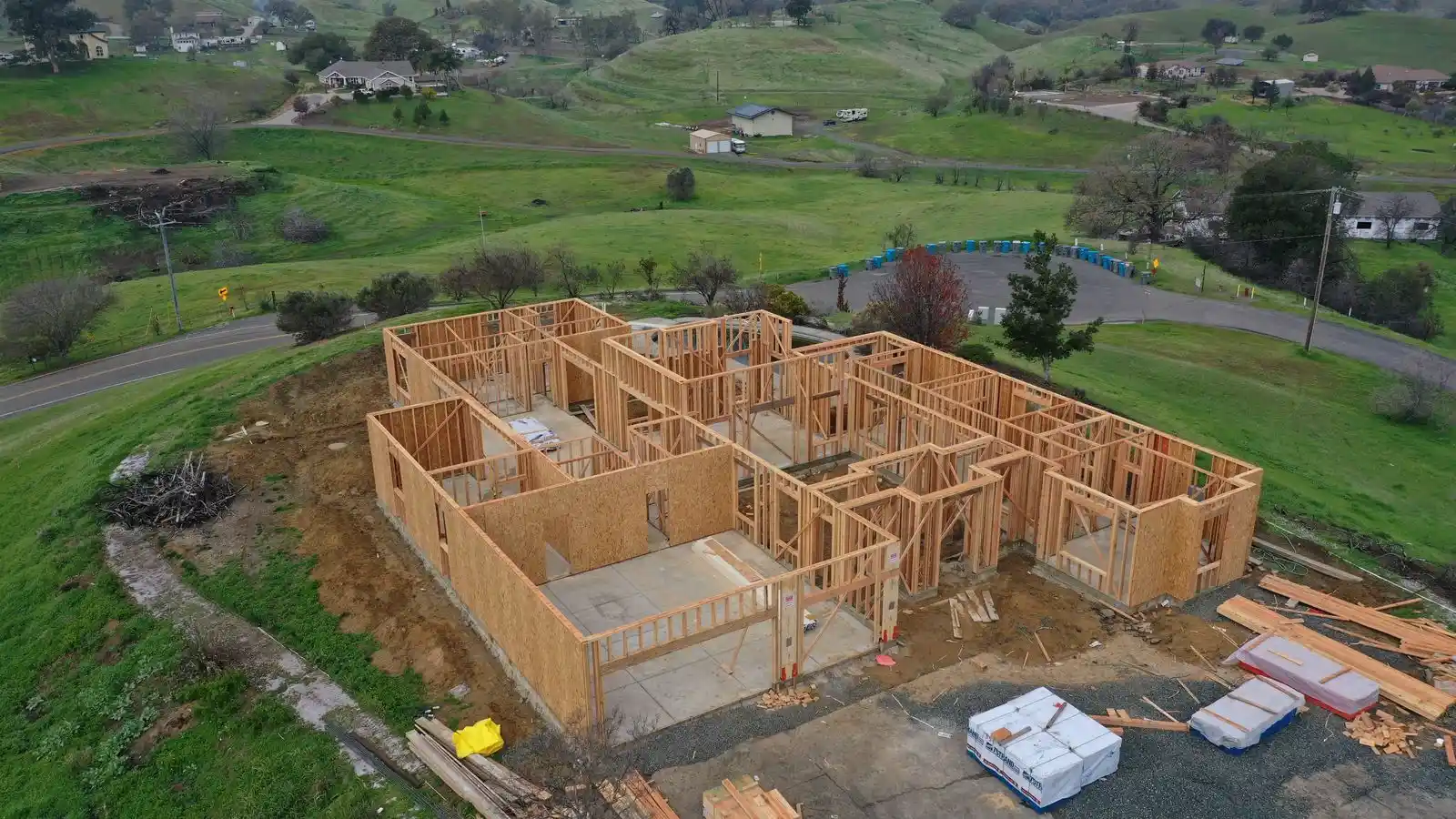
Reconstruction is permitted structural rebuilding after major damage or total loss. It’s not cleaning, and treating a rebuild as “cleanup” hurts you: wrong scope, wrong documentation, and a claim that doesn’t match the actual work. Reconstruction can involve engineering, permits through your local building department, and code-compliant construction. One contractor carrying the project from board-up through move-in reduces the handoff gaps where things get lost between a cleanup crew and a builder. Before any demolition, confirm whether hazardous-material testing is required.
Asbestos, lead, and choosing a fire-recovery contractor
Around Pasadena’s older housing, South Coast AQMD Rule 1403 requires an asbestos survey by a Cal/OSHA Certified Asbestos Consultant before covered renovation or demolition. For renovation, the survey can be limited to the materials that will be disturbed. For housing built before 1978, the EPA’s Renovation, Repair and Painting Rule generally applies to compensated work that disturbs more than six square feet of interior painted surface. Confirm the exact scope and any exceptions for your building.
When hiring, California gives you real legal protections, and it helps to be aware of them before you sign. Verify the contractor’s CSLB license. A written contract is required above $500. The down-payment limit is 10% or $1,000, whichever is less. There’s a general three-day right to cancel, though emergency service-and-repair contracts can differ, so ask. CSLB recommends getting at least three bids, and you should compare equivalent scopes rather than vague totals, because a low number often hides a smaller scope of repairs. Confirm who handles permits, insurer documentation, drying records, contents, testing, and reconstruction. A licensed, fire-specialized contractor protects you through milestone payments tied to completed work, proper documentation, and code compliance. An unvetted handyman rarely offers that. Treat “sign by Friday” pressure as a red flag, not a reason to hurry.
California and Pasadena owner’s quick-reference checklist

- Pasadena Fire Department for the incident and origin-and-cause report
- Pasadena Building & Safety for permits
- Rent Stabilization Department for relocation and just-cause rules where they apply
- California Department of Insurance for your claim rights (general California timelines: about 15 days to acknowledge a claim, about 40 days to accept or deny after proof of claim, subject to exceptions)
- CSLB to verify your contractor’s license
- Red Cross for emergency assistance to a displaced tenant
Talk to a licensed fire-recovery team before you decide anything permanent
When you’re ready for an on-site look, Golden Coast Construction & Restoration keeps a permanent local office serving Pasadena and Southern California. The team is IICRC-certified and licensed as a California General Contractor, CSLB #838443 (you can confirm it on CSLB’s lookup). We offer 24/7 emergency board-up, work directly with insurance adjusters, document the loss, use by-the-book milestone payments with QA inspections at each stage, and carry one process from board-up through restoration and, where needed, full reconstruction. An honest figure for the cost of restoring your property requires an on-site inspection; anyone quoting a firm price sight-unseen is a red flag. We don’t decide legal fault. That’s for the investigators, insurers, and your counsel. We can assess the damage and lay out your options.
What is the number one leading cause of house fires?
Cooking is consistently the leading cause of home fires, often from an unattended stovetop. That’s why unattended cooking comes up so often in tenant-fire questions, and it’s a common thread in rental property fire claims. Fires that begin in shared common areas, like a laundry room, raise their own set of responsibility questions.
Can fire damage be deducted from the security deposit?
In California, a deposit can be applied to tenant-caused damage beyond ordinary wear and tear, with the required itemization within 21 days after move-out. A deposit rarely covers a major fire loss, so treat it as one documented recovery source, not a substitute for an insurance claim.
What if the tenant has no renters insurance?
The tenant may still be personally responsible for damage their negligence caused, and they fund their own temporary housing. In practice, recovering money from an uninsured tenant is limited by what they can actually pay, which is why your own landlord’s insurance usually carries the building repairs first and shields your mortgage obligations in the meantime.
Do landlords have to professionally clean between tenants?
There’s no universal legal duty for homeowners or landlords to professionally clean at turnover. Fire and smoke contamination is a different, larger scope than ordinary cleaning and needs proper assessment and treatment before an apartment or house is safe to re-occupy, which protects both the current tenancy and any future one.