

Key Takeaway
After a house fire, whether the HVAC system needs replacing or can be cleaned by a restoration contractor depends on the severity of contamination and physical damage to each component. A mixed scope is common: lightly contaminated sheet-metal ductwork can often be cleaned under negative pressure with HEPA collection, while parts with melted components, corrosive soot in sealed mechanisms, or suppression-water corrosion typically require replacement. Keep the system off and get a written component-by-component assessment before any work begins.
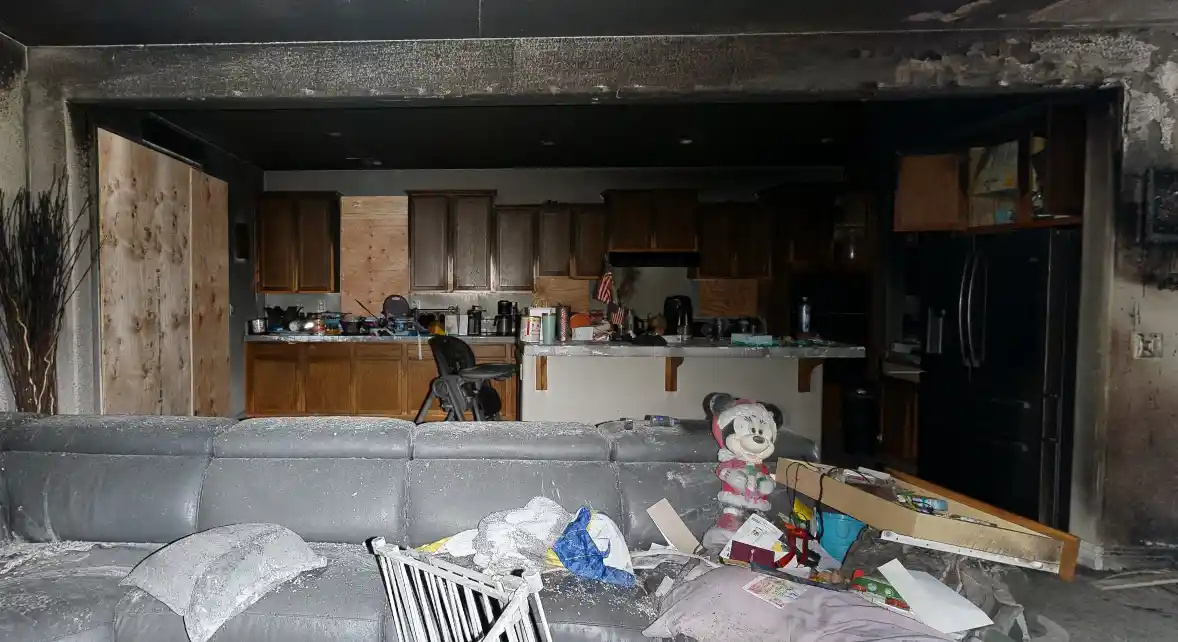
A house fire does not automatically mean the whole HVAC system has to be torn out. It also does not mean a quick duct cleaning will handle it. The honest answer sits in between: some HVAC units and components can be professionally cleaned once they’re verified restorable, while parts damaged by heat, firefighting water, corrosion, or contamination that can’t be removed usually need replacement. A mixed scope, cleaning some pieces and replacing others, is common in fire damage restoration. If you’ve been told one extreme or the other, slow down. Keep the system off until someone qualified has actually looked at it. The right call comes from an inspection, not a phone verdict.
Why Fire Damage Can Reach the Whole HVAC System
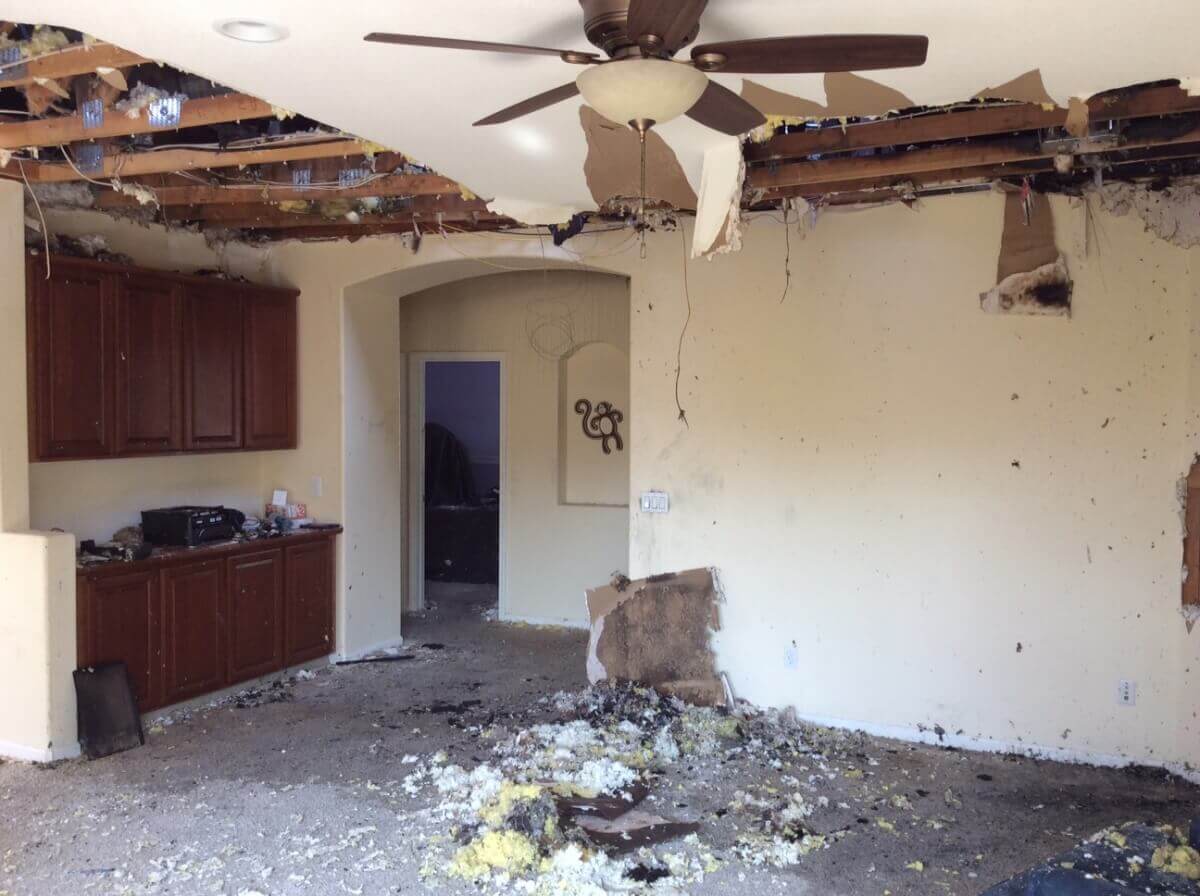
If the unit was running when the fire started, it did what it’s built to do. It pulled air, and the smoke and soot in that air, through the return side and pushed fine particles out through the HVAC ducts into rooms far from the flames.
The filter helps, but it doesn’t stop everything. Fine soot slips past it and settles inside ductwork and on the heating equipment surfaces. Water used to put the fire out can enter the air handler and the ducts, and over weeks that water damage drives corrosion on metal parts. Heat alone can warp or scorch components near the flames without ever touching them. What the firefighters did to save the structure can leave behind suppression water the system never dries out on its own.
Here’s the part worth holding onto: soot smudged around a register does not prove the inside of the system is contaminated, and a clean-looking vent does not prove the system is clean. The residue and the real fire damage often sit where you can’t see them. That gap between what’s visible and what’s actually there is exactly why an inspection decides this, not a guess over the phone. There’s a health angle too: soot carries irritants you don’t want recirculated through a home, which is another reason the system stays off until it’s evaluated.
How Contamination Severity Drives the Clean-or-Replace Decision
Most of this decision comes down to how badly the HVAC systems were contaminated and whether anything was physically damaged. It helps to think in tiers.
| Severity | What it looks like | Likely path |
|---|---|---|
| Light | Limited smoke deposits, no physical damage to components | Professional cleaning often restores the unit |
| Moderate | Visible residue and lingering odor, no melting or warping | Extensive cleaning, judged component by component |
| Severe | Heavy corrosive soot, melted or warped parts, suppression-water corrosion, electrical damage | Replacement likely for the affected components |
Lightly contaminated HVAC units tend to respond well to proper cleaning. Severe contamination is a different situation. Corrosive soot that reaches sealed mechanical parts, or extreme heat that damages wiring and controls, can create electrical hazards that make cleaning unsafe or pointless. Safety comes before any attempt to salvage a damaged unit, and installing new equipment is sometimes the only path that holds up.
None of this is a single verdict for the whole system. The HVAC ducts might clean up fine while the air handler doesn’t, or the opposite. A responsible restoration company grades each component on its own and then builds the scope from there.
What a Proper HVAC Fire Assessment Should Inspect
A real assessment is a methodical walk through the whole system, not a glance at a vent. You can judge the quality of a company’s work by what its team actually opens up and looks at. A thorough inspection should cover:
- The filter and filter rack
- Return and supply ducts
- Return and supply plenums
- The air handler or furnace cabinet
- The blower, coils, heat exchanger, controls, and wiring
- Duct material and insulation
- Registers and grilles
- Signs of firefighting water and any heat deformation
- Whether odor strengthens when the system runs
There’s a standard built for exactly this. ANSI/IICRC S590, first published in 2023, is the HVAC assessment standard for fire, water, and mold events. It calls for documenting impacted surfaces and producing a written assessment and Restoration Work Plan. A qualified assessor hands you a written plan with findings and reasons, not a verbal yes or no.
Which HVAC Components Can Usually Be Cleaned
Plenty survives a fire. Sound, accessible sheet-metal ductwork can often be mechanically cleaned and sealed to remove soot and restore it. Registers and grilles that are intact usually clean up. Nonporous, mechanically sound equipment surfaces respond to cleaning, and blowers and coils can be restored where access and manufacturer-compatible methods allow it. This is where real HVAC work pays off for homeowners, because a part that cleans up well is a part you don’t have to pay to replace. The same holds for an air conditioner coil that escaped direct heat.
The ACR, The NADCA Standard: 2025 Edition frames it this way: components exposed to heat and smoke are evaluated for restoration, and surfaces that can’t withstand proper mechanical cleaning get replaced. The decision follows the condition, not a blanket rule about the material.
One honest caveat: cleaning is confirmed by verification afterward, never promised in advance. Any company guaranteeing a specific result before the work is done and checked is getting ahead of the facts.
When HVAC Replacement Is the Honest Answer

Sometimes a part can’t be saved, and the straight answer is replacement. That’s more likely when you find:
- Melted, warped, scorched, or corroded parts
- Wet or matted insulation
- Friable or delaminated duct liner
- Damaged flexible duct or duct board
- Porous contamination you can’t reach to clean
- Soot that has entered the compressor or sealed mechanical components
- Residue or odor that persists after appropriate cleaning
- Components that fail cleanliness verification
Keep the language straight here, because it affects your claim. Cleaning and restoring usable components is restoration. Pulling out and installing new ducts, wiring, or a new unit is repair, and replacement is a separate line item. When a part is swapped for a new one, that fixing work is its own scope and shouldn’t be blurred into the cleaning.
A company worth trusting will tell you when a part can’t be saved even though that means losing the cleaning work on it. That willingness to leave money on the table is one of the clearest signs you’re dealing with honest people.
After a Small Fire, Why Changing the Filter Isn’t a Complete Fix
After a small fire, a fresh filter feels like a reasonable fix. It isn’t a complete one. The filter is a single component, smoke bypasses it, and it does nothing about contamination already sitting on the return side or inside the ducts. Even a small, contained fire can send soot deep into the system, and odor removal from that residue takes more than a filter change.
If it’s practical, photograph or set aside the old filter before you toss it, since it can help document what the system was exposed to. And don’t flip the system on just to check whether the smell is gone. Running it moves air, and that airflow can push settled particles back through surfaces you’d want kept clean. FEMA and EPA both advise leaving a fire-affected system off until it’s been evaluated.
How the HVAC Work and Verification Should Be Done, and Who Does What

What professional cleaning should include
A good restoration process starts with a written scope and controlled access to the system. The work uses source removal under negative pressure so dislodged residue doesn’t drift into your living space, with mechanical agitation to loosen contaminants and HEPA vacuum collection to capture them. When the vacuum exhausts indoors, NADCA specifies HEPA filtration at 99.97% efficiency at 0.3 microns. Every affected component gets cleaned, not just the visible vents.
Sealants, biocides, fogging, and ozone come after source removal, if at all. They never replace it. A pleasant smell is not proof the system is clean, so treat any pitch built around deodorizing as incomplete.
How to confirm it was done, and who should do it
Ask for before-and-after inspection and photographs, a visibly clean condition or another specified verification level, confirmation that the system is mechanically safe to restart, and a written completion report. The roles break down like this:
- The fire restoration company assesses and coordinates the whole fire loss, including smoke cleaning, structural drying after suppression water, and claim documentation.
- A team of HVAC experts handles the system-specific assessment and cleaning.
- A properly licensed HVAC contractor handles mechanical repair, replacement, and recommissioning.
Alongside the HVAC, a fire loss often touches plumbing and gas lines near the affected room, so those get checked before anything is restarted. California note: in California, HVAC mechanical work falls under the CSLB C-20 classification. Verify an active license before anyone installs or replaces a unit.
Insurance, Cost, and Documentation After HVAC Fire Damage
Homeowners insurance often covers HVAC inspection, cleaning, or replacement after a fire, but it varies by policy and cause of loss. Some policies pay to clean the system but not to have it replaced, which makes your documentation matter. The cost of the work depends entirely on the extent of what the inspection finds across the range of components, so no honest figure comes before the property is seen.
Photograph the system before any cleanup or disposal, so you can determine later what condition each part was in. Get a written clean-versus-replace rationale that explains the reasoning for each component. Then hand that scope to your adjuster at the insurance company. The California Department of Insurance advises homeowners not to start extensive permanent repairs until the adjuster has assessed the damage, and it lays out your rights during a claim. No company can honestly quote a firm price without seeing the property, so be cautious of anyone who tries.
House Fire vs. Wildfire Smoke: Not the Same Assessment
An internal house fire and regional wildfire smoke intrusion affect HVAC systems differently and are assessed under different frameworks. This post is about an internal house fire, and in many homes the first thing that saves money is getting that distinction right. If you’re dealing with wildfire smoke drawn into the system, see our separate wildfire-smoke HVAC article rather than applying this guidance to that situation. We welcome questions and comments from readers working through either one, since getting this right protects your home and your health.
Talk to a Specialized Fire Restoration Team Before You Decide
A real clean-or-replace answer comes after someone inspects the equipment, the duct materials, the fire’s path, the heat exposure, the suppression water, and your claim documentation. It doesn’t come from a photo or a phone quote, and any company handing you a firm verdict sight-unseen is a red flag. The right call is crucial to your life getting back to normal, and the right contractors won’t rush you to it.
Golden Coast Construction & Restoration handles fire damage restoration with IICRC-certified work and a permanent office in the Pasadena area, with 24/7 emergency board-up when you need it first. We work directly with adjusters, document the scope in writing, and use by-the-book milestone payments so you stay protected through the restoration process. Whether the job is cleaning or rebuilding after a larger loss, the person who assesses your home is the one who coordinates it. Our California license is CSLB-verifiable (#838443). When you’re ready, contact us for a free, on-site assessment. We’re glad to assist, and we give you a straight opinion with no pressure and no manufactured deadline. It’s how we treat our customers.
Frequently Asked Questions
Do you need to clean your HVAC after a house fire? Not automatically, and not just the vents. If smoke or soot reached the system, it should be assessed component by component. Cleaning may be enough after a small, contained fire, but only an inspection confirms it.
What is involved in replacing an HVAC system? Removing affected ductwork, equipment, and sometimes wiring, then installing and recommissioning new components to code. In California that mechanical work falls under the C-20 classification. It’s a different scope from cleaning, and replacement is restoration-to-replacement, not the same as rebuilding the home.
What is considered a major repair for HVAC? Work touching sealed mechanical parts, the compressor, the heat exchanger, or the electrical system, not a filter swap. Soot reaching the compressor or heat damage to controls usually points toward parts being replaced.
Does homeowners insurance cover HVAC cleaning or replacement after a fire? Often, but it varies by policy, and some cover cleaning without covering replacement. Document everything before work starts and share the written scope with your adjuster.