Key Takeaway
For Altadena vs. Pasadena rebuild permits, the key difference is jurisdiction: Altadena parcels are permitted through LA County Planning and Public Works Building and Safety, while properties inside Pasadena city limits go through the City’s Permit Center under Ordinance No. 7444, adopted March 24, 2025. Both programs allow like-for-like rebuilds with up to 10% or 200 square feet of added area, but size, height, and fee-waiver rules differ between the two. Your mailing address does not confirm your jurisdiction, so verify your parcel before paying for plans.
If your home is in Altadena, Los Angeles County reviews and issues your rebuild permit. Altadena is a town in name and character but not in law, so it has no city hall of its own. If your property sits inside Pasadena city limits, the City issues your building permits. Both jurisdictions created expedited paths for Eaton Fire rebuilds, and both use similar-sounding language, but the rules for the two communities are not identical.
This article is for property owners moving out of insurance and debris removal and into design. Two ideas hold it together. Like for like means replacing what was legally there in roughly the same size, place, and use, which is what unlocks the fast track. And permit eligibility and fee-waiver eligibility are separate tests: you can be approved for one and not the other.
Who issues your rebuild permit, the County or the City of Pasadena?
Altadena and Pasadena share a border and shared a fire, but not a government. Applications from Altadena residents run through County Planning and Public Works Building and Safety, with Fire Department, Public Health, and other reviews folded in as the project requires. Properties inside city limits go through Pasadena’s Planning and Community Development Department and Permit Center, where red-tagged properties are assigned a City planner who answers zoning and rebuilding questions for that address.
How do I confirm which jurisdiction covers my property?
Most folks assume the mailing city and ZIP code settle it. They don’t. Plenty of parcels carry a Pasadena mailing address and sit in unincorporated county territory, and those property owners are County applicants. Two houses on the same block can answer to different rulebooks.
- Look up the parcel in the LA County jurisdiction tool.
- Check the City of Pasadena’s address-based damaged-property map, which also shows the assigned planner.
- Confirm with the Permit Center or that planner in writing, and check counter hours before you drive over.
Plans drawn to the wrong jurisdiction’s standards are money spent twice. Ten minutes with the maps prevents that.
Why Palisades Fire and Pacific Palisades rules don’t apply here

January 2025 produced two separate disasters with two separate permit programs. Pacific Palisades sits in the City of Los Angeles, which adopted its own expedited procedures for Palisades Fire rebuilding efforts. That fire also reached Malibu and unincorporated pockets of the Santa Monica Mountains, each with its own review path. Guidance written for those areas does not govern an Altadena or Pasadena parcel, and permit data and progress dashboards are published separately for the two fires.
Altadena vs. Pasadena rebuild permit comparison for property owners
| Altadena (LA County) | Pasadena (City) | |
|---|---|---|
| Issuing authority | LA County Planning and Public Works Building & Safety | City Planning & Community Development, Permit Center |
| Like for like expansion | 10% or 200 sq. ft., whichever is greater | 200 sq. ft. or 10%, whichever is greater, in RS and specified hillside districts; generally 10% in RM-16, RM-32, special-purpose districts, and nonconforming structures |
| Height and stories | Greater of prior height or Title 22 maximum; no added stories | Up to 10% taller for eligible RS and hillside rebuilds; no one-story-to-two-story in hillside overlays |
| Moving the footprint | Minor relocation if at least 50% of the original footprint is retained | Allowed if the new location meets current setbacks or does not increase an existing nonconformity |
| Setbacks | Altadena R-1 general 20-foot front setback, with stated exceptions | Current City setbacks, or no greater nonconformity than before |
| Review targets | First review targeted within 10 business days of a complete application; rechecks 5 to 10 business days | Expedited fire-rebuild review; next-business-day inspections on active permits; no published plan-check time |
| Fee waiver basics | Owned and occupied before January 7, 2025 | Owner-occupied on January 7, 2025, with a City red-tagged structure |
| Program status | Interim ordinance in effect through August 22, 2027 | Ordinance No. 7444, adopted March 24, 2025, later extended |
Both programs are temporary ordinances and can be amended, so check the current version with the issuing agency.
What does like for like mean for Eaton Fire rebuilds?
Like for like rebuilds in Altadena
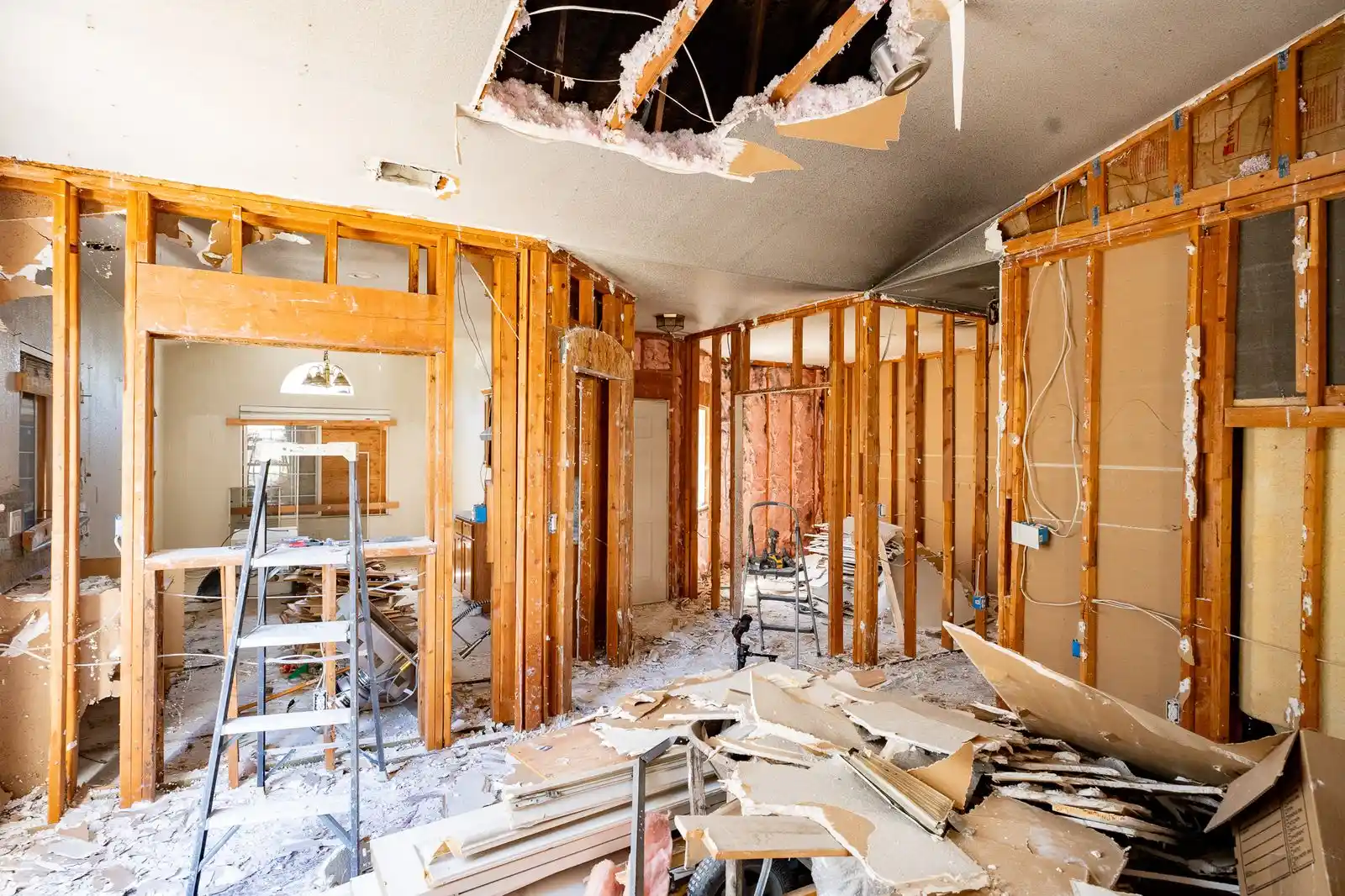
A like-for-like structure is defined by the County as one with the same general size, location, use, and footprint as the legally established pre-fire building. Your floor plan can change. The replacement can be smaller. Qualifying relieves the project of some current zoning standards, but it still has to comply with building, fire, and health and safety requirements. Zoning relief is not code relief.
Like for like in Pasadena (Ordinance No. 7444)
Pasadena’s ordinance covers structures the City red-tagged for Eaton Fire damage, and eligibility is confirmed during plan check rather than approved up front. The City measures pre-fire location, footprint, floor area, and height as the structure stood on January 6, 2025. Note that this baseline differs from the County’s, which ties eligibility to the January 7, 2025 fire.
How much larger, taller, or further back can you rebuild?
“10% or 200 square feet” reads like the same rule on both sides of the line. It isn’t. In Pasadena the greater-of option applies to RS districts and specified hillside provisions, while RM-16, RM-32, special-purpose districts, and nonconforming structures are generally held to 10%. The County applies its greater-of rule to residential rebuilds, then layers separate conditions on top. Height splits too: in Altadena the maximum is the greater of the destroyed structure’s height or the current Title 22 maximum and the story count cannot increase, while eligible Pasadena RS and hillside rebuilds may go up to 10% taller, with no one-story home becoming two stories in a hillside overlay.
An illustrative example, not a real project: a design 190 square feet larger, shifted 8 feet back, and a foot taller. In Altadena the size is fine, the move works if at least half the original footprint is retained, and the 20-foot front setback governs the shift. In an RS district in Pasadena, the same design fits if the new location meets current setbacks. Change one variable and the project leaves the streamlined track for discretionary review.
How the permitting process works: EPIC-LA and the Pasadena Permit Center
The LA County Unified Permit process for Altadena
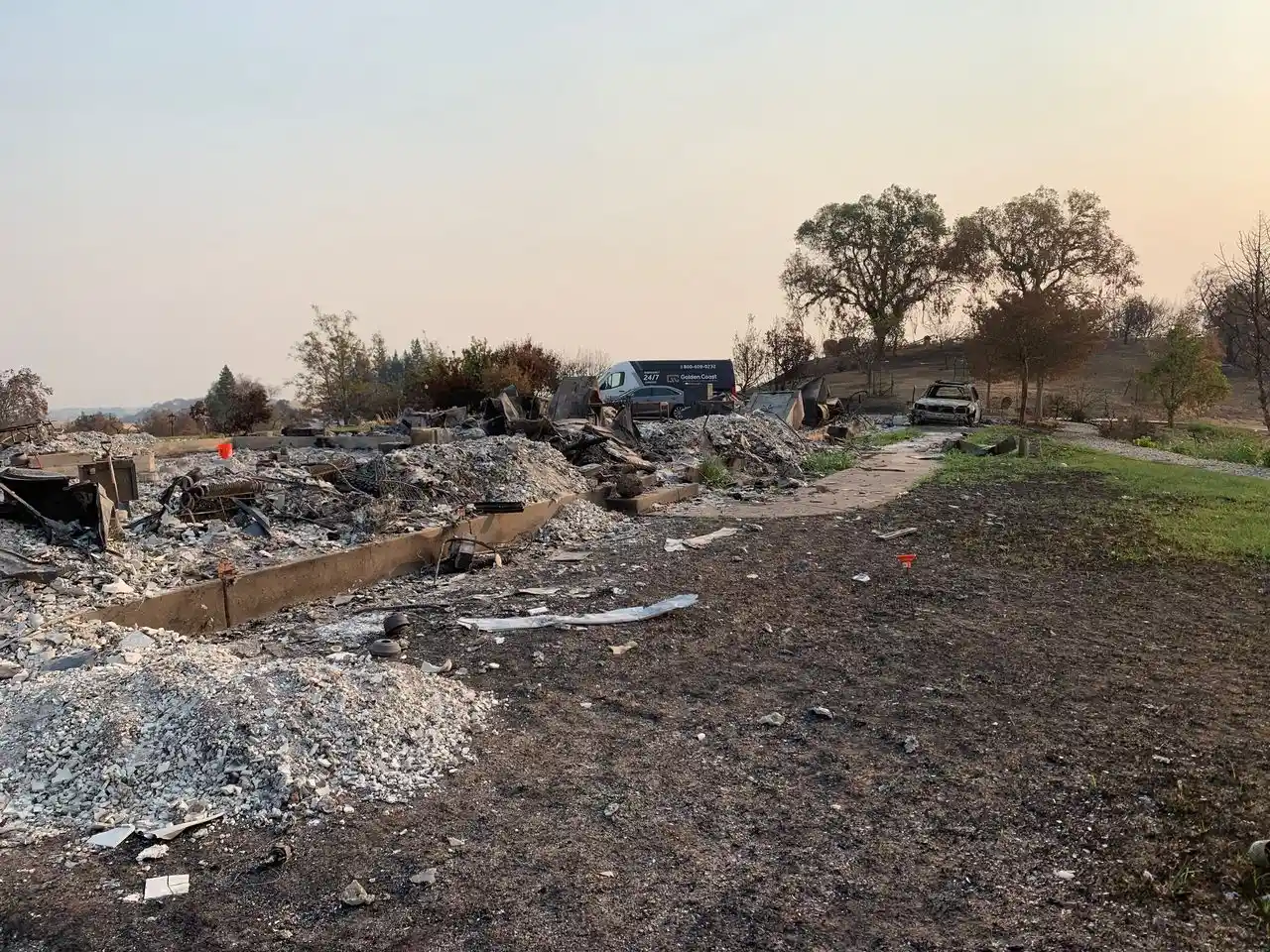
The County launched its Unified Permit process in August 2025. You apply for a County Disaster Recovery Permit, Rebuild Project, through EPIC-LA, the County’s online permitting system, or in person at the Altadena One-Stop Permit Center. Architectural site, floor, and elevation plans clear zoning conformance first. Then the building package is routed internally for geotechnical, drainage and grading, building, fire, septic and public health, debris, and water fire-flow reviews. Some clearances stay outside the unified process, including certain utility, sanitation, school, and water-service items.
The County targets first review within 10 business days of accepting a complete application, with rechecks in 5 to 10 business days. A complete package with the right forms draws fewer correction letters, and that is the part of the timeline you control. Standalone ADU applications are reviewed within 10 business days.
Starting a City of Pasadena rebuild permit
Start with the City’s address map to find your assigned planner. Pasadena also offers 30-minute virtual planning consultations before you submit construction plans. Code questions go to Building and Safety; fire-flow, hydrant, and sprinkler questions go to Fire Department plan check. The City reports next-business-day inspections on sites with active permits, which keeps progress inspections from becoming the bottleneck once framing starts.
A published review target is not a promised issuance date. Corrections, outside clearances, and non-like-for-like review all add time, and both agencies are handling an enormous number of rebuild projects at once. One City rebuilding page still reads “Coming Soon” while later pages document active procedures, so call the Permit Center rather than trusting a single page.
Can you submit plans before debris removal is complete?
Yes. County guidance allows plans to be submitted while the lot is still being cleared, and the same sequencing works for City projects. What clearance controls is issuance: required site clearances must be on file before building permits are issued, whether the lot was cleared under the Army Corps of Engineers program or privately.
Design and plan check can run in parallel with site work, which usually moves the day you break ground earlier than owners expect. Soil testing and when construction may legally begin are covered in a separate article.
Which permits and fees may be waived?
Qualifying for a permit is not the same as qualifying for a waiver, and the official pages tend to blur this point.
Altadena. Property owners rebuilding single-family homes in unincorporated LA County may be approved for waivers if they both owned and occupied the property before January 7, 2025. Waived items include zoning review, building plan review, soils or geological review, building permits and inspections, Fire Department plan review and inspections, and Public Health review. Not covered: design and construction services, addressing, survey fees, construction recycling deposits, utilities, sanitation, and school charges. A waiver trims review charges, not the capital cost of building.
Pasadena. The City waives plan-check and permitting fees for eligible owner-occupied single-family homes and condominiums with a red-tagged structure, generally requiring occupancy on January 7, 2025. Post-fire ownership changes are restricted, with a family-transfer exception, and properties listed for sale are not eligible. If title sits in a trust or an LLC, ask your planner how occupancy gets documented. Excluded are water-service fees, outside-agency charges, fees for entirely new structures or uses, a reduced refundable $1,000 Construction and Demolition Waste Management Deposit, and possible school fees when the rebuild exceeds the previously permitted area by 500 square feet or more. Yellow-tagged properties, including many needing repairs rather than full reconstruction, are not eligible under the current program.
The distinction that catches residents off guard is new construction. Floor area or uses that did not exist before the fire generally fall outside the waiver, even when the rest of the project is approved as like for like.
Parcel-specific issues that can change your permit path
- Oak trees. No County oak-tree permit is required under the Eaton ordinance when the replacement has no greater impact on a protected oak’s zone than the destroyed structure did.
- Hillside overlays and nonconforming setbacks. Common in both communities, and each can limit height, stories, and placement.
- Historic status. Adds review in either jurisdiction.
- Prior unpermitted square footage. Only legally established area counts toward your baseline.
- Added ADUs, fire flow, and utility requirements. Each can move a project off the streamlined track.
One shared state rule affects rebuilding efforts in both towns: a November 24, 2025 California executive order suspended application of the 2025 California Building Standards Code to qualifying homes damaged or destroyed in the January 2025 fires, except for specified 2025 fire and public-safety requirements, directing those projects to the 2022 standards. It also suspended certain solar PV and battery-storage requirements while keeping solar-ready requirements. Confirm the applicable code edition in writing with the issuing building department.
What to gather before you pay for final plans

- Written jurisdiction confirmation and the red-tag record.
- Assessor data and prior building permits history.
- Documented pre-fire legal floor area and footprint.
- Survey or site information and current debris-clearance status.
- Proof of ownership and occupancy, plus insurance declarations if you’re seeking a fee waiver.
What fire rebuild contractors should put in writing
CSLB tells homeowners to verify a contractor’s license status and to make permit responsibility part of the written contract. Beyond that, builders working on Eaton Fire rebuilds should be able to confirm your jurisdiction, compare the pre-fire permit record against your proposed scope, keep site clearance separate from reconstruction, coordinate building, fire, grading, and utility approvals, and name who pulls the permits.
Golden Coast Construction & Restoration rebuilds homes after fire. We’re a California General Contractor, CSLB #838443, verifiable in the CSLB license lookup, IICRC-certified, with a Pasadena office serving the Los Angeles area and 24/7 emergency board-up. Payments are tied to completed milestones, with QA inspections at each one, a signed certificate of completion, and asbestos or lead testing where warranted. We work directly with insurance adjusters.
No one can honestly quote a rebuild sight-unseen. If you’d like a walk-through of your lot and your pre-fire permit record, we’ll come out and look. New homes are already taking shape on both sides of the city line, and cancellation windows on disaster-area contracts vary by transaction, so we cover those in a separate article on California rebuild contract rules.