

Key Takeaway
Assistance for victims of house fires starts with two calls: the American Red Cross at 1-800-733-2767 for emergency shelter, food, and clothing, and 211 for local resources. If you have homeowners or renters insurance, report the loss immediately and ask about Additional Living Expense coverage, which pays for temporary housing when your home is uninhabitable. FEMA aid applies only when a presidential disaster declaration covers your address, not for most single-home fires.
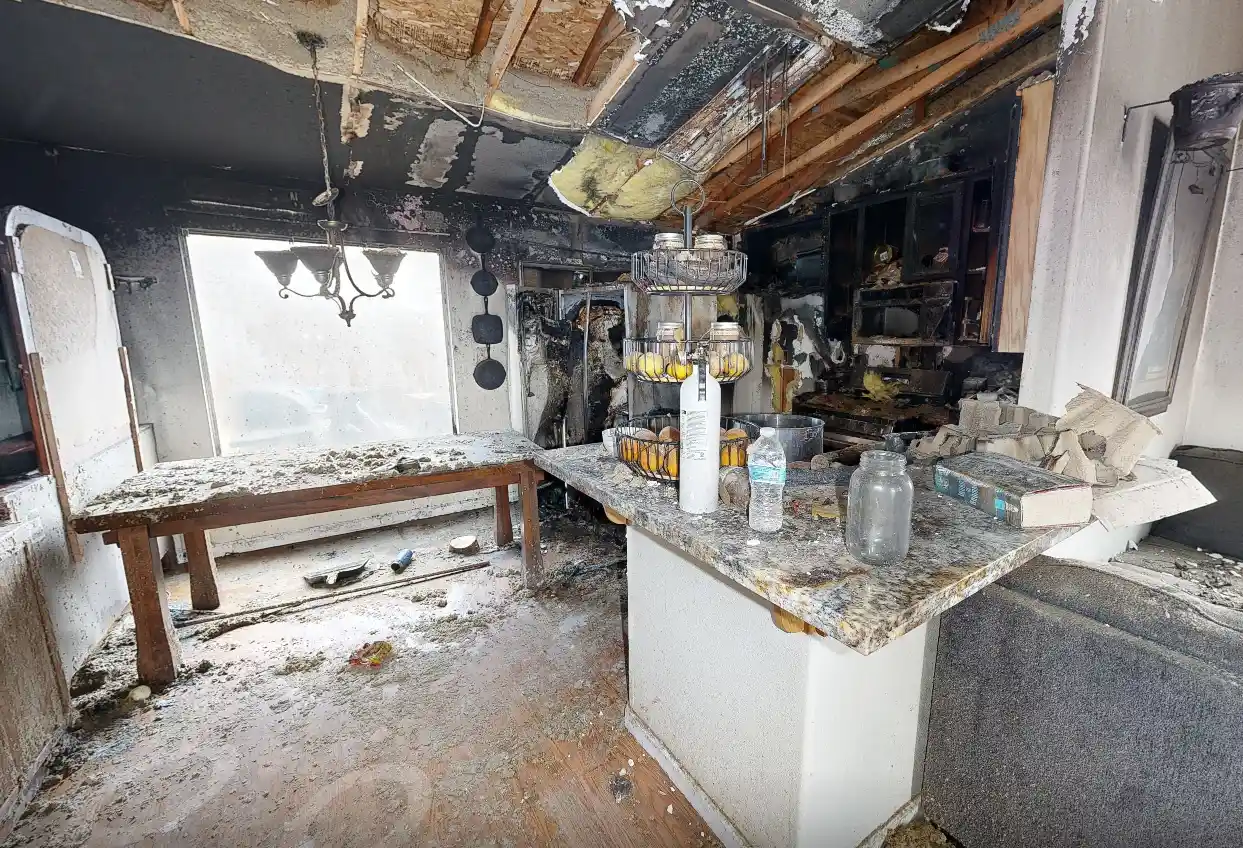
If your home just burned, here is the short answer. Call the American Red Cross at 1-800-733-2767 or dial 211 for a safe place to stay tonight, plus food, clothing, and help replacing medication. If you have homeowners or renters insurance, report the loss and ask specifically about Additional Living Expense coverage, which can pay for temporary housing assistance. FEMA help generally applies only when your fire is part of a presidentially declared disaster, not an isolated single-home fire. Recovering from a house fire can feel overwhelming, and it is one of the hardest days a family faces. This guide lays out who helps, with what, and in what order, whether you own, rent, or have no insurance at all.
What to Do If You Need Help Tonight
Call 911 first if anyone is hurt or the fire is still active
Before anything else, make sure everyone is out and safe. Call 911 for injuries, active flames, or a medical emergency. Everything else can wait until people are accounted for.
Red Cross emergency services: where to stay tonight
Call the Red Cross at 1-800-733-2767. Depending on a needs assessment, Red Cross emergency services may arrange a safe place to stay for a short period. You can also dial 211, which connects most U.S. households with local emergency shelter and temporary shelter options. Red Cross help is limited and needs-based: short-term emergency housing and referrals, not permanent housing or rebuilding funds.
Food, clothing, medication, and medical equipment
The same two calls can point you toward hot meals and emergency food, help with clothing and personal items, and the Red Cross can help replace lost medication or medical equipment. Cross emergency food services and local food aid programs assess case by case, so tell them exactly what essential supplies and medications you need, including any medical supply access for ongoing conditions.
Help for displaced or injured pets
Local animal services and some shelters take in pets displaced by fire. Ask the Red Cross or your 211 operator for the nearest resource.
Do not re-enter until the fire department clears the home
A burned home can hide unstable floors, weakened walls, live electrical hazards, soot, and water left behind from firefighting. Wait until the fire authority says it is safe to go back in.
Who Helps With What After a House Fire?
| Source | What it helps with | When to use it |
|---|---|---|
| American Red Cross | Immediate shelter, food, clothing, emotional support | The first hours and days |
| 211 | Local emergency shelter, utility help, social-service referrals | Anytime you need a local resource |
| Your insurance company | The claim, temporary living expenses, repairs | As soon as people are safe |
| Local fire departments | Fire report, re-entry clearance | For documentation and safe access |
| State insurance department | Claim questions and disputes | If the claim stalls |
| FEMA | Aid under a declared disaster with Individual Assistance | Only when your area is designated |
| SBA | Low-interest disaster loans for owners and renters | Where a declaration applies |
| HUD | Mortgage relief options | If you have a federally backed loan |
| Local assistance centers / case management | One-stop hubs, document replacement | Longer disaster recovery |
| Community organizations | Furniture, clothing, financial relief | As you rebuild daily life |
FEMA’s Federal Assistance Programs and House Fire Victim Aid

Usually FEMA does not step in after a single-home fire. This is where a lot of online advice gets it wrong. FEMA’s Individuals and Households Program is tied to a presidential disaster declaration, the specific areas designated under it, and the types of assistance authorized. A fire affecting one home normally does not open a FEMA claim. When a declaration does apply, FEMA temporary housing assistance may cover lodging reimbursement, essential home repairs, and personal property, so both aid and medical support reach homeowners and renters alike. The Small Business Administration also offers disaster loans and grants to owners and renters in declared areas, a separate federal path worth knowing about. Some states also maintain state disaster relief funds that activate after larger wildfire events, so it is worth asking at a local assistance center how to receive emergency financial assistance that fits your situation.
How do I apply to receive emergency financial assistance?
Check whether your address and event qualify at DisasterAssistance.gov or through the FEMA mobile app. If you are eligible, apply quickly to meet deadlines. For local recovery program access, a case manager can help you line up immediate emergency assistance and basic needs assistance at the same time. Funds for approved applicants can arrive within a few business days. After a major California wildfire, the state sometimes offers tax relief as well, including extended filing deadlines through the Franchise Tax Board for those in a declared disaster area.
If You Have Homeowners or Renters Insurance
Report the loss to your insurance company as soon as people are safe. Then ask about Additional Living Expense coverage, often called ALE or loss-of-use. When a covered loss makes your home uninhabitable, ALE pays the increase over your normal living costs, things like temporary housing, reasonable extra meal costs, storage, and relocation. It does not pay every household bill, and limits vary by policy.
On that first call, ask:
- Is my home officially considered uninhabitable?
- Do I have ALE or loss-of-use coverage, and what are the limits?
- What documentation do you need?
- Can I receive an advance?
- What temporary protective work is authorized?
- What must be documented before anything is moved or discarded?
Save every fire-related receipt. Your insurer needs them to review ALE and other claim costs. Write down your claim number and your adjuster’s direct contact information before you hang up. Keeping your essential paperwork and claims records in one place now smooths the paperwork and claims process and saves a great deal of stress later.
Local Support Networks and Financial Recovery Resources If You Don’t Have Insurance
Uninsured and renting households have paths too. Start with the Red Cross and 211. From there, local social services, voluntary agencies, and disaster case managers can layer resources over time, help with document replacement, furniture, clothing, and in some cases limited financial relief. As an illustrative example of how local support networks work, one regional fire foundation in Ohio runs a SAVE program offering gift cards to fire survivors. The Fire Foundation’s SAVE initiative, and similar efforts supplying aid to victims, vary widely by area and should never be counted on as a guarantee. If a declaration applies to your area, SBA disaster loans are open to homeowners and renters. If you can’t afford to rebuild, lean on case management rather than a single source. Faith based support groups and other robust support systems often provide emergency food supplies, emergency food assistance, and rental assistance programs. For the uninsured, housing solutions usually come from several smaller financial recovery resources fit together over time.
County-specific support programs and legal aid services
Many counties coordinate their own county-specific support programs after a fire, and these often open local assistance centers where you can replace important documents lost in the fire, meet a case manager, and connect to charitable aid in one visit. In Los Angeles County, local housing authority programs may also point renters toward long term housing resources. If a dispute arises with a contractor or an insurer, legal aid services in your county may be able to help at low or no cost. When disaster strikes on a larger scale, these centers become the hub where government financial aid programs, charities, and volunteer agencies work side by side.
Replacing a government issued photo ID and vital records
A fire often destroys the paperwork you need to prove who you are. Replacing a government issued photo ID, Social Security card, and birth certificates early makes every later step faster, from insurance to benefits to new housing.
How to Protect the Property and Your Insurance Claim
Once the fire department clears entry, a few steps protect both the structure and your claim. For board up fire restoration and the rest of the recovery and rebuilding, the earliest actions matter most.
- Arrange temporary board-up and roof tarping to prevent further weather or intrusion damage.
- Photograph and inventory damaged contents before moving or discarding anything, and confirm claim procedures with your adjuster.
- Discard food exposed to heat, smoke, or soot. Photograph it first when it is safe to do so.
- Make only reasonable temporary repairs. Do not begin permanent repairs before the adjuster inspects the loss.
Water used to put out the fire soaks into drywall, flooring, insulation, and framing, often where you can’t see it. The EPA recommends drying wet materials within 24 to 48 hours to reduce the chance of mold. That work should be arranged only after professionals confirm the building is safe to enter. Do not attempt DIY cleanup inside a structurally damaged home. For fire restoration insurance help, a specialized restorer can document damage in the format adjusters expect.
Restoration or Rebuilding: What Comes Next

These are two different things, and confusing them leads to false expectations. Restoration means stabilization, drying, cleaning, smoke and soot removal, contents work, salvage, and repair. Reconstruction, or rebuilding, means structural work after major damage or total loss, with its own planning, permits, and timelines. The first edition of the ANSI/IICRC S700 Standard for Professional Fire and Smoke Damage Restoration was published in 2025. It covers assessment, cleaning, odor management, and documentation, and it expressly does not fully cover reconstruction.
Fire, demolition, or cleanup can also disturb hazardous materials. Buildings constructed before 1970 are more likely to contain asbestos, and homes built before 1978 may contain lead-based paint. Age alone does not prove either is present, but testing or specially trained contractors may be warranted before damaged materials are disturbed. Rebuilding may also bring newer fire resistant construction requirements into play. After a widespread wildfire, some California jurisdictions offer expedited permit processing times and priority scheduling for inspections, so ask your city or county building department what applies before you plan a timeline.
Tax considerations for a house fire and property value reassessment
There are tax considerations for house fire losses worth raising with a qualified advisor. If you can’t afford to rebuild, consider whether rebuilding or selling makes more sense for your situation, and weigh the tax relief options each path carries. In California, a property value reassessment after substantial fire damage can bring lower property tax obligations and, in a declared disaster, immediate property tax relief until the home is repaired.
How to Choose Help Without Being Pressured
Verify licensing with the correct state authority before you sign anything, and favor licensed pre screened contractors over whoever shows up first. Get a written scope of work and a payment schedule. Use milestone payments tied to completed work, and never sign your insurance checks over to a contractor. An artificial “sign by Friday” deadline is a red flag. The disaster already created the urgency; a trustworthy contractor won’t manufacture more. Legal aid exists if a dispute arises.
State rules differ. In California specifically: the CSLB recommends getting at least three bids and checking the license before hiring. California caps home-improvement down payments at 10% of the contract price or $1,000, whichever is less. The general home-solicitation cancellation window is three days (five days for consumers 65 or older), and qualifying repair contracts tied to a declared disaster carry a seven-business-day window. Those figures are California-specific. Check your own state’s rules elsewhere.
How Golden Coast Construction & Restoration Fits

Golden Coast Construction & Restoration handles fire recovery only, from emergency board-up through complete reconstruction, with one contractor across the whole job. We’re IICRC-certified, offer 24/7 emergency board-up and immediate assistance, and keep permanent local offices, including one serving the Pasadena and greater Los Angeles area. We work directly with insurance adjusters, document the claim, and use by-the-book milestone payments tied to completed work, with QA inspections at each milestone and a signed certificate of completion. We arrange asbestos and lead testing where it’s warranted. A specialized licensed restorer protects you in ways a handyman cannot: correct drying to prevent mold, code-compliant repairs, and payments that follow the work rather than running ahead of it. California work is licensed under CSLB #838443. An honest figure for your home requires an on-site inspection. Anyone quoting a firm price sight-unseen is a red flag. When you’re ready, reach out for a calm assessment.
Frequently Asked Questions
What does the Red Cross provide after a house fire?
Immediate, needs-based help: a safe place to stay, food and clothing referrals, emotional support, and help replacing medications or medical equipment. Red Cross emergency services are limited and short-term, not permanent housing or rebuilding funds.
Does FEMA help with individual house fires?
Usually no. FEMA Individual Assistance is tied to a presidential declaration and a designated area. Check DisasterAssistance.gov; an isolated single-home fire typically does not qualify.
Does homeowners or renters insurance pay for temporary housing?
Often yes, through ALE or loss-of-use coverage when a covered loss makes the home uninhabitable. It covers the increase over your normal costs, and limits vary. Ask about an advance and keep all your receipts.
What is disaster relief and who provides it?
Disaster relief is coordinated help from the Red Cross, 211 networks, community organizations, and, for declared disasters, FEMA and the SBA. Together they cover emergency shelter, essentials, and recovery referrals. When disaster strikes, these groups often meet at a local assistance center so survivors can reach several forms of help in one place.
Where can I get emotional support after a fire?
SAMHSA’s Disaster Distress Helpline is free and confidential, available 24/7 by call or text at 1-800-985-5990. For an immediate mental-health crisis, call or text 988.