

Key Takeaway
Attic insulation after a house fire often requires full removal, but the decision depends on insulation type, extent of smoke or water damage, and whether the material can be adequately cleaned. Fiberglass, cellulose, and mineral wool are difficult to decontaminate once smoke or soot penetrates the fibers, making removal the common outcome. New insulation cannot go in until framing is dry, cleaned, air-sealed, and inspected. In Pasadena and California, replacement must meet current energy code, which may require R-38 to R-49 depending on your scope and climate zone.
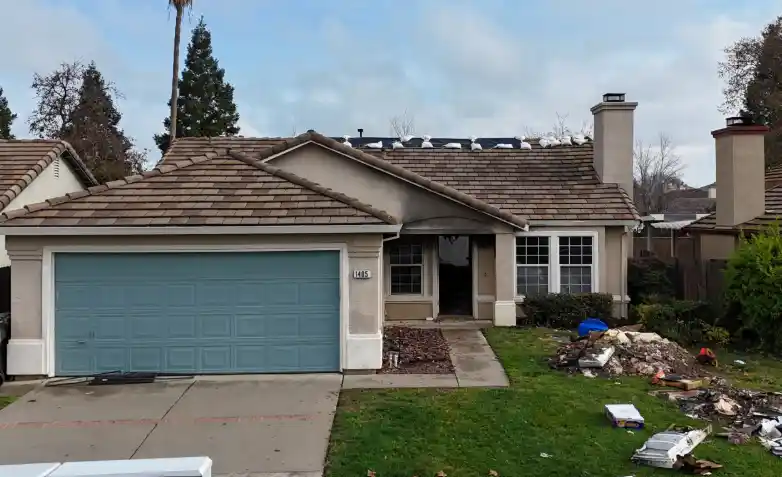
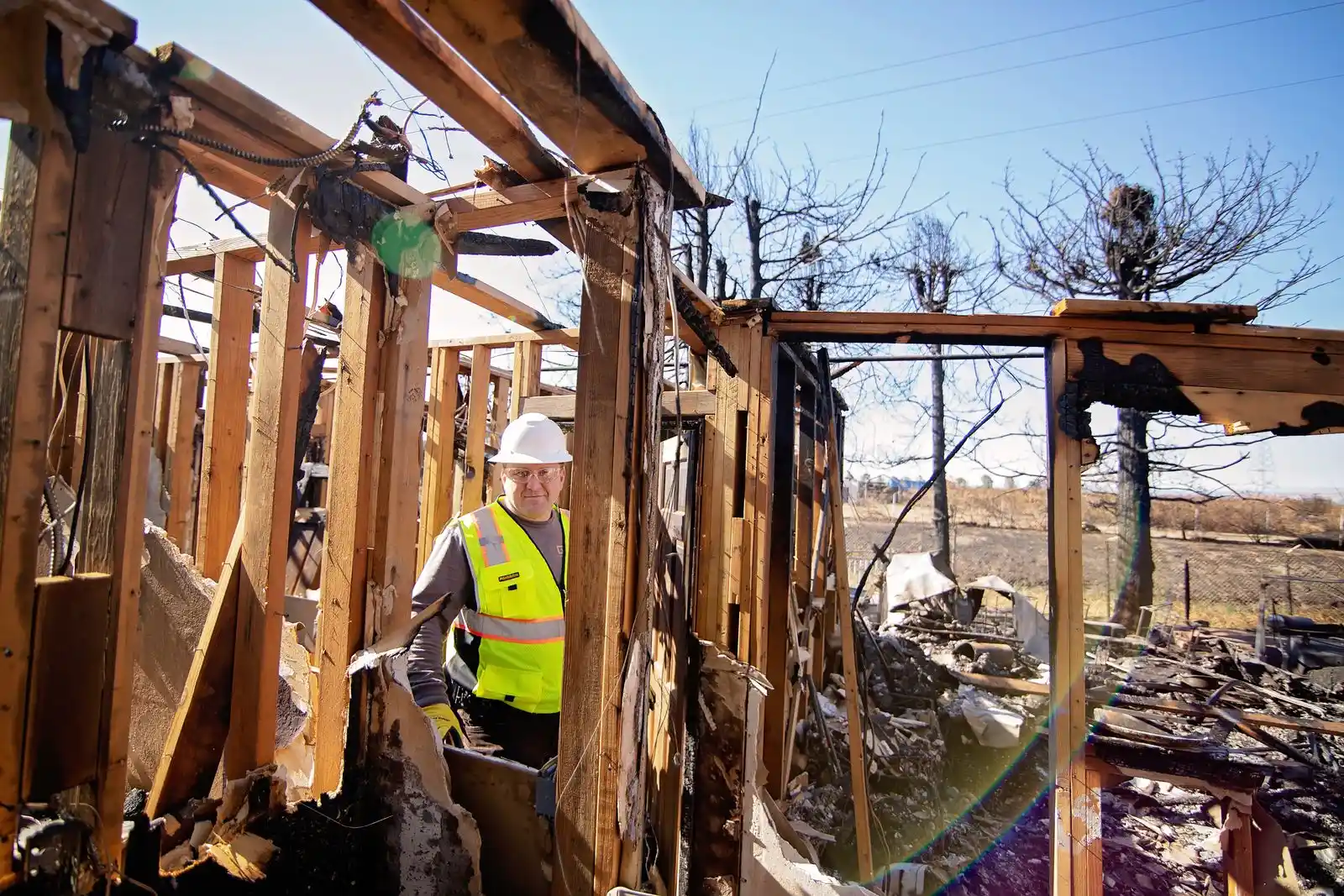
Attic insulation touched by flame, heavy soot, persistent smoke odor, or fire-suppression water often needs to come out. But replacement isn’t automatic. The material type and the extent of the impact have to be assessed first, and new insulation shouldn’t go in until the attic is clean, dry, structurally sound, and ready to close under the applicable building and energy codes.
If a contractor has already told you it all has to be removed, that may well be right. It also may not be the whole picture. You deserve a material-specific answer and a written scope, not a blanket order. Here’s how to tell what’s true for your attic and what protects you along the way.
Why Your Attic Gets Hit Even When the Flames Never Reached It
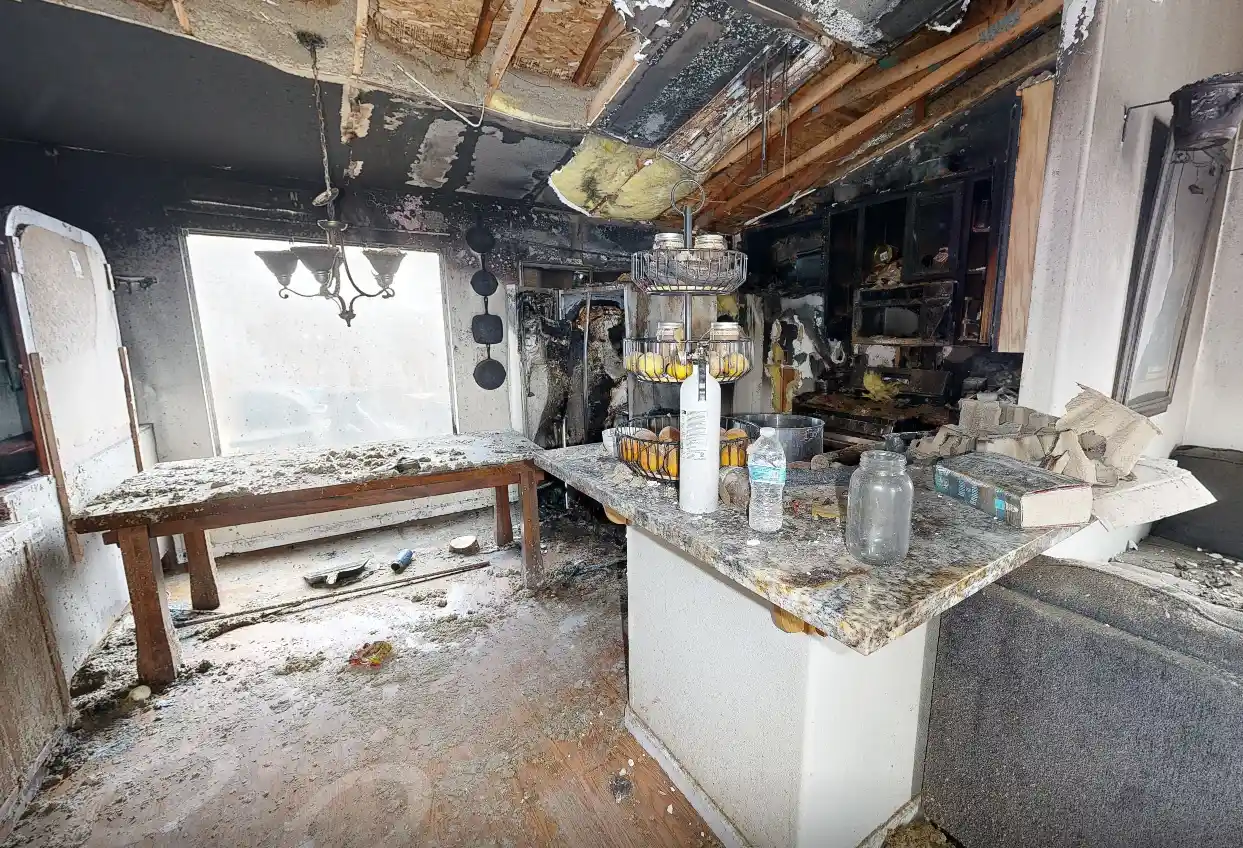
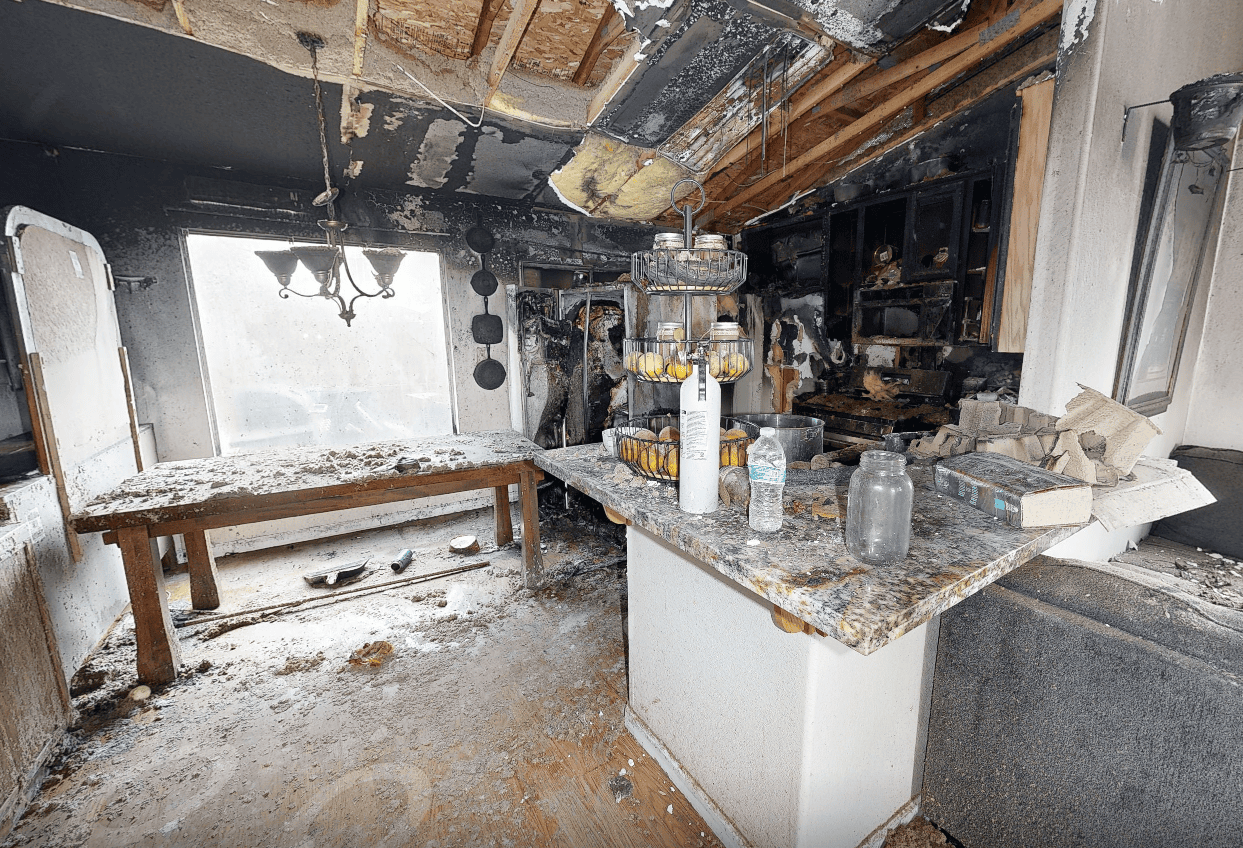
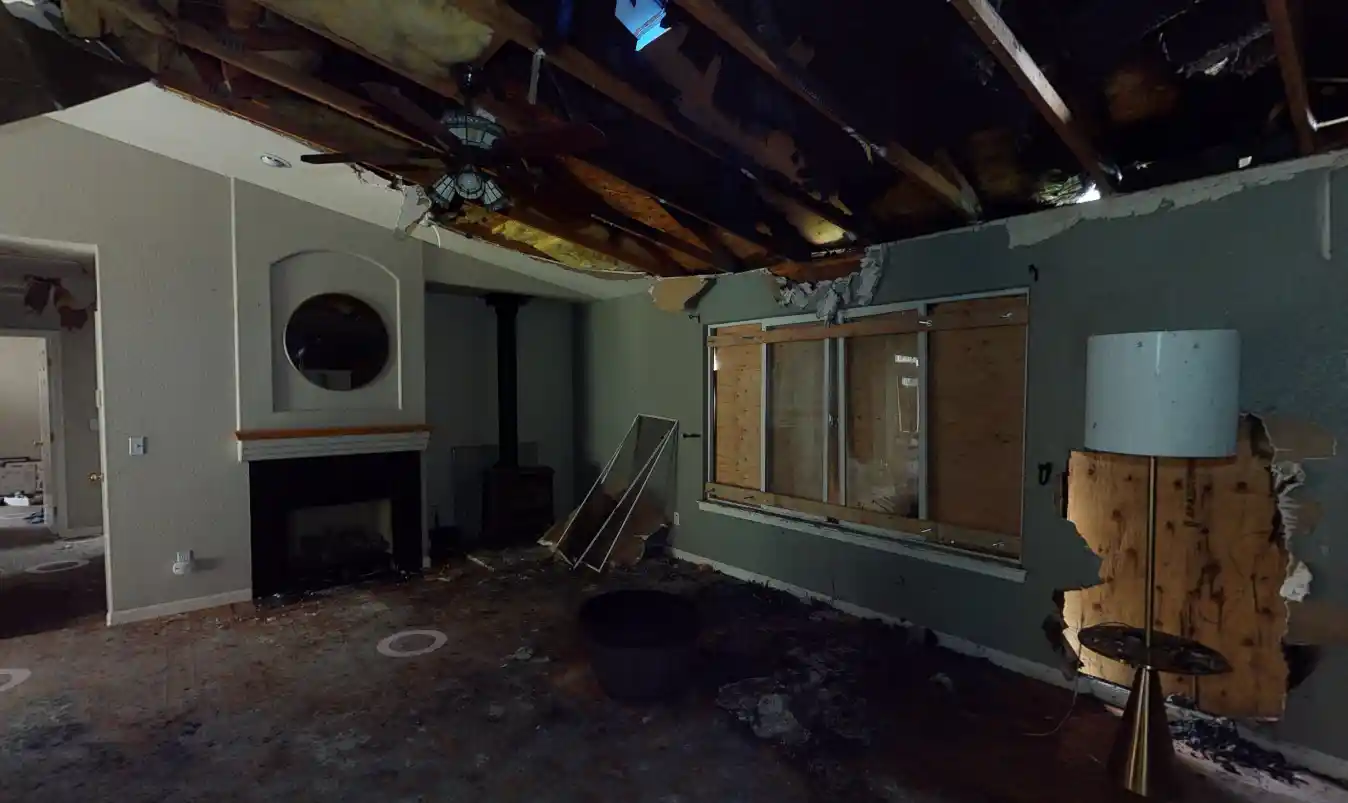
Smoke rises. It moves through pressure differences and the concealed pathways between walls, ceilings, and the attic. An attic often collects more smoke contamination than any room in the house, because that’s where the smoke ends up. Wind-driven ash from a wildfire can also enter through attic vents and soffit vents, along with other openings in the roofline.
Fire-suppression water adds a second problem. Water from hoses or sprinklers travels into ceiling and attic assemblies, and wet insulation can start growing mold quickly. So being told your attic is affected after a fire that started downstairs isn’t an overreaction. It’s what’s expected.
Does Attic Insulation After a House Fire Always Need to Be Replaced?
Here’s the correction to the most common claim online: smoke damage by itself does not generally reduce insulation’s R-value. The real problems are contamination, trapped odor, water, and blocked access to the framing and roof decking beneath. California Department of Insurance wildfire restoration guidance makes this same point. Fibrous insulation materials are hard to clean adequately once smoke is in them, so removal is often warranted, but that’s about cleanability, not lost thermal performance.
Use this as a starting framework for the job. It isn’t a substitute for an on-site inspection, but it shows how the decision gets made.
| Condition of the insulation | Likely direction |
|---|---|
| Burned, melted, charred, or heat-deformed | Remove and replace |
| Wet, compacted, contaminated, or not dried promptly | Usually remove and replace |
| Smoke-affected fiberglass, cellulose, rock or mineral wool | Often removed, cleaning is difficult |
| Smoke-affected foam or reflective insulation | Evaluate case by case, some may be restorable |
| Unknown pebble-like vermiculite | Stop work, get asbestos guidance |
| Clean, dry material outside the impact area | May be retained if inspection and scope support it |
How the Answer Changes by Insulation Type

Fiberglass insulation
Fiberglass is generally noncombustible, so it doesn’t readily ignite. But once smoke and soot settle into the fibers, cleaning it well is difficult, and wet or matted fiberglass batts and loose-fill usually come out. Batt insulation set between floor joists or rafters tends to hold residue where it’s hardest to reach.
Cellulose
This porous loose-fill material holds residue and water readily. It’s treated with fire retardants, but “fire resistant” doesn’t mean usable after a fire. Smoke-affected cellulose is often removed.
Mineral wool and rock wool
The base fiber is noncombustible, so it resists ignition well and isn’t flammable in the way wood framing is. The installed material can still hold soot, odor, water, and debris, which is what drives removal.
Spray foam insulation, closed cell and rigid foam
Don’t assume foam insulation always has to go. Some spray foam and reflective insulation may be restorable. But open cell spray foam, closed cell spray foam, and rigid foam all have to be checked for heat damage, delamination, damaged coatings, trapped odor, access limits, and whether the code-required ignition or thermal barriers are intact. Those barriers matter because cured spray foam will ignite and spread flame if the covering layer is compromised, so a damaged fire barrier isn’t a cosmetic problem. Closed cell foam also resists water better than open cell and acts as an air barrier, which can change the call when fire-suppression water is involved, but heat-deformed foam still comes out regardless of the cell structure.
Vermiculite
If you see pebble-like vermiculite, stop. The EPA says to assume it may contain asbestos and not to disturb it. Don’t rake, sweep, vacuum, or sample it yourself. Removal, if needed, should use a trained, accredited asbestos-abatement contractor that’s independent of whoever did the assessment. This doesn’t mean all older insulation contains asbestos, only that unknown vermiculite warrants tests first.
What Must Happen Before New Insulation and Air Sealing Go In
This is the part most pages skip. New insulation should never bury unsealed penetrations, trapped odor, damaged wiring, or wet framing. Blowing fresh material or spraying new foam over contaminated insulation isn’t a remedy. The order of work on the project is what protects you.
- Safety clearance and structural assessment
- Claim documentation, before anything is disposed of
- Material and hazardous-material assessment
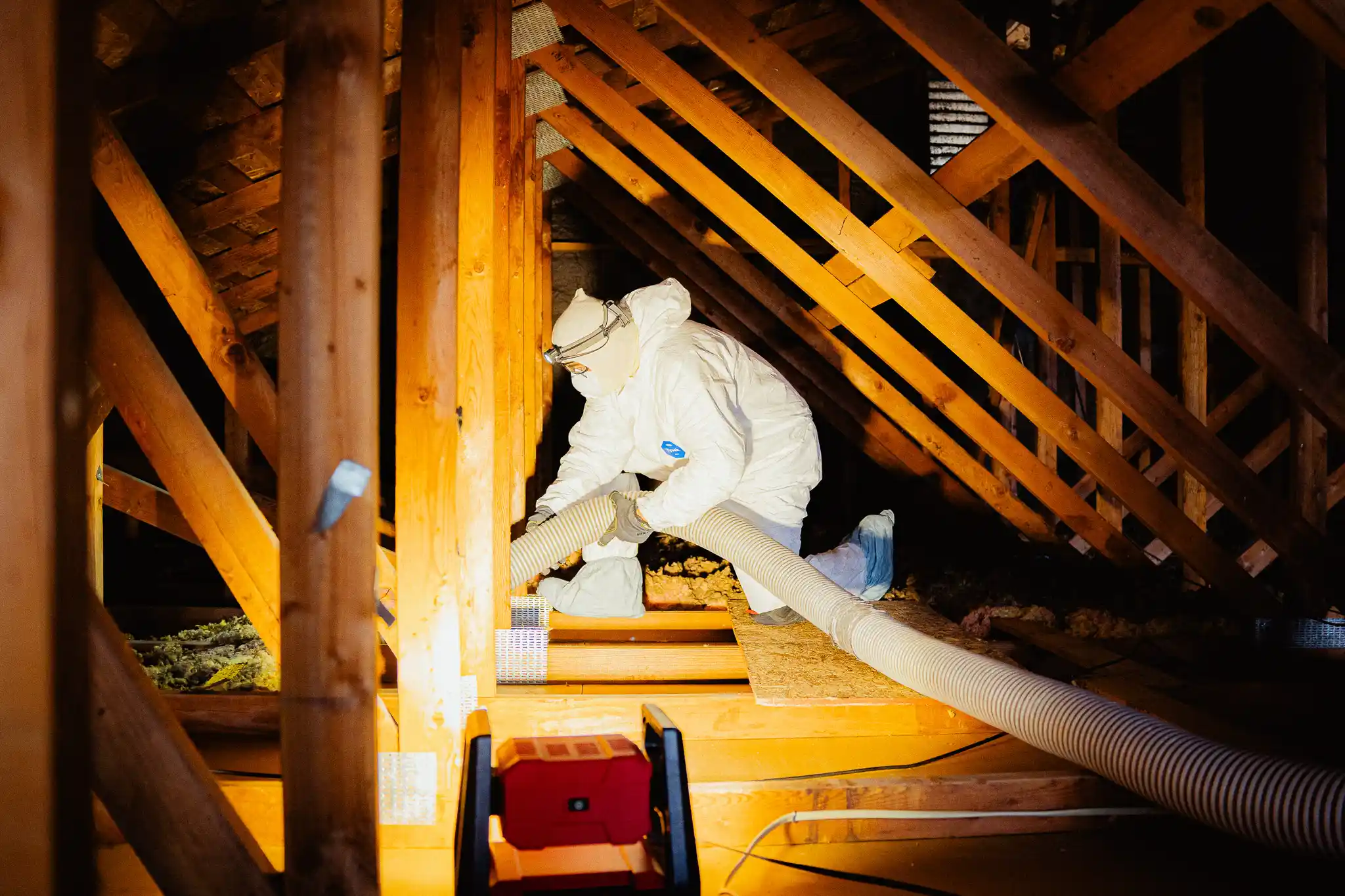
- Controlled removal where required, using containment, negative-pressure systems, and proper PPE
- HEPA vacuuming and damp-wiping of framing, roof decking, duct exteriors, and equipment surfaces
- Drying and moisture verification
- Roof, framing, electrical, and HVAC repairs, prioritized by urgency
- Air sealing attic-floor penetrations and correcting ventilation, including blocked soffit vents
- Local code and permit review
- New insulation installed over dry, cleaned surfaces
- Inspection and completion documentation
The Department of Energy is clear that attic-floor penetrations should be air-sealed before insulation goes in, not after. New material is meant to close a clean, dry, sealed attic space, not hide an unresolved one. Good restoration work usually takes several days for this reason.
The 24 to 48 Hour Moisture Window After Fire-Suppression Water

The EPA advises drying water-damaged areas and materials within 24 to 48 hours to help prevent mold. Porous insulation that stays wet longer than 48 hours is generally best removed and replaced. “Dry on the surface” isn’t proof, though. A restorer still checks for sub-surface moisture, settling or compaction, whether contaminants traveled with the water, and whether the wood roof decking and framing reached acceptable drying conditions. Temperature and airflow in the attic affect how fast those spaces dry, so drying logs matter more than a quick touch test. For more on this, see our article on fire-suppression water and the mold window.
Restoration vs. Reconstruction: Which One Is Your Attic?
These are two different projects with different rules. Restoration happens in a standing, repairable home. Reconstruction follows major structural or total loss. Mixing them up leads to the wrong scope and the wrong code path.
| Standing, repairable home | Major or total loss |
|---|---|
| Insulation work is part of fire restoration and repair | Insulation is installed during reconstruction |
| Existing assemblies may remain after cleaning and inspection | New roof and ceiling assemblies follow approved plans |
| Alteration provisions may apply | New-construction or rebuild compliance path may apply |
| Scope centers on affected materials | Scope is integrated with the full structural rebuild |
Documenting Smoke Damage to Attic Insulation for Your Insurance Claim

Document before anything is removed. Photograph the insulation in place, then ask your adjuster to include the attic, insulation, ductwork, and concealed spaces in the documented scope. Keep a record of material type and depth, quantities removed, moisture readings and drying logs, cleaning methods used, the new insulation type and installed R-value, and inspection and completion records.
The California Department of Insurance advises keeping damaged items until the adjuster authorizes disposal, so don’t throw out insulation before the insurance company inspects unless safety or an active emergency requires it. Ask for any claim decisions and exclusions in writing. Coverage depends on your policy and the verified damage, and no one can promise it up front. Our fire-claim documentation guide covers this in more depth.
Pasadena and California: Code and Energy Requirements for New Attic Insulation
New insulation has to meet current code, not simply match what came out. Pasadena adopted the 2025 California building codes, effective January 1, 2026, subject to local amendments. Pasadena generally falls in California Energy Code Climate Zone 9, but confirm the project address with the California Energy Commission’s climate-zone tool.
Repair and reconstruction can follow different energy-code paths. For certain alterations to existing single-family homes in Climate Zones 8 through 16, the 2025 code references R-49 or a weighted U-factor of 0.020 for vented attics, with scope-based exceptions. Certain new vented-attic prescriptive assemblies reference R-38. So don’t assume “you need R-49” or “you need R-38.” The required assembly depends on your scope, compliance path, and plan review with Pasadena Building and Safety.
Replacement also has to respect a minimum 1-inch ventilation airspace where the Residential Code requires it, and must not cover soffit vents, eave vents, flue clearances, non-IC-rated recessed lights, or required electrical clearances. Proper air sealing around the perimeter and at penetrations also helps prevent ice dams in colder assemblies. If spray foam insulation is used at the roof line to create a conditioned, unvented attic, that’s a different assembly with its own code rules, and it changes how the structure breathes. Done correctly, the added insulation improves energy efficiency, protects indoor air quality, and lowers heating and cooling costs. One more caution: in pre-1978 homes, disturbing more than 6 square feet of painted interior surface can trigger EPA lead-safe work rules.
How to Choose a Contractor Who Protects You
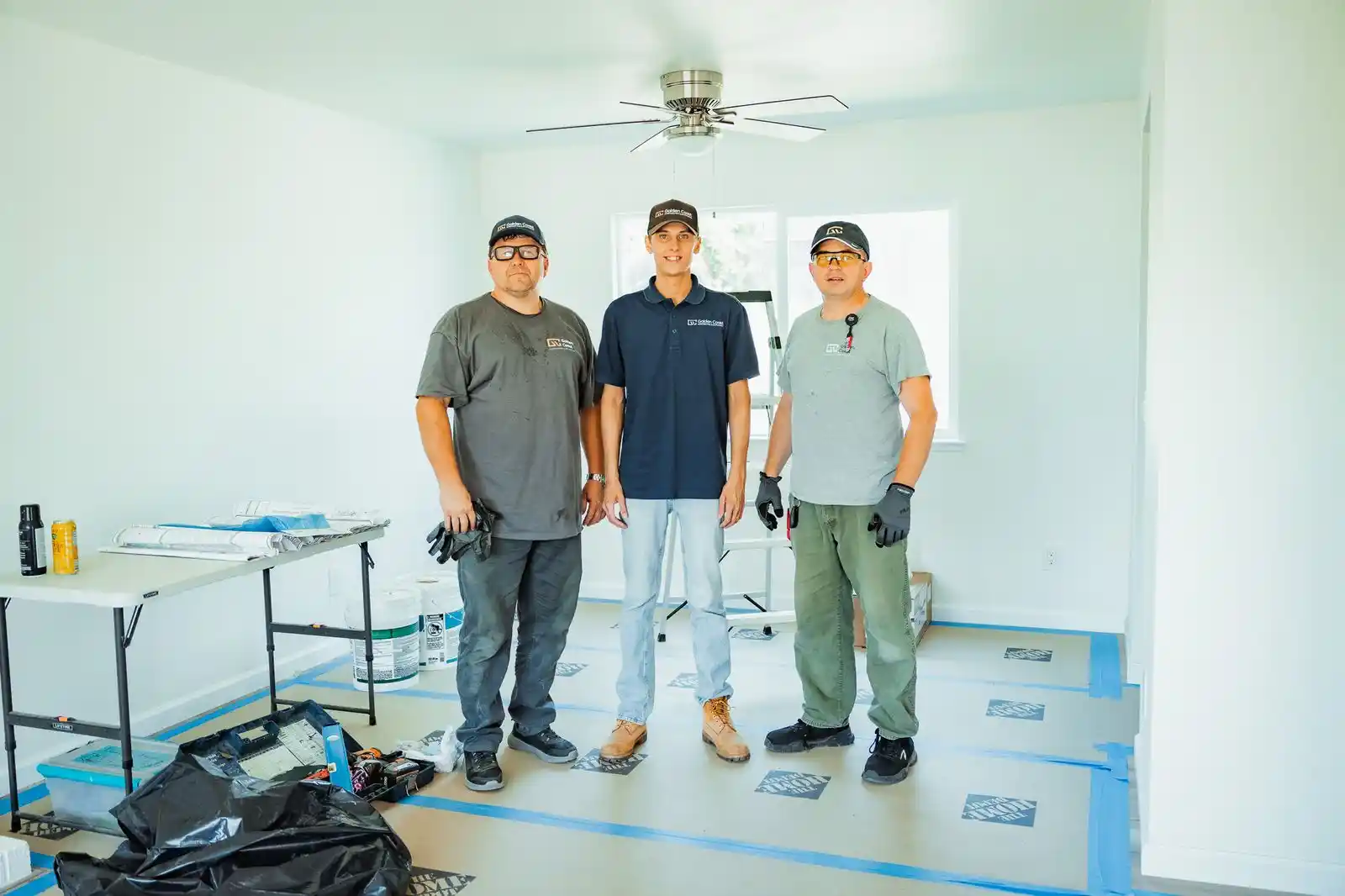
A handyman or an unvetted crew can remove insulation. A DIY attempt can too, though it risks spreading soot and missing hidden moisture in the walls, attic, or garage. Fewer people can handle the full sequence that keeps odor, moisture, and contamination from staying behind. At that point, professional help earns its keep. Ask these questions:
- Is the California license active and verifiable through the CSLB lookup?
- Does the written scope name what’s being removed, cleaned, retained, and replaced?
- Who documents moisture readings and completion conditions?
- How are ducts, wiring, framing, and hazardous materials handled?
- Does the payment schedule follow completed milestones?
- Are code compliance and permits included?
- Is the firm experienced in fire restoration, not insulation installation alone?
California protections worth knowing (per the CSLB): a home-improvement down payment generally can’t exceed 10% of the contract price or $1,000, whichever is less. Progress payments shouldn’t exceed the value of completed work. Many qualifying contracts carry a three-business-day right to cancel, or five business days if you’re 65 or older, when applicable. A firm that quotes a firm price sight-unseen or pushes you to sign right now is a red flag.
Talk to a Fire-Focused Restoration Team Before You Insulate
The honest answer for any attic depends on an on-site inspection. Anyone quoting a firm cost without seeing it is a warning sign. Golden Coast Construction and Restoration handles the full sequence with one contractor: assessment, controlled removal, structural drying after fire-suppression water, hazardous-material testing where warranted, cleaning, adjuster coordination, code-compliant repair or rebuild, and milestone inspections. We’re IICRC-certified, licensed as a California General Contractor (CSLB #838443, verify current status), with a permanent Pasadena-area presence and 24/7 emergency board-up. When you’re ready, contact us for an on-site assessment of your attic insulation after your house fire.
Frequently Asked Questions
Is house insulation flame retardant?
It varies. Fiberglass and mineral wool are generally noncombustible and don’t readily ignite. Cellulose is treated with fire retardants but can be flammable without them, and proper installation matters for fire safety. None of that means the material is usable after a fire.
Is it safe to be in a house with exposed insulation after a fire?
Be cautious. Contaminated or damaged insulation can release persistent odors and particles, and leaving it in place lets residue linger and can aggravate respiratory issues. Get a professional assessment and use proper PPE for any removal.
Can rockwool be used as a firestop?
Mineral or rock wool is noncombustible and appears in some fire-rated assemblies, where it functions as one of several code barriers. Firestopping is a code-specific detail, so follow approved assemblies and local code rather than a blanket claim.
What are the downsides of blown-in insulation?
Loose-fill is porous, can settle, and readily holds water and odor, which reduces its effectiveness over time. It’s hard to clean once smoke is in it, which is why it’s typically removed after a fire. The benefits of a fresh, properly sealed install usually outweigh keeping compromised material.
Will homeowners insurance cover attic insulation replacement after a fire?
It depends on your policy and the verified damage. Document everything, including stuff stored in the attic that may need its own claim line, and ask your adjuster to maintain the attic in the scope. No one can promise coverage up front.