

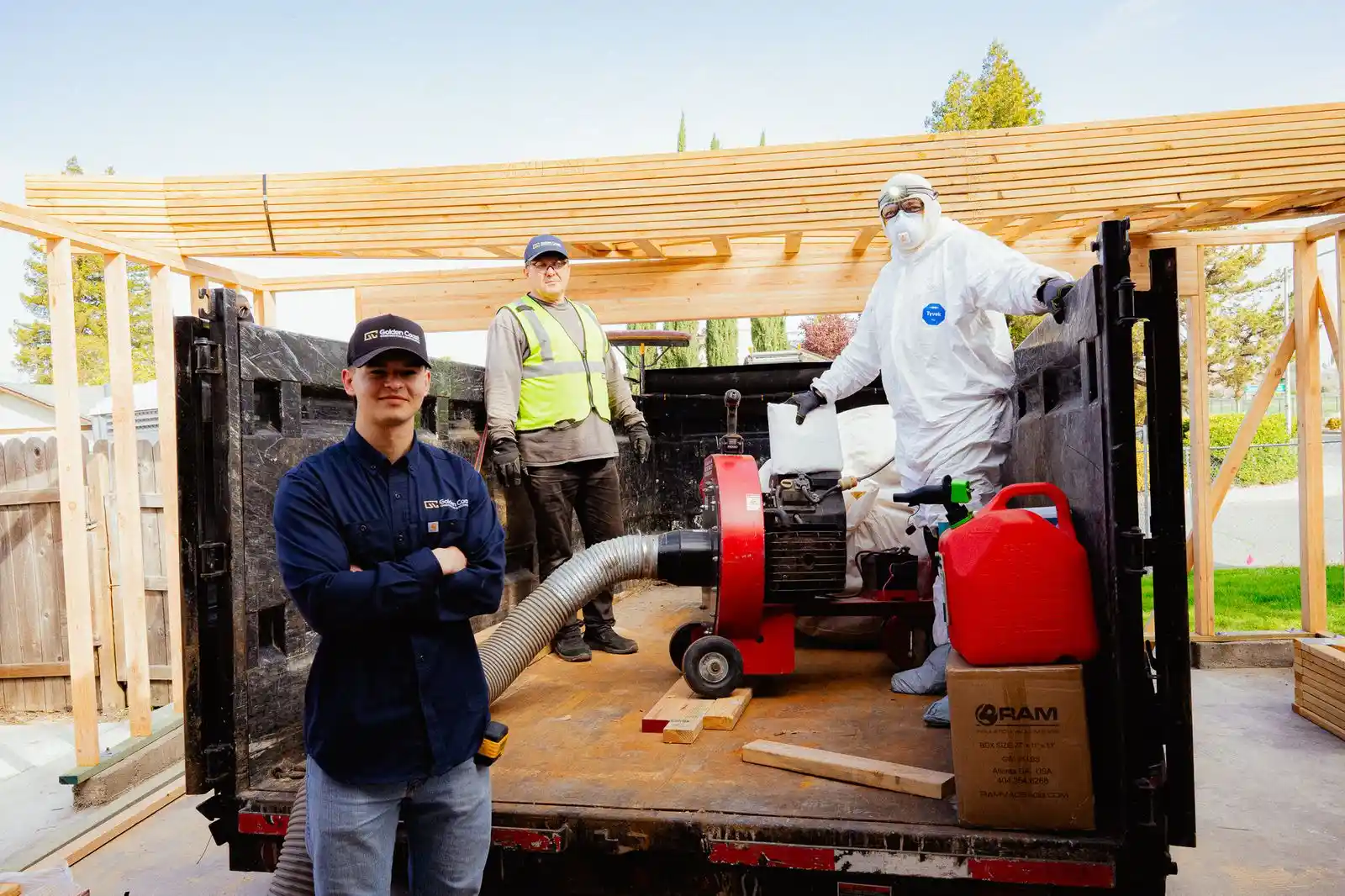
Key Takeaway
A fire damage inspection is a documented, on-site assessment that maps structural damage, smoke, soot, moisture, HVAC impacts, and contents across your home to determine what needs cleaning, repair, or reconstruction. There is not just one inspection after a house fire – multiple qualified parties each answer different questions. No single contractor can issue every structural, electrical, environmental, and insurance determination. Knowing who checks what helps you protect your claim and avoid costly mistakes.
A fire damage inspection is a documented, on-site assessment performed after the property has been cleared for entry. It maps the structural damage, smoke, soot, odor, HVAC, contents, and firefighting-water impacts across the home, then determines what needs cleaning, repair, specialist evaluation, replacement, or reconstruction. Here’s the part most pages skip: there isn’t just one inspection. Different people check different things, and no single person answers every question. Think of this as a comprehensive guide to who looks at what, and why it matters.
If you’re reading this soon after a fire, you’re likely trying to figure out who to trust and what should happen first. This article walks you through who inspects what, what a good written report should contain, and what the fire damage findings mean for your next steps.
First, Can Anyone Safely Go Inside?

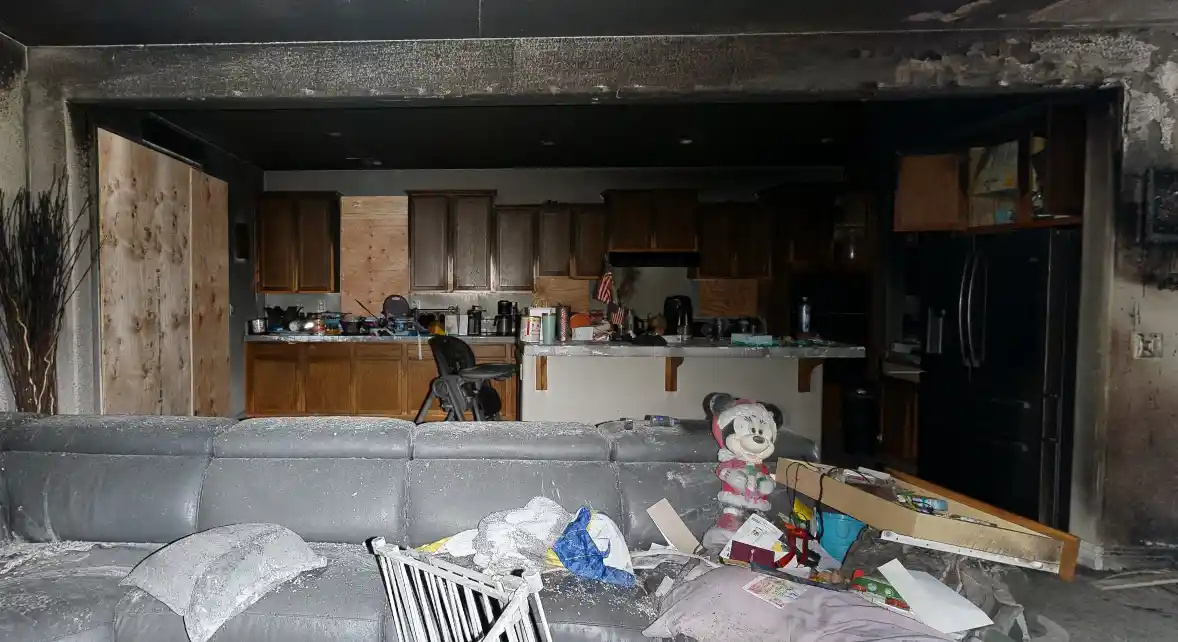
Flames out does not mean safe. Before any fire damage assessment happens, someone has to confirm the building can be entered. High heat can weaken framing and connections you can’t see from the curb, and that is one of the first fire risks a trained eye looks for. This is a safety question before it is a repair question.
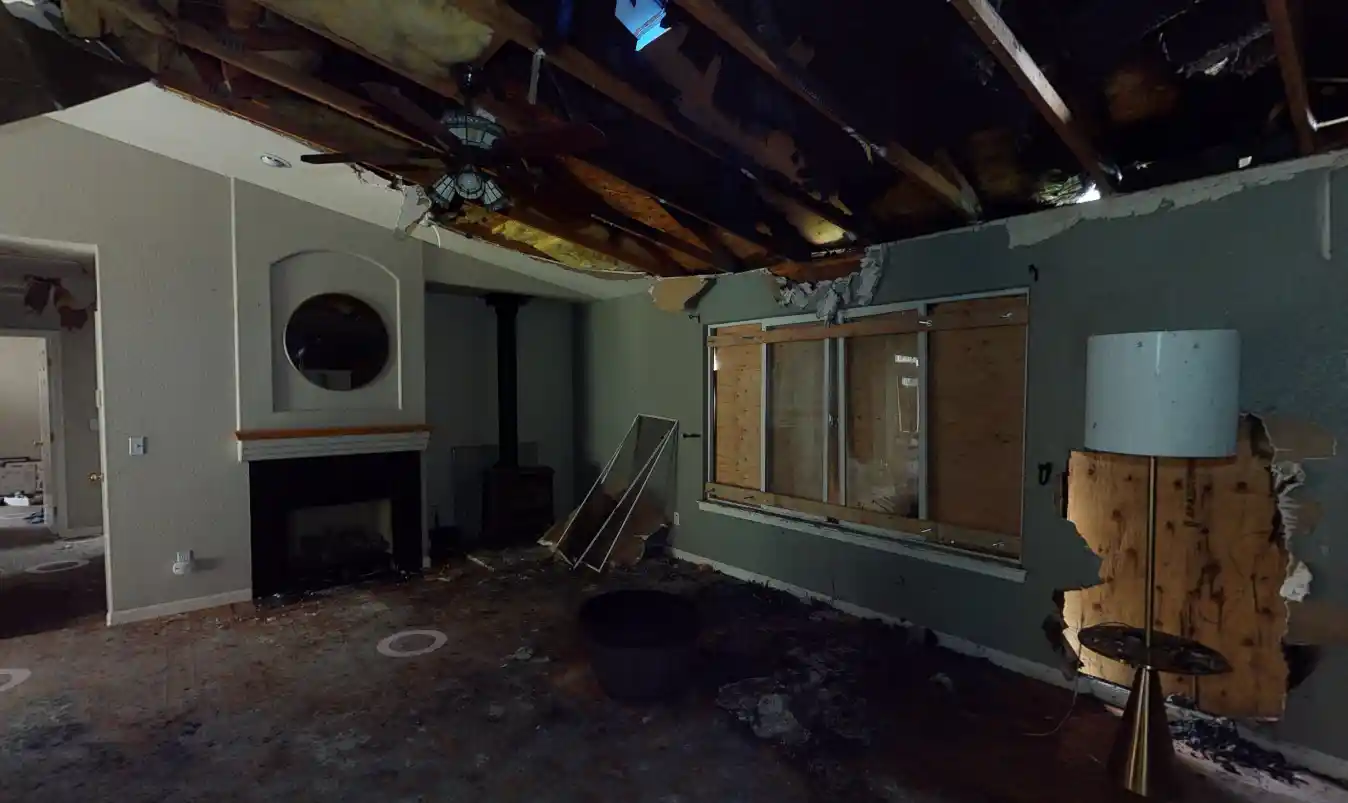
Common post-fire hazards include damaged gas lines, live electrical hazards, missing structural supports, foundation cracks, sagging floors, unstable ceilings, and loose power lines near the property. Trained professionals wear proper protective equipment when they go in, because soot and debris carry their own risks and other hazards may be hidden.
One more thing: the scene may still be under a cause-and-origin investigation. If it is, don’t disturb anything or remove items that could be evidence. Wait for clearance from the fire department or fire marshal.
A Fire Damage Inspection Is Not One Inspection: Who Checks What
Several separate assessments may be needed after a fire, each with its own purpose and its own qualified party. No single contractor can personally issue every structural, electrical, environmental, municipal, and insurance determination. Knowing whose opinion answers which question protects you from vague answers and overreach. That is the real importance of understanding the process before the work begins.
| Inspection or assessment | Main purpose | Typical party |
|---|---|---|
| Cause-and-origin investigation | Determine where and how the fire started; preserve evidence (NFPA 921, 2024 edition, guides this; it is not a damage or restoration assessment) | Fire department, fire marshal, or qualified fire investigator |
| Municipal building safety assessment | Decide whether entry or occupancy is safe | Local building official or building inspector |
| Insurance inspection / scope of loss | Document covered fire damage and measurements for the claim | Insurance adjuster |
| Restoration damage assessment | Map residue, odor, moisture, HVAC, and contents; build a work plan | Qualified fire restoration contractor |
| Structural assessment | Determine whether framing, roof, floors, or foundations remain adequate | Licensed engineer or architect |
| Trade and environmental evaluations | Evaluate electrical, gas, plumbing, HVAC, asbestos, or lead hazards | Appropriate licensed or accredited specialist |
| Permit and progress inspections | Confirm reconstruction meets approved plans and code | Local building department |
What Does a Professional Soot Damage and Fire Assessment Check?

The restoration damage assessment is the one that maps the fire damage and builds the repair plan. The first edition of ANSI/IICRC S700, published in 2025, sets out what this work covers: the presence, intensity, and boundaries of fire residue and odor across the building, building systems including HVAC systems, contents, and adjoining buildings affected by the fire.
A thorough assessment works through the home by area, not from a random checklist, and restoration experts use that order to identify areas that need attention:
- Exterior and building envelope: roof, openings, and whether the structure needs board-up or tarping.
- Structure and concealed assemblies: burned wood framing, charred concrete and steel, connections, load bearing walls, and floors. High heat can compromise structural integrity even where a surface looks intact, so how deeply the wood has charred matters as much as what you can see. A damaged structure is not always obvious from the outside.
- Systems: electrical, gas, plumbing, heating, and HVAC units, none of which should be trusted until the right trade checks them.
- Smoke, soot, and odor boundaries: where smoke residue settled and how far it traveled. Soot damage can corrode metals and leave lingering odors, and different residue types call for different cleaning methods.
- Attic insulation and cavities: attic insulation and wall cavities hold smoke and soot long after visible signs fade on the walls.
- Contents: items that may be cleanable and items that need specialist evaluation.
- Inaccessible areas: cavities or assemblies that need destructive investigation to confirm the full extent of the damage.
Assessing damage this way identifies the scope of work and the extent of what the fire actually reached across the affected areas. It does not assume everything with a stain must come out.
Can Smoke Damage Reach Rooms Where There Were No Flames?
Yes, often. Smoke and soot migrate well beyond the room where the fire started. They move through gaps, settle in closed cabinets and closets, and ride HVAC systems: returns pull smoke in, supply ducts push residue out across the house. Heat effects can reach nearby spaces too.
This is why an inspection limited to the room of origin misses property damage. It doesn’t mean smoke reaches every room every time. It means a careful fire damage assessment checks the rooms that look fine, not just the ones with obvious burn marks.
Water Damage and Mold Growth Risk From Firefighting Efforts
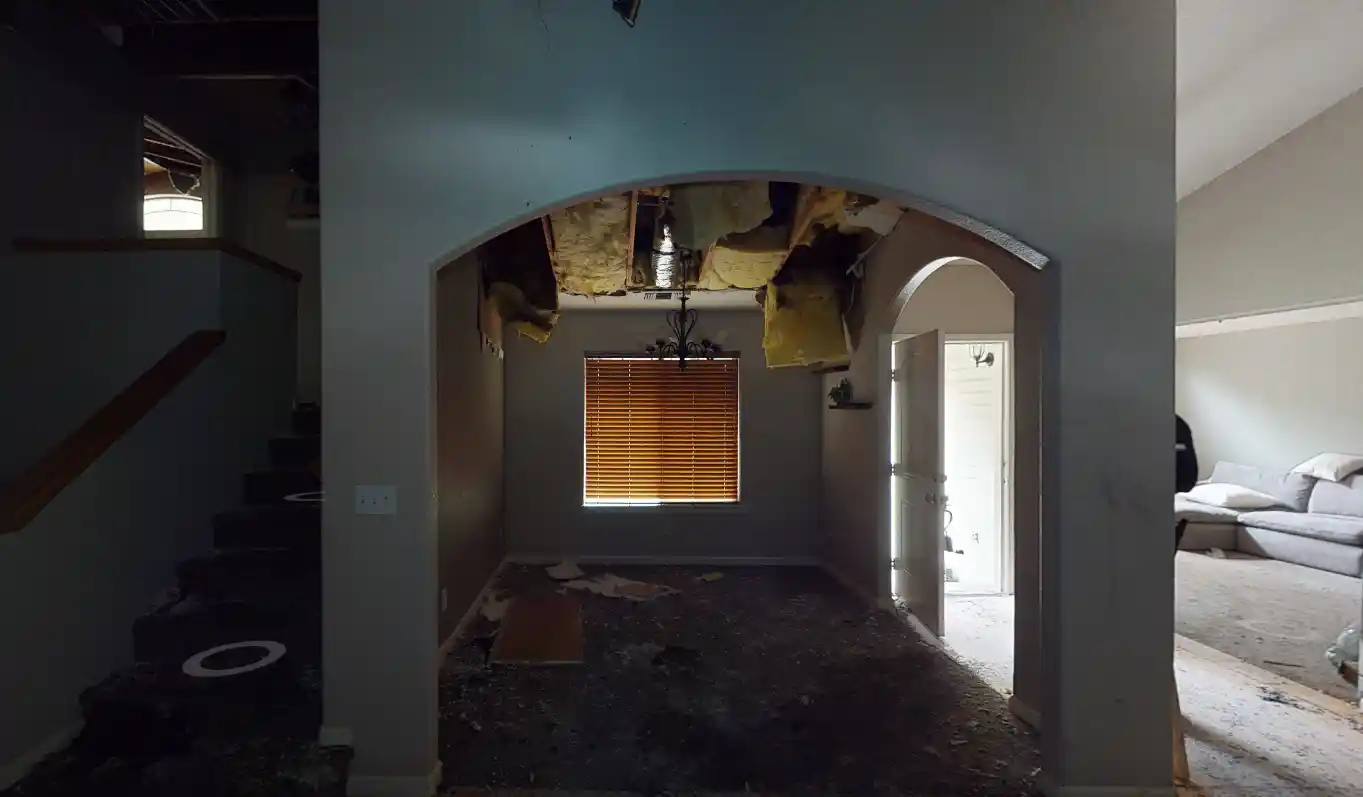
Putting out a fire takes a lot of water, and that water travels. It runs into wall cavities and down to lower levels that never saw flame. EPA guidance says wet materials and areas should be dried within 24 to 48 hours to reduce the chance of mold growth, which makes finding hidden water damage a critical part of the fire inspection.
Inspectors use moisture meters, thermal imaging cameras, and other tools to locate water you can’t see. A good assessment keeps a detailed record of wet materials and moisture pathways, sagging ceilings or floors, swelling, warping, staining or delamination, wet insulation and subfloors, and any materials that can’t be adequately dried. This drying and mold prevention is part of fire recovery, handled because the fire happened, not as a standalone water damage service.
Structural Issues: When Is a Structural Engineer or Licensed Trade Needed?
A restoration contractor is not the authority on structural adequacy. When framing, roof, floors, load bearing walls, foundations, or connections may be compromised, a licensed structural engineer or architect evaluates whether the structure is still structurally sound and able to carry load. This is the point in the process where guessing is dangerous. Burned wood can look sound on the surface while the char has eaten into its strength, so structural issues belong to someone trained to answer them. Electrical, gas, and HVAC systems need the appropriate licensed trade before anyone trusts the exposed equipment again.
Matching the right expert to the right question is what protects you. Good restoration professionals know the boundary of their own role and call in a structural engineer rather than overstating what they can certify. For a deeper look, see our article on when a structural engineer is needed after a fire.
What Should the Fire Damage Inspection Report Contain?
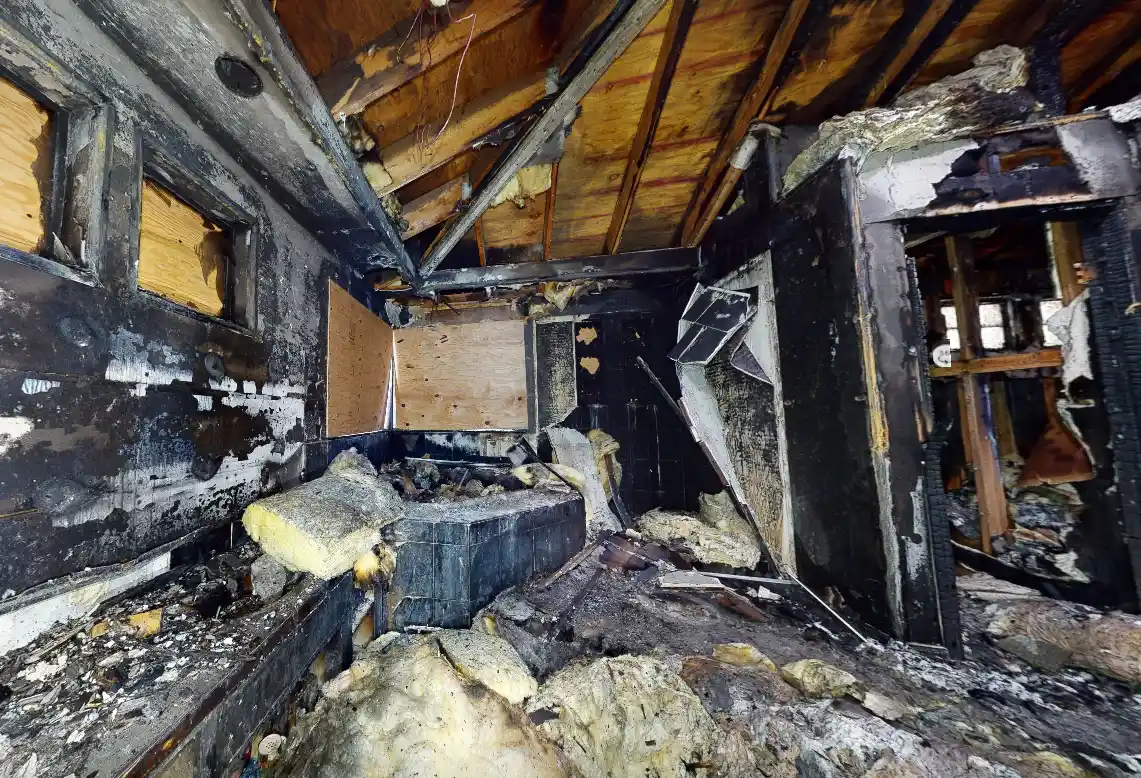
A trustworthy assessment produces more than “we took a look.” Detailed reports are what support your claim and guide the repairs, so a comprehensive report should include:
- Date, property, fire date, and who performed the assessment.
- Who authorized entry or released the scene.
- Areas inspected and areas not accessed.
- Photographs tied to specific rooms and findings.
- Moisture readings or maps where suppression water was present.
- Smoke, soot, and odor boundaries, plus HVAC and contents observations.
- Detailed notes on immediate stabilization needs and the extent of any structural damage.
- Materials classified for cleaning, repair, further evaluation, replacement, or reconstruction.
- Specialist referrals.
- A separate restoration work plan or reconstruction scope, usable by your adjuster and the permitting authority.
IICRC S700 specifically includes assessment, documentation, and a Restoration Work Plan within its scope, which keeps restoration planning grounded in what the inspection actually found rather than guesswork.
How the Inspection Connects to Your Insurance Claims
Your adjuster documents the scope of loss: the degree of fire damage, the quality of materials and workmanship, and the measurements needed to calculate quantities. The restoration assessment is separate. It supports your insurance claims, but coverage is decided by your policy and your insurer, not by the contractor.
A few steps protect you here: make reasonable temporary repairs and save the receipts, avoid extensive permanent repairs until the adjuster has assessed the damage, keep a communication log, photograph everything and don’t discard damaged items until directed, get detailed written bids from licensed contractors, and request copies of reports, estimates, findings, and calculations in writing. For the full picture, see our article on the adjuster’s scope of loss.
Restoration vs. Rebuilding: What the Inspection May Recommend

These are not the same thing, and mixing them up leads to the wrong scope. Restoration means stabilizing, drying, cleaning, deodorizing, salvaging, and repairing affected materials. Reconstruction means removing and rebuilding structurally damaged or destroyed portions of the property under permits and current building code, which may touch the concrete foundation and framing of damaged areas.
| Finding | Likely next step |
|---|---|
| Surface residue on restorable material | Professional cleaning and restoration |
| Wet but salvageable material | Documented drying and monitoring |
| Damaged finish or component | Repair or replacement |
| Structural uncertainty | Structural engineer or architect evaluation |
| Major structural damage or loss | Permitted reconstruction |
| Suspected asbestos or lead | Testing before any disturbance |
Pasadena and California Homeowner Protections
In Pasadena, building safety assessments use colored placards. A red placard means unsafe; you can only enter with the Building Official’s permission. A yellow placard means restricted use, limited to the conditions written on it. A green placard means a visual assessment found no apparent structural hazard at that time, but it may miss latent hazards, and the city encourages owners to get further assessment from a certified or licensed professional. A green tag is not a complete fire, smoke, electrical, environmental, or restoration clearance.
Pasadena also warns that fire debris and ash may contain lead, asbestos, arsenic, PAHs, or dioxins. EPA says visual inspection alone can’t confirm asbestos, so suspect materials should be tested by an accredited professional before they’re disturbed, and homes built before 1978 trigger EPA lead-safe renovation rules. Don’t collect samples yourself.
Before hiring, verify any contractor’s license at CSLB’s live lookup; work totaling $1,000 or more generally requires a license. California limits home-improvement down payments to 10% or $1,000, whichever is less. Cancellation windows differ between ordinary contracts and declared-disaster situations, so confirm which applies to your loss. One caution specific to this region: IICRC S700 excludes wildfires, so a standing home in a regional wildfire plume may need a different assessment than a contained kitchen or bedroom fire. See our dedicated wildfire smoke inspection article for that.
Questions to Ask Before You Accept an Inspection Scope
- Who cleared or released the property for entry?
- What areas will, and will not, be inspected?
- Will I receive photographs and a written report that captures all the damage?
- How will smoke and soot boundaries be documented?
- Will you check firefighting-water migration and water damage?
- When would you recommend a structural engineer or a licensed trade?
- How do you decide what is cleaned, repaired, replaced, or rebuilt?
- Are hazardous-material tests needed before opening walls?
- Is the inspection separate from the repair contract?
Frequently Asked Questions
What happens at a fire inspection after a fire?
Once the property is cleared for entry, restoration professionals do a documented room-by-room fire damage assessment of structure, smoke and soot, HVAC, moisture, and contents, then produce a written report with photos and findings.
What should I do immediately after a house fire?
Confirm everyone is safe, don’t re-enter until cleared, contact your insurer, arrange temporary housing, and set up emergency board-up or roof tarping. Document everything as you go.
How long does a fire damage inspection take?
There’s no responsible universal figure. It depends on property size, access, the extent of the damage, and which specialists are needed. Anyone quoting a firm time or price sight-unseen is a red flag.
Should asbestos and lead be tested before demolition?
Often, yes. Visual inspection alone can’t confirm asbestos, and pre-1978 homes trigger lead-safe rules. Testing should be done by an accredited professional before materials are disturbed.
Does the adjuster’s inspection replace a restoration inspection?
No. They serve different purposes. The adjuster scopes the covered loss for your insurance claims; the restoration assessment maps the fire damage and builds the actual work plan, flagging any other issues that need a specialist.
Talk to a Licensed, Fire-Focused Team
A specialized, licensed fire restoration company protects you better than a handyman, an unvetted contractor, or going it alone because the findings connect directly to the next steps: emergency board-up and roof protection, fire-specific smoke and soot restoration, structural drying and mold prevention after suppression, contents evaluation, insurance documentation, and permitted repairs or full reconstruction when the structural damage calls for it.
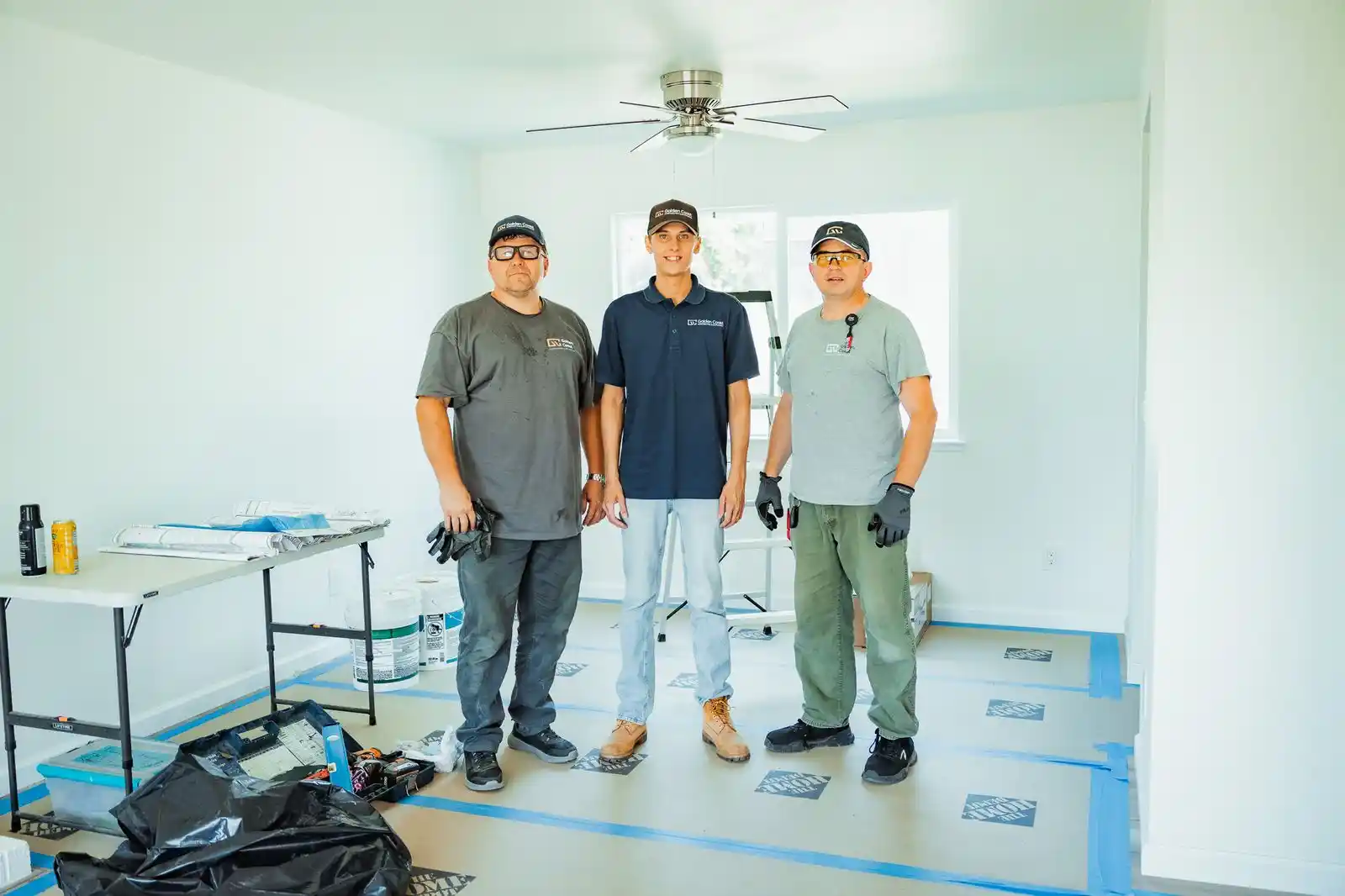
Golden Coast Construction & Restoration is IICRC-certified, with a permanent Pasadena office and 24/7 emergency board-up. We work directly with your adjuster, run quality inspections at milestones, provide a signed certificate of completion, and arrange hazardous-material testing where warranted. Our California contractor license is CSLB #838443, which you can verify through CSLB’s lookup. When you’re ready, contact us for an on-site assessment. No pressure, no deadline to sign, just a clear read on where your home stands.