Key Takeaway
Fire damage restoration cost in Renton typically ranges from a few thousand dollars for smoke cleanup to hundreds of thousands for full reconstruction, but no honest number exists until a contractor inspects the property. The scope depends on how far soot traveled, how much firefighting water soaked into the structure, which materials can be cleaned versus replaced, and what current King County building codes require. Washington law gives you the right to choose your own contractor and requires insurers to acknowledge your claim within 10 working days.
There is no honest flat cost for fire damage restoration in a Renton home without someone walking the property first. The number comes from a documented scope, and the scope comes from an inspection: how far smoke and soot traveled, how much water the fire department used and what that water damage soaked into, which materials can be cleaned versus replaced, how much of your contents need handling, whether asbestos or lead testing is warranted, what Renton or King County will require by permit, and whether you are looking at restoration or reconstruction.
You are probably reading this mid-claim, maybe with a preliminary estimate from your adjuster in hand and no way to judge whether it covers everything. Here is how a real estimate gets built, what belongs in it, which parts of the cleanup come first, and which Washington rules are on your side while you sort this out.
Fire damage restoration cost Renton homeowners ask about: why no one can quote it over the phone

A firm price offered before anyone has seen your house is a red flag. Not because the person is necessarily dishonest, but because the number cannot be tied to anything real yet. Nobody can price soot cleaning on walls they have not looked at.
The ANSI/IICRC S700 standard for fire and smoke damage restoration calls for assessing the presence, intensity, and boundaries of fire residue and odor throughout the structure, the building systems, the HVAC, and the contents. That is a physical inspection of the property. The burned room is where the assessment starts, not where it ends.
You have likely already found cost tables online with a Renton or Seattle label attached. Most pull national averages that blend light smoke cleanup, moderate repairs, and full rebuilds under a single heading for fire damage restoration services. One local result currently displays a fire damage table that is actually water damage repair pricing. Averaging jobs that different produces a number that describes nobody’s house, including yours.
Restoration or rebuild? The difference that drives the whole number
Before anything else gets sorted out, the loss has to be split into two categories, because they are different kinds of work with different costs, different timelines, and different treatment on your claim.
What counts as fire damage restoration
Restoration is cleanup and cleaning, mitigation, structural drying after firefighting water damage, deodorization, and salvage or limited repair of materials that survived. The goal is to restore what can be saved to its pre-loss condition. Smoke-filmed cabinets that clean up. Framing that dried out sound. A wall that needs new drywall and paint but no structural work.
What counts as reconstruction after fire damage
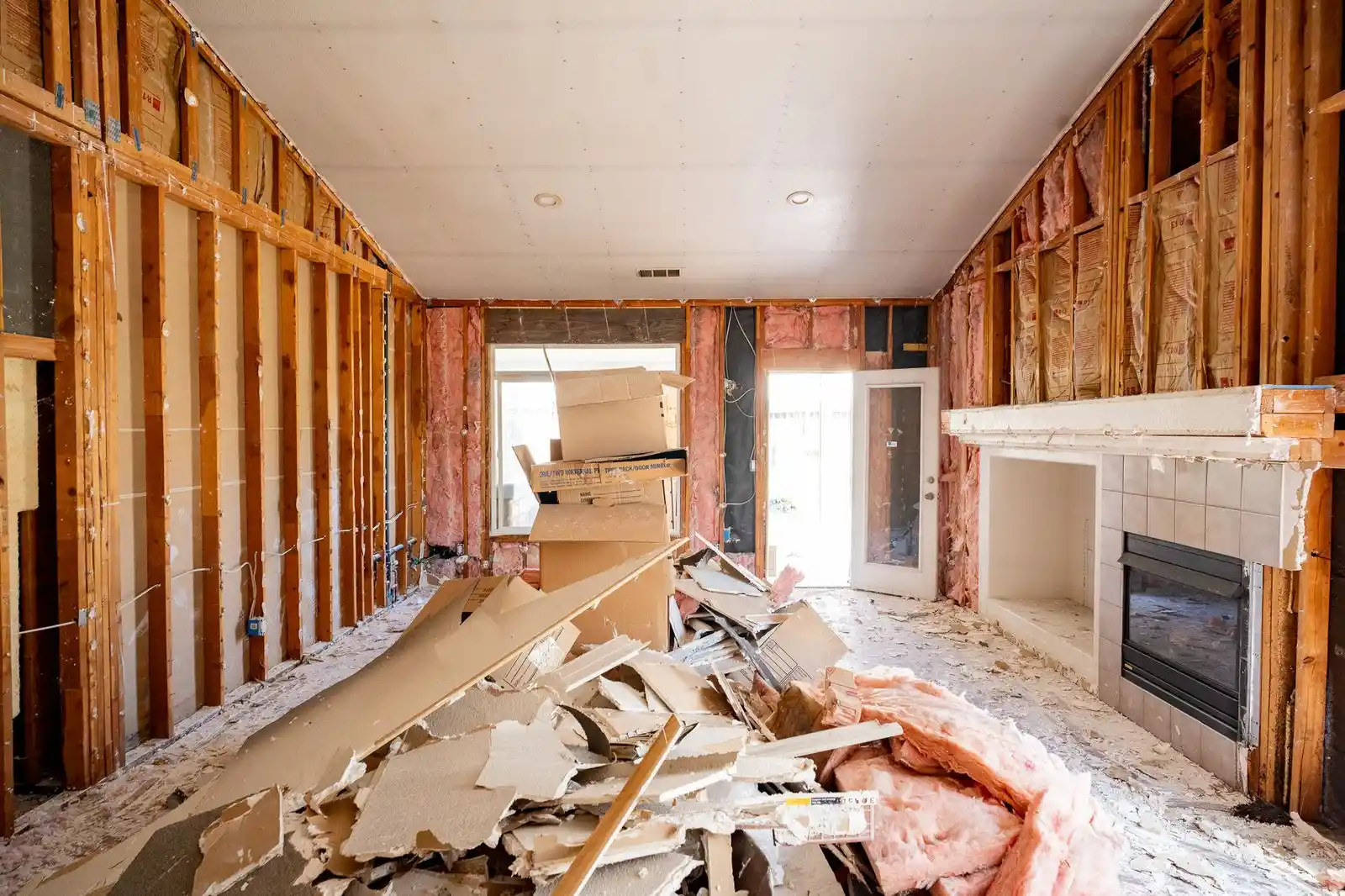
Reconstruction covers structural repairs: removing and replacing framing, roof structure, sheathing, or mechanical systems, up through full reconstruction of a total loss. That is a permitted construction project with drawings, inspections, and compliance with the code currently in effect, not the code your house was built under.
The S700 standard, first published in 2025, covers assessment, mitigation, cleaning, contents, and odor management. It expressly does not comprehensively address reconstruction, and its present scope excludes wildfire-affected structures, though a revision is underway. Most fire damage restoration projects contain both phases. When an estimate collapses them into one vague “fire damage” line, that is the single most common way the number goes wrong, for you and for your insurance company.
What determines your fire damage restoration cost: the real scope drivers

Two houses with identical burn footprints can carry very different scopes. Square footage is one input, not the answer. The variables below are what an estimator is actually measuring and writing down as they walk through. None of them can be guessed from the street.
| Scope driver | Why it changes the job |
|---|---|
| Extent of active burn and charring | Determines whether materials are cleanable or must be removed back to sound substrate. |
| How far smoke and soot traveled | Residue and odor follow air paths into wall cavities, upper floors, and rooms that never saw flame. |
| Fire suppression water | Water damage in wet assemblies requires documented structural drying before any rebuilding begins. |
| Clean versus replace, material by material | Sealed surfaces often clean; porous materials and insulation frequently do not. |
| Contents volume and salvageability | Inventory, cleaning, storage, and return are their own body of work. |
| Asbestos or lead in older construction | Testing and controlled removal change methods, containment, and worker safety requirements. |
| Structural damage where warranted | Heat-affected framing or connections may need an engineer’s evaluation. |
| Permits, inspections, and code requirements | Repairs must meet the code in effect now, which can add scope discovered during demolition. |
| Matching existing finishes | Discontinued flooring, cabinetry, or trim affects how much has to be replaced to look right. |
| Site access and staging | Lot layout, driveway width, and dumpster placement affect labor and equipment logistics. |
The same logic applies to commercial properties, though occupancy type, life-safety systems, and business interruption coverage add layers a single-family fire does not have. Commercial services and residential repair services share one rule: the scope drives the cost, not the other way around.
How far did the smoke and soot actually travel?
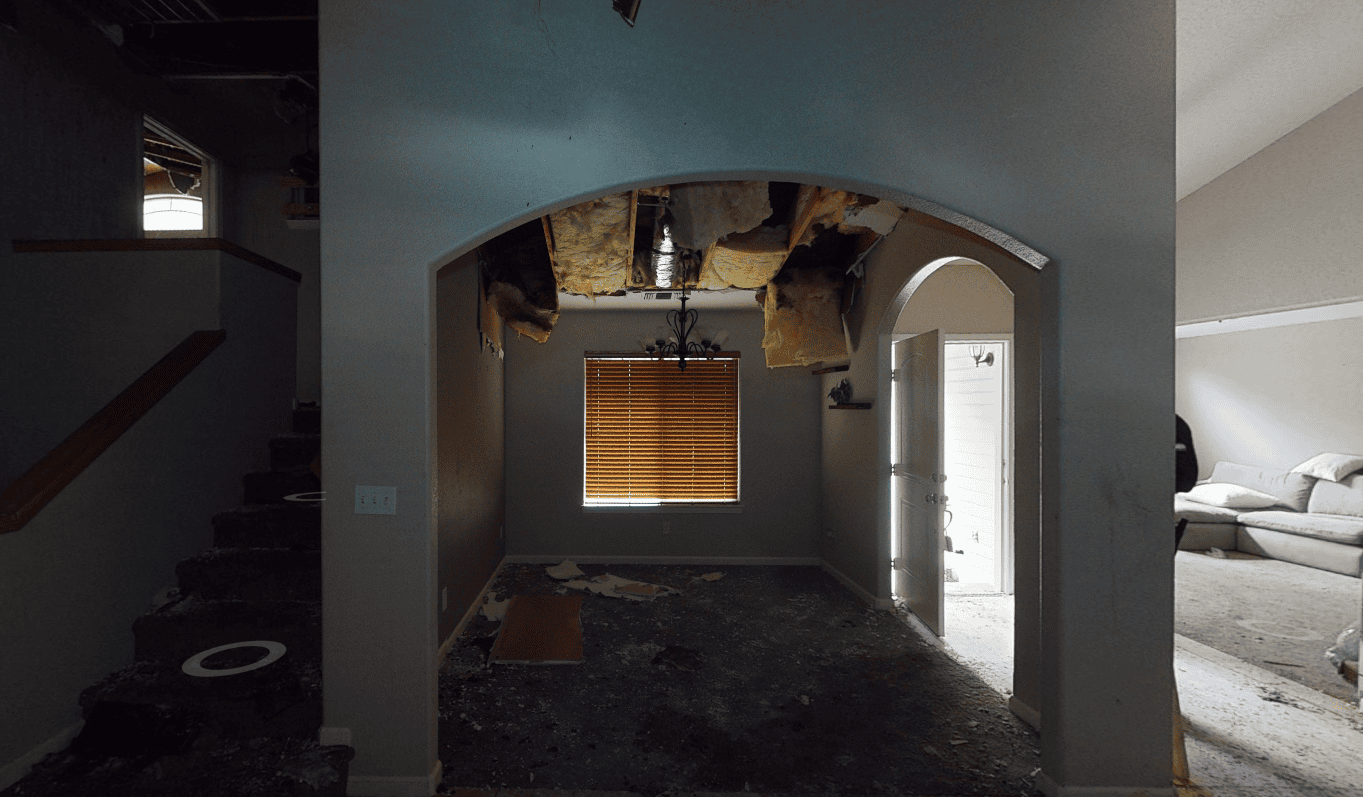
Odor and residue routinely show up two floors from the fire. Soot moves with air, which means the HVAC system, wall and floor cavities, and the closets nobody opened all get assessed. Soot damage is not one condition and soot cleanup is not one method. Dry soot on painted walls often comes off with chemical sponges and HEPA vacuuming, while protein residue from a kitchen fire is greasy, nearly invisible, and needs wet cleaning and deodorization to release the smell. Get that sequence backward and you drive the residue into the surface. That is why a complete estimate is rarely confined to one room, and why an estimate confined to one room deserves a question.
What the firefighting water leaves behind
Putting the fire out saves the house and soaks it. Standing water gets extracted first, then the wet assemblies get dried. EPA guidance calls for addressing clean-water-damaged materials within 24 to 48 hours to help prevent mold growth, so drying equipment has to work quickly, long before anyone talks about rebuilding. Let that window pass and mold remediation becomes its own scope stacked on top of the fire work. Water left by firefighting efforts belongs in the fire scope, not in a separate conversation, and it is not standalone water damage restoration. We cover the drying and mold-prevention window in more detail in a separate article if you want the mechanics.
Emergency board up and roof tarping: where the cost clock actually starts
The Washington Office of the Insurance Commissioner notes that policyholders have a duty to protect damaged property from further damage, which can include board up, mitigation, or temporary repairs. OIC also advises discussing the process with your insurer and holding off on permanent repairs until the insurer has inspected the damage. Keep receipts, photos, estimates, and emails.
So the line is fairly clean. When fire strikes, stabilize now: board up the openings, tarp the roof, stop the rain and the trespassing. An open roof through a wet Renton week invites storm damage on top of the fire loss. Permanent demolition and rebuilding wait for a documented inspection and an agreed scope. Emergency board up services are available around the clock in this area, and a board up is priced as its own small scope, separate from cleanup and separate from reconstruction. Accepting emergency services from one company does not obligate you to hire that company for the restoration or the rebuild.
One safety note before you go back in for anything: a fire-damaged structure can have compromised framing, live wiring, and settled soot that becomes airborne the moment you move through it, and those particles carry real health risks. Wait for clearance from the fire department, and for utilities to be checked, before you walk the property.
Contents and pack out: the part of the estimate homeowners forget

Pack out means your belongings are inventoried, photographed, boxed, moved offsite, cleaned and deodorized where possible, stored while the structure is worked on, and returned. It is priced separately from the building because it is separate work, and it usually appears as its own line on your fire claim.
The inventory is worth more to you than it looks. It is the record of what was in the house, what was salvageable, and what was not, and it is what an adjuster works from when personal property is settled. Some things will not survive, and no cleaning method changes that. A careful inventory is how those items get accounted for instead of forgotten.
What a complete fire damage restoration estimate should show
Hold any estimate you receive against this list.
- Scope broken out room by room or area by area, not a single lump sum.
- Quantities and line items you can read and check.
- Clean-versus-replace called out per material, including walls, flooring, and insulation.
- Contents scope separated from structural scope.
- Stated assumptions about asbestos and lead, including what has and has not been tested.
- Who pulls the permits and which subcontractors are used.
- Written exclusions, so you know what is not in the number.
- The change-order process and how insurance supplements get handled if hidden structural issues appear.
- Milestones and a payment schedule tied to completed phases of the restoration process.
If an estimate cannot show these things, it usually means the assessment has not been done yet. We go deeper on comparing estimates side by side in a separate piece.
How your insurance coverage changes what you actually pay

The contractor’s price and what your insurance company pays are related numbers, not the same number. Your policy, deductible, limits, endorsements, and the approved scope decide the gap.
Washington OIC defines replacement cost coverage as paying to repair or replace covered property at current cost without deducting depreciation, subject to policy terms and limits. Actual cash value subtracts depreciation. Additional living expenses, sometimes called loss of use, may cover added temporary housing and related necessary costs when a covered loss makes the home uninhabitable. Repairs required to fix covered fire damage are treated differently from upgrades you choose along the way. Nobody, including us, can promise what your insurance coverage will pay. We have a separate article on replacement cost, actual cash value, and recoverable depreciation.
How long your insurer has to respond in Washington
Under Washington claims-handling rules, an insurer on an individual policy generally must acknowledge an insurance claim within 10 working days unless it pays the claim first, and complete its investigation within 30 days unless it cannot reasonably do so, with an explanation when more time is needed. Those are handling timeframes. They are not a promise that payment or the full scope is settled in 30 days.
You choose the contractor, not your insurer
The Washington Office of the Insurance Commissioner is direct on this: the policyholder has the right to select the contractor who performs covered repairs. An insurer may recommend restoration companies, and some of those recommendations are perfectly good. You are simply not required to use the list.
Renton permits, King County, and the code your rebuild has to meet
Inside Renton city limits, a permit is generally required before you construct, alter, repair, demolish, or replace regulated building, electrical, gas, mechanical, or plumbing systems, subject to listed exemptions. If your parcel has a Renton mailing address but sits in unincorporated King County, permitting runs through King County instead. Confirm which jurisdiction your address falls under before assuming.
Washington’s current code cycle is the 2021 model codes with Washington amendments, effective March 15, 2024, including the 2021 International Existing Building Code. That matters to your estimate because repairs must meet current code, and code-required upgrades sometimes surface only after demolition opens a wall. The permit and inspection record is also what proves the work was done properly when you eventually sell.
Washington contractor rules that protect you during a fire damage restoration

Washington registers construction contractors with the Department of Labor and Industries rather than issuing a general contractor license the way some states do, and registration requires a bond and liability insurance. General contractors post a $30,000 bond; specialty contractors post $15,000. Liability minimums are $200,000 public liability plus $50,000 property damage, or $250,000 combined.
L&I’s own advice to homeowners: verify active registration, bond, and insurance in the Verify tool, review any citations and bond lawsuits, get at least three written bids, put it in writing, never pay the entire contract in advance, and tie later payments to completed phases rather than calendar dates. Three written bids are highly recommended for exactly that reason. Residential jobs of $1,000 or more require the contractor to give you a Model Disclosure Statement. On projects above $6,000, L&I suggests considering a project-specific performance bond.
Down payments and milestone payments in Washington
Washington does not have California’s residential down-payment cap, and a fair amount of the contractor advice you will find online is written for California. L&I’s guidance here is a reasonable down payment followed by payments tied to completed phases of work. Ask any contractor to show you the phases in writing before you pay anything.
Can you cancel a fire restoration contract in three days?
Not automatically. The Washington Attorney General’s office states that in most cases a signed contract cannot simply be cancelled. A three-business-day cooling-off period may apply to qualifying door-to-door and other off-premises sales, and the federal rule excludes goods or services needed because of an emergency, which can include fire response. Read the cancellation notice in your own contract, and get legal guidance if the terms are unclear.
Asbestos and lead: why testing can change the scope of a Renton fire job
Washington L&I requires a good-faith asbestos survey by an AHERA-certified building inspector before construction, renovation, repair, or demolition work that may disturb suspect material. There are nuances for owners doing work on their own noncommercial residence, but hired contractors and their crews still need proper information and safeguards before disturbing anything suspect.
For lead, EPA’s Renovation, Repair and Painting rule generally applies when paid contractors disturb painted surfaces in pre-1978 housing, requiring certified firms and lead-safe work practices, with general minor-repair thresholds of 6 square feet interior and 20 square feet exterior and limited emergency provisions. Plenty of housing in the Renton area predates 1978. Testing exists to keep contaminated dust out of the parts of your home the fire never touched.
Red flags in a fire damage restoration quote

- A firm price given without anyone seeing the property.
- No written, itemized scope behind the number.
- Restoration and reconstruction lumped into one vague line.
- Pressure to sign by a specific date.
- A request for the full contract amount up front.
- Reluctance to give you L&I registration details you can verify yourself.
- A contract that assigns your claim rights or insurance payments without a plain-English explanation.
- No plan for permits, documentation, or inspections.
On that assignment point: Washington OIC warns that an assignment of benefits can transfer claim rights or insurance payments to a contractor and may limit your control over negotiations and repairs. Ask your insurer or a legal adviser before signing one. A contractor talking directly with your adjuster does not require you to assign the claim.
How Golden Coast Construction & Restoration handles a fire damage assessment in Renton, WA
We do not give a number before we have seen the property. An assessment means walking the structure, checking where smoke and soot actually traveled, opening what needs opening, testing moisture in wet assemblies, and writing a documented scope built around your home’s specific needs that your adjuster can work from.
We work fire losses only, from emergency board up through reconstruction, out of a permanent office serving Renton and the surrounding communities. We do not take standalone water losses such as burst pipes or sewage backups. Smoke damage cleanup, soot cleaning, and structural drying are handled as parts of fire recovery, by the same team, well equipped for containment and drying, on the same scope. We are registered with Washington L&I, and you can confirm our registration, bond, and insurance yourself in L&I’s Verify tool before you sign anything. Our technicians are IICRC-certified. Payments are tied to completed phases, with QA inspections at milestones and a signed certificate of completion at the end. We arrange asbestos and lead testing where the age of the home or the materials warrant it.
The practical advantage over a general handyman is not effort, it is method: correct drying so mold does not follow the fire, documentation an adjuster can approve, and permitted repairs that hold up at resale. One team carries the restoration process from the first board up to the final walkthrough, so nothing gets lost in a handoff and your house gets back to normal without a second round of repairs. Get three bids, per L&I’s advice. We are glad to be one of them. Call when you are ready for an on-site assessment. There is no deadline on our end.
Frequently Asked Questions
How much does it cost to rebuild a fire-damaged house?
Rebuild cost is set by the structural scope, the code in effect, your finish level, and the permit path in your jurisdiction. Any firm figure offered before an inspection and a written scope is a guess. Cleaning and repairing salvageable materials is restoration; replacing framing, roof structure, or systems is reconstruction, and the two are priced very differently.
How do you estimate fire damage costs?
You assess the full affected area, including HVAC and concealed cavities, following the IICRC S700 approach. Then you document room by room, decide clean versus replace for each material, price contents as a separate scope, account for permits and code requirements, and keep mitigation, cleanup, and reconstruction in separate scopes rather than one line.
How long does fire damage restoration take?
Emergency board up is typically same-day. Smoke and soot cleaning and structural drying run days to weeks depending on how much water went in. Reconstruction runs months and follows the permit and inspection schedule. Washington claim-handling timeframes, 10 working days to acknowledge and 30 days to complete the investigation unless it reasonably cannot be, affect when scope gets approved.
Does a house lose value after a fire?
It can, and Washington sellers carry disclosure obligations about prior damage. Permitted, inspected, code-compliant repairs backed by a documented scope and a signed certificate of completion are what protect value. Undocumented or unpermitted work is what erodes it.
Can I choose my own fire restoration contractor in Washington?
Yes. The Washington Office of the Insurance Commissioner states that the policyholder has the right to select the contractor for covered repairs. Most homeowners do not know that. Your insurance company may recommend restoration services, but you are not obligated to use that list. Verify whoever you choose in L&I’s Verify tool first.