

Key Takeaway
Fire damaged drywall falls into one of three outcomes: clean it, replace it, or rebuild it. Drywall with direct flame or heat exposure must be replaced, while wet panels risk mold within 24 to 48 hours and should be removed unless dried immediately. Smoke-only panels that are dry and intact may be cleaned, but only after an on-site assessment confirms no hidden contamination or lingering odor behind the wall.
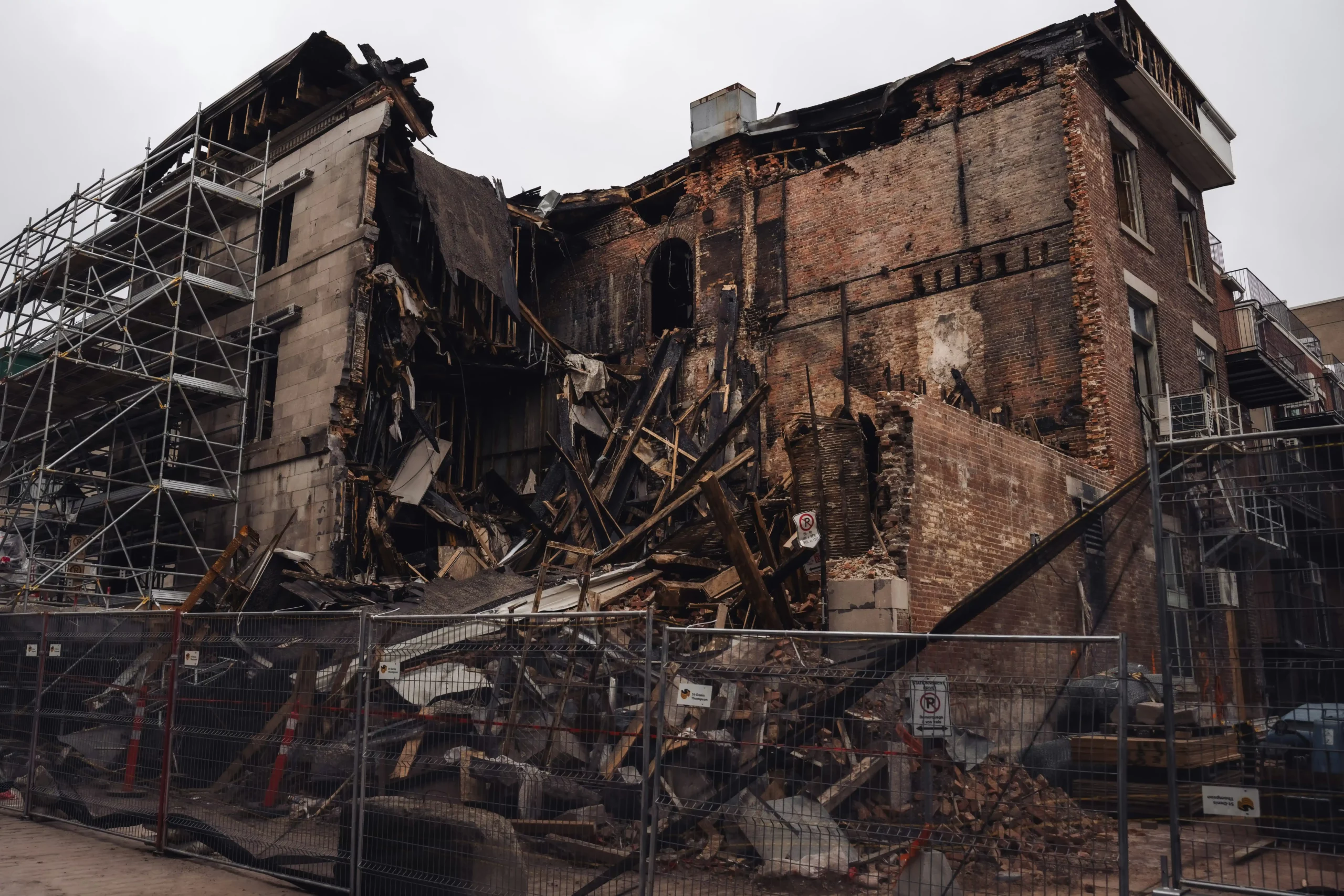
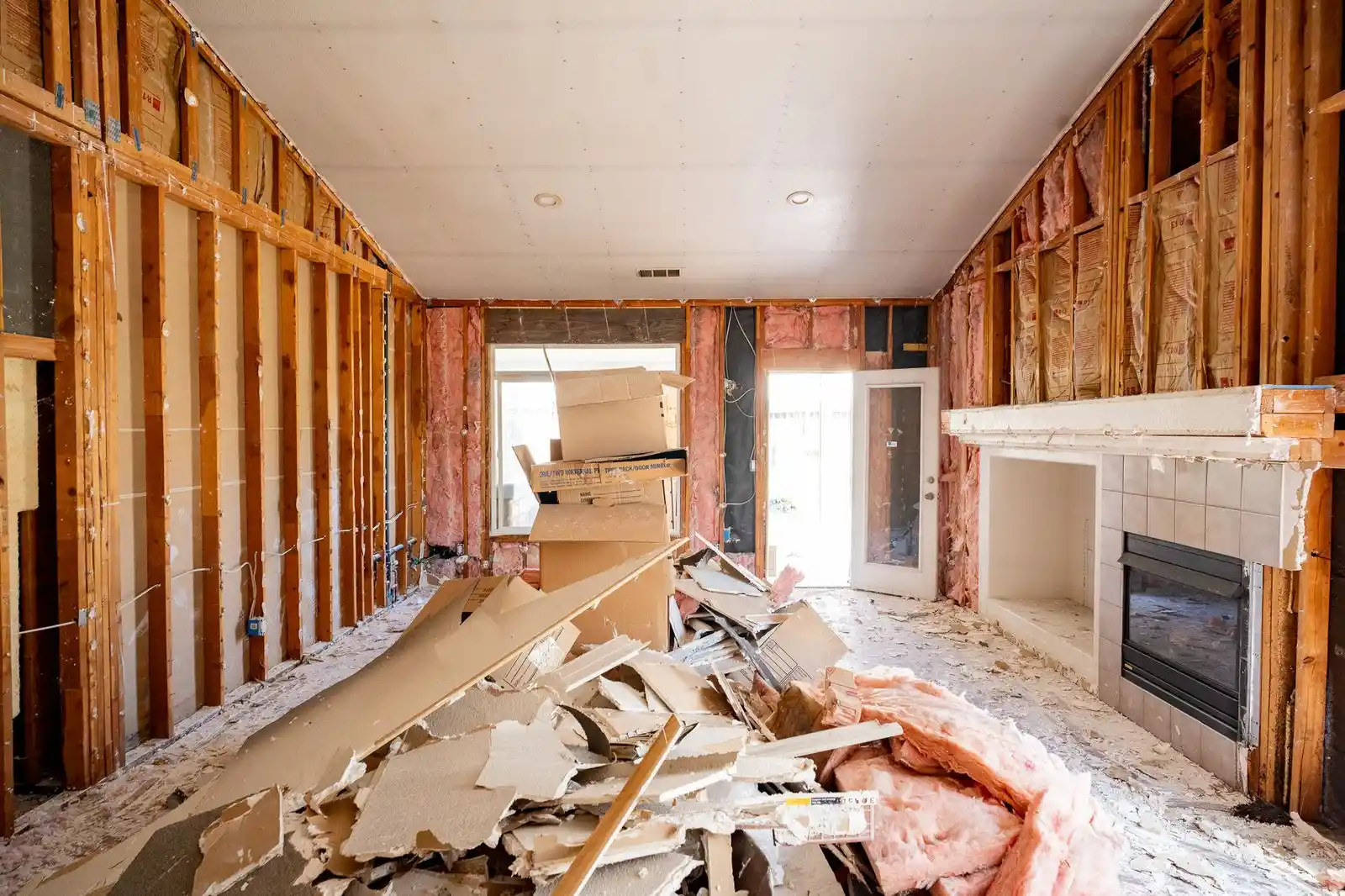
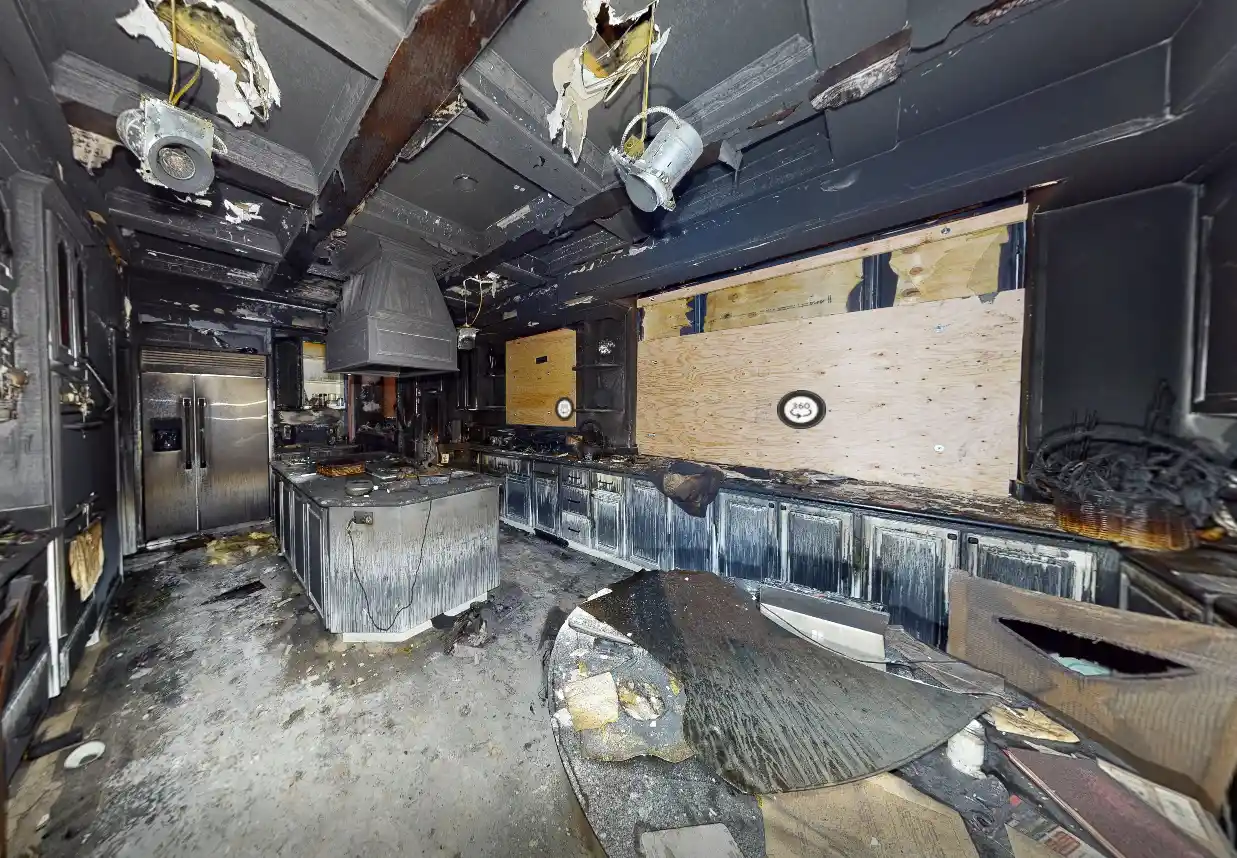
Drywall that was directly burned, materially heat-damaged, or soaked by firefighting water should be removed and replaced. A fire-resistance-rated wall or ceiling that was directly exposed to fire should be rebuilt to its tested assembly, not patched. Smoke damaged drywall can sometimes be cleaned and kept, but only after an assessment confirms it’s dry, intact, and free of hidden contamination or lingering smell. So the real answer to “does fire-damaged drywall need to be replaced?” is one of three: clean it, replace it, or rebuild. If you’re standing in front of stained or blistered walls trying to decide, that’s the question we’ll help you work through. One note up front: cleaning soot and swapping a few damaged panels is restoration. Rebuilding a fire-exposed rated assembly or a structural section is reconstruction, and the two are not the same job.
Before you clean or tear out anything: safety assessment and documentation first
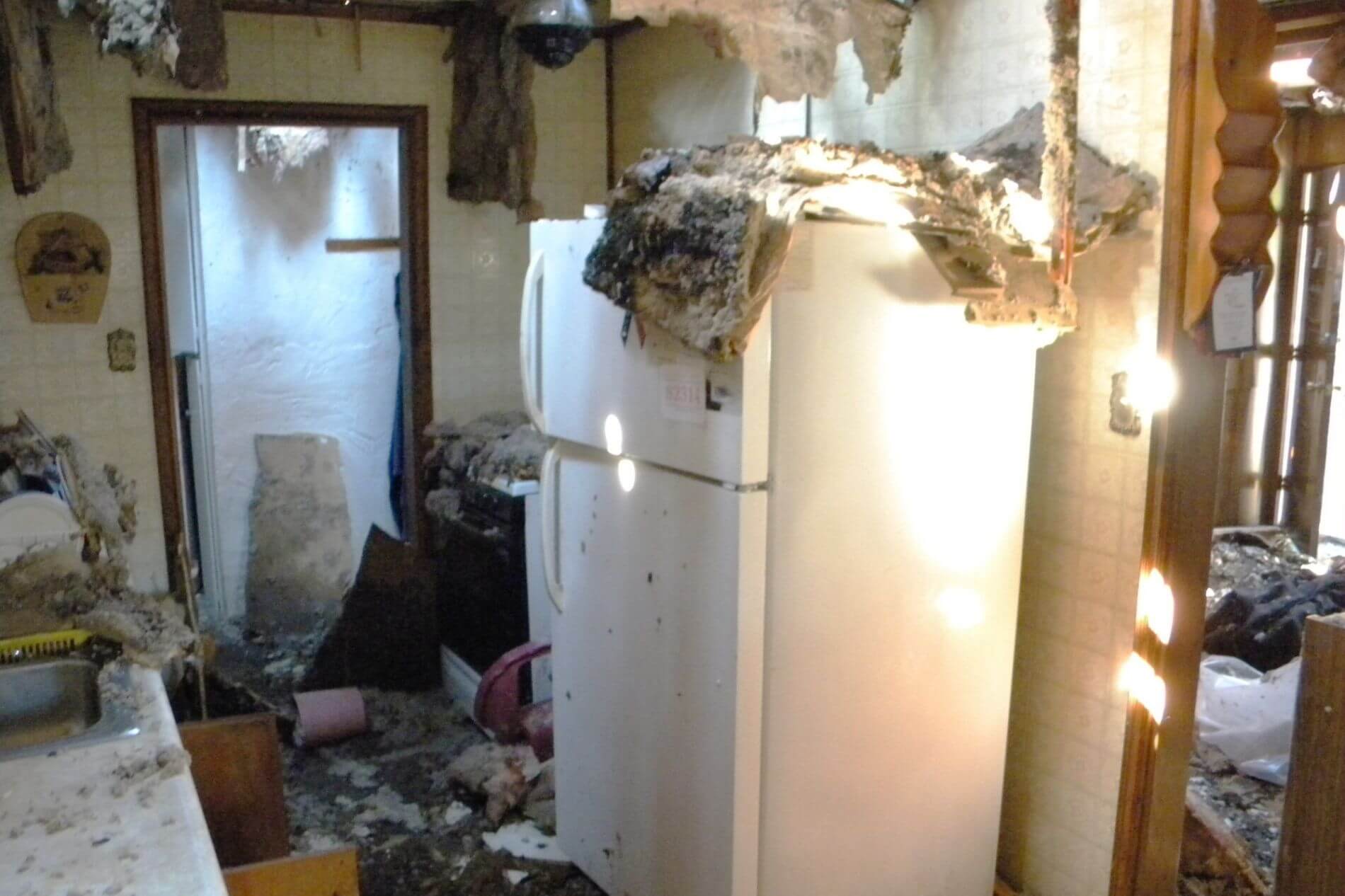
The first question isn’t what to do with the drywall. It’s whether it’s safe to be in the room at all. After a fire, wait for official clearance before entering. Many jurisdictions post inspection placards: red means unsafe to enter, yellow means restricted use, green means no obvious structural hazard was found (though latent hazards can still exist). Even a green placard doesn’t mean the air is clean.
Soot is acidic and carries toxic compounds. Ash can irritate skin and lungs, so wear proper protective gear before you touch anything. A quick safety assessment also means confirming that electrical circuits to the affected areas are isolated, since fire can damage wiring hidden inside the walls. Structural safety comes before cosmetics every time.
Once you’re cleared and protected, photograph and document the damage before any cleanup or removal of a single panel. Your insurance adjuster needs to see the affected areas as they are. The exception: emergency board-up, stabilization, and drying can proceed before full documentation when life safety or the 24 to 48 hour mold window demands it.
The four kinds of fire damage that decide the answer
“Fire damaged drywall” is really four different problems, and each has its own assessment path before you reach for cleaning supplies or a pry bar.
Direct flame. Where fire actually touched the board, you’ll see charring and burned paper facing. That drywall is spent and requires replacement.
Heat. This one fools people. High heat can calcine the gypsum core, driving the chemically bound moisture out of it. The panel may look intact from the hallway but be brittle, powdery, and no longer able to do its job. Discoloration, cracking, and crumbling are the tells. A badly damaged core won’t hold a repair.
Smoke and soot. Smoke particles seep into porous materials like drywall, leaving stains and smell, and the acidic smoke residue corrodes surfaces over time. Different fuels leave different residues, and smoke travels, moving through wall cavities to places the flames never reached. That is why smoke damaged walls and ceilings often turn up rooms away from the fire itself.
Firefighting water. Suppression water saturates drywall fast, and wet gypsum starts growing mold within 24 to 48 hours. The water damage changes the decision for both the panel and everything behind it.
Clean, replace, or rebuild: a decision guide

| Condition | What usually happens |
|---|---|
| Direct flame exposure | Replace the affected board. |
| Significant heat exposure | Replace. Calcination can leave the panel brittle even where it still stands. |
| Fire-rated assembly directly exposed to fire | Rebuild to the tested assembly, not a patch. |
| Fire-rated assembly not directly exposed | Have a qualified professional assess its continued suitability. |
| Smoke only, dry and intact | May be cleaned and kept after assessment. |
| Visible soot | Clean and evaluate the surface before any paint or primer. |
| Wet from firefighting | Inspect panel and cavity. Replace unless dried promptly and sound. |
| Persistent smell after cleaning | Investigate the cavity before sealing. |
| Cavity access needed | May be removed even if the surface looks fine. |
The deciding factor isn’t how dark the stain looks. It’s whether the panel and the assembly behind it can still perform safely.
Signs fire damaged walls need to be replaced
- Charring or scorching, which is more than surface damage
- Burned or missing paper facing
- Board that’s brittle, crumbling, or powdery (calcined)
- Bowing, swelling, softness, or delamination
- Paint or coatings blistered by heat
- Rusting or loosened fasteners
- Visible mold
- Smell that persists after proper cleaning
- Soot stains that bleed back through after a test-clean
- Damage around electrical outlets and light fixtures
- Gaps or a cavity that needs opening to inspect what’s behind the board
Cutting and removing drywall releases fine particles into the air, which is why containment and protective gear matter during the work, not just the diagnosis.
How to clean smoke damaged drywall when it can be saved
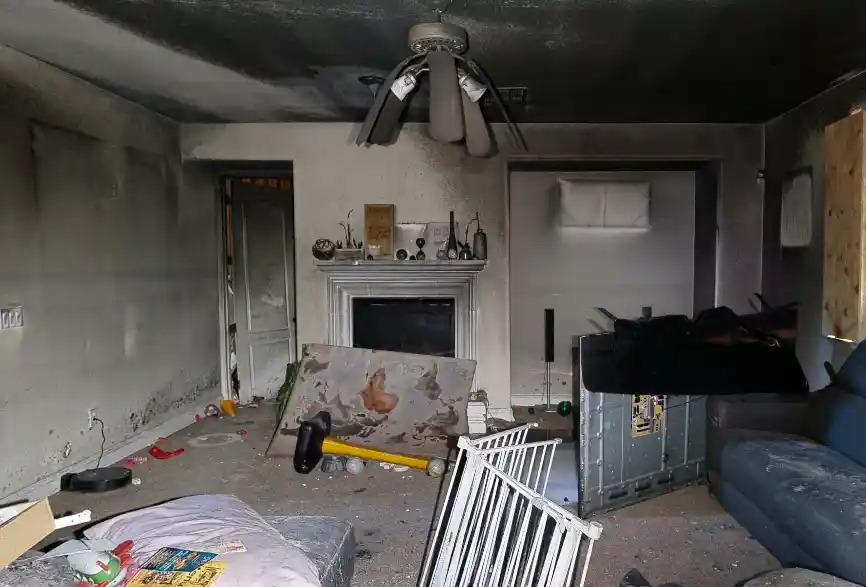
A panel can usually stay if all of these hold: the exposure was smoke only, the board is dry and physically sound, residue is limited to accessible surfaces, it passes a test-clean, and there’s no concealed source or lingering smell behind it.
The correct cleaning process matters. Document, assess, remove what can’t be saved, clean the salvageable surfaces, verify that the surface is dry and the odor source is gone, then prime or seal only where appropriate, and refinish last. To clean smoke damaged drywall the right way, the right tools exist for good reasons: HEPA vacuuming captures fine soot a household vacuum would scatter, and a dry chemical sponge lifts dry soot off the surface without smearing it into the paper. Work top to bottom so loose soot falls onto surfaces you haven’t reached yet. Shellac based primer blocks odor and stains from bleeding through, but only after the residue and its source are gone. Deep-seated smell and smoke that migrated into cavities or ductwork usually need professional removal and odor neutralization. A coat of primer over soot hides evidence; it doesn’t fix the problem. (Smoke and soot cleaning and the mold window each deserve their own deeper look.)
A word on DIY cleaning
DIY cleaning can handle light, dry soot on an intact surface in a small room where you can open windows for ventilation. What it can’t do is judge calcination, moisture in the cavity, or smoke that traveled behind the walls and ceilings. If the odor returns after cleaning, if stains bleed back, or if the smoke damaged walls cover more than one room, that’s the signal to stop and get an assessment rather than keep repainting over the problem.
What firefighting water does to drywall
Wet gypsum is on a clock. The Gypsum Association identifies 24 to 48 hours, depending on conditions, as the typical window to dry water-exposed board before mold begins growing, and the EPA recommends drying or discarding wet absorbent materials within about 48 hours. Replace water-exposed panels unless the source is stopped, the water was uncontaminated, the board can be dried promptly, and the panel, fasteners, and wood framing stay sound.
Handheld moisture meters help more for comparing wet and dry areas than for pinning the exact moisture content of gypsum. And the insulation and structural materials behind the board matter as much as the surface you can see. This is water from fire suppression, handled as part of fire recovery, not a standalone water-damage service.
Why fire-rated walls and ceilings are different
There’s a common error worth correcting: a fire rating belongs to the complete tested assembly, not to a single sheet. Don’t just buy “fire-rated drywall” and call it done. The tested system includes the panel type and thickness, the number of layers, the wood or metal framing material and spacing, fastener type and spacing, joint placement, insulation, and any penetrations or firestopping. Replacement has to restore that configuration, or the rating is compromised even when the new drywall looks identical. That matters for both walls and ceilings, since a rated ceiling separation protects the floor above it.
A rated assembly directly exposed to fire should generally be rebuilt rather than patched. One that wasn’t directly exposed should be assessed before anyone assumes it’s fine. The local building official has final say. This is often where a project crosses from restoration into reconstruction.
Hidden damage behind smoke damaged walls
A clean-looking surface doesn’t rule out hidden damage behind it, and a dramatic stain doesn’t prove the whole panel is lost. That’s why selective opening matters. A restorer checks for wet or smoke-contaminated insulation, charred or heat-affected framing, damaged fasteners, wiring and outlets, pipes, ducts, and soot deposited on the back of the board.
This is targeted opening with containment, not automatic whole-house demolition. Sealing off the work area keeps soot from cross-contaminating rooms the fire never reached, so a small problem doesn’t spread. Checking the cavity is essential when the smell lingers, because surface wiping can’t reach contamination you can’t see.
Asbestos, lead, and air quality before demolition

The EPA is clear that you can’t tell by sight whether drywall, glass, or joint compound contains asbestos. If suspect materials will be disturbed, an accredited professional should assess or sample them. Homeowners should not collect samples themselves.
For housing built before 1978, lead-based paint must be assumed or tested when work disturbs painted surfaces. Under the EPA’s Renovation, Repair and Painting rule, the minor-work exception is generally limited to about 6 square feet per interior room or 20 square feet for exterior work, and demolition is not exempt regardless of area. Demolition releases fine particles either way, so containment and HEPA filtration protect the air quality in the rest of your home.
Insurance, permits, and your protections in Pasadena and California
Document the claim before broad demolition
The California Department of Insurance advises homeowners to report the loss promptly, make reasonable temporary repairs to prevent further damage, and keep receipts. Photograph and document everything, keep a claim diary, get written bids from licensed contractors, and don’t throw out damaged materials before the adjuster authorizes it. When you get a scope, make sure it separates cleanup, demolition, drying, repair, and reconstruction rather than lumping them together. Replacement of ruined board and reconstruction of a rated assembly are different line items, and they should read that way.
Permits and contractor protections
Check with Pasadena Building & Safety before opening or reconstructing fire damaged walls, especially when framing, utilities, structural damage, or rated separations are involved. Pasadena lists the 2025 California Building Codes as effective January 1, 2026. Verify any contractor through the CSLB Instant License Check before you sign. A few California protections are worth knowing because they exist to protect you: a written contract is required on home improvement work over $500, the down payment is capped at 10% or $1,000, whichever is less, and you have a 3-business-day right to cancel (5 business days if you’re 65 or older), with some exceptions. Pasadena’s rebuilding guidance recommends estimates from at least three contractors.
Frequently asked questions
What is fireproof drywall called? There’s no truly fireproof drywall. The common type is Type X, a fire-resistance-rated gypsum board. The rating comes from the full tested assembly, not the sheet on its own.
How do you clean smoke off walls? HEPA-vacuum the loose soot first, then use a dry chemical sponge on dry residue before any wet method, working top to bottom across walls and ceilings. Prime only after the residue and its source are removed, using a shellac based primer for odor and stains. Deep-seated smell usually needs professional restoration and odor neutralization.
Can damaged drywall be repaired? Smoke-only panels that are dry and intact can sometimes be cleaned or spot-repaired. Charred, heat-brittle, saturated, or rated-assembly panels need replacement or rebuilding, not patching. The decision depends on the panel and the assembly behind it.
Will insurance cover fire damaged drywall? Fire damage is commonly covered, but document everything and get a written room-by-room scope before any broad demolition. Confirm the specifics with your carrier and adjuster.
Is anything salvageable after a fire? Often, yes. Surfaces and materials touched only by smoke may be cleanable. An on-site assessment is what separates what can be saved from what has to go.
Getting an honest answer for your home
Here’s the honest truth: the condition of your drywall, and the assembly and cavity behind it, can’t be judged or priced from photos. It takes an on-site inspection. Anyone quoting a firm price sight-unseen is a red flag worth walking away from.
A handyman can patch the wall you can see. A specialized licensed restorer assesses the smoke residue, moisture, the cavity, hazardous materials, the insurance documentation, and any rated-assembly requirements, then handles proper cleaning, drying, code-compliant repairs, and by-the-book milestone payments that protect you. Golden Coast Construction & Restoration is CSLB-licensed (#838443, verifiable) and IICRC-certified in fire recovery, with a permanent Pasadena-area office and 24/7 emergency board-up. When you’re ready, we’ll come look and give you a straight assessment of your home.