

Key Takeaway
Fire debris removal is the controlled removal and lawful disposal of burned structural materials, ash, hazardous waste, and contaminated soil, completed only after the site is documented and approved for cleanup. In a California wildfire disaster, the process typically runs in two phases coordinated by Cal OES. Do not remove anything until reentry is approved, your insurance company has documented the loss, and hazardous materials have been assessed.
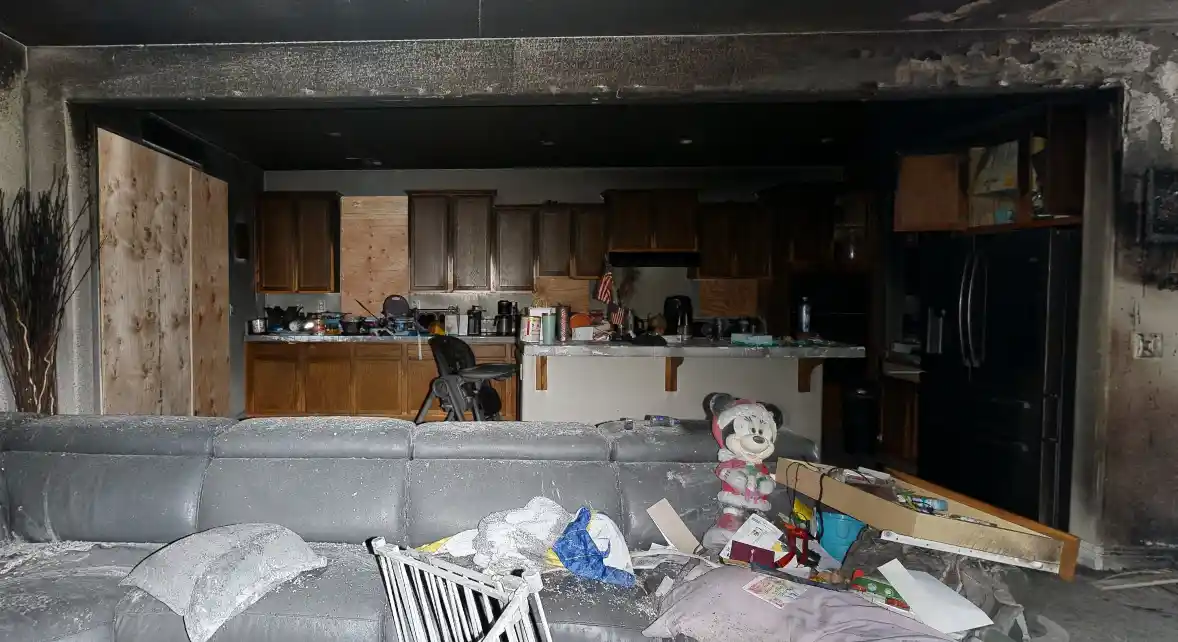
Fire debris removal is the controlled removal and lawful disposal of burned structural materials, ash, household hazardous waste, asbestos-containing materials, and sometimes contaminated soil, done only after the site has been released, documented, and approved for cleanup. If you’re a Pasadena-area homeowner standing in front of a burned house or lot, scared and unsure what you’re allowed to touch, that last part matters most. In a California wildfire disaster, the debris removal process often follows two phases, and the safest first move is usually to wait and verify.
Do Not Remove Anything Yet If…

An empty-looking lot is not necessarily a safe one. Hold off on any debris cleanup or hauling if any of these are true:
- Local officials have not approved reentry.
- The fire investigation is still open.
- Your insurance company has not documented the loss.
- A government debris program may apply to your property.
- Asbestos or other hazardous materials have not been assessed.
- Required permits or work plans aren’t approved.
Document the damage with photos before anything moves, and keep children and pets away from the affected area. Waiting here protects your evidence, your claim, your program eligibility, and your health. It also keeps you clear of the physical hazards a burned site still holds.
What Fire Damage Debris Cleanup Actually Includes (and What It Doesn’t)
Structural fire related debris is not ordinary household waste. Ash from a burned home can contain asbestos, lead, arsenic, mercury, batteries, paints, pesticides, and fuels. That’s why identifying and separating hazardous materials, under local, state, and federal disposal rules, is part of the work, and why it carries real risk to human health if handled wrong.
- What it includes: ash and burned building materials, unstable structural debris, remaining household hazardous waste, asbestos siding and other asbestos-containing materials, damaged vehicles and appliances, contaminated soil where required, and hazardous trees in the approved scope.
- What it is not: routine soot cleaning, contents restoration, general water work, or reconstruction.
Keep three terms straight. Restoration is cleaning, drying, odor control, and salvage. Debris removal is the controlled removal and disposal of structural debris and other fire related debris above. Rebuilding is construction after major or total loss. They’re different jobs with different rules.
First, Figure Out Which Situation You’re In

The right path depends on whether this is one home or a declared disaster. The steps differ.
| Situation | Likely path |
|---|---|
| Standing, repairable home | Damage assessment, selective removal, restoration, repair |
| Destroyed structure after an individual house fire | Investigation, insurance documentation, hazardous-material review, demolition/debris permit, removal, reconstruction |
| Property in a declared wildfire | Incident-specific Phase 1/Phase II program or approved private alternative |
How California’s Two-Phase Consolidated Debris Removal Process Works
When a wildfire incident is declared, California’s consolidated recovery process usually runs in two phases, and it exists to protect whole communities, not just one lot. Cal OES coordinates with state and federal agencies to activate it.
Phase 1 is the household hazardous waste removal step: visible materials like batteries, paints, chemicals, and asbestos, handled by the U.S. Environmental Protection Agency or the California Department of Toxic Substances Control to reduce threats to public health and the environment. Phase II covers the rest: structural ash and debris, remaining asbestos, foundations where applicable, contaminated soil, damaged vehicles, and hazardous trees from destroyed damaged structures.
Here’s the part people miss. “Phase 1 complete” does not mean your site is cleared or safe to rebuild. Hidden asbestos, buried waste, ash, and contaminated soil can still remain for Phase II.
These programs are incident-specific and activated only for declared disasters. As a completed example, the government-sponsored Phase II cleanup for the 2025 Eaton and Palisades fires finished in September 2025, with more than 2.5 million tons removed across more than 10,000 parcels. Those are historical figures, not a property-level estimate. Earlier recovery efforts, including those following the Santa Rosa fires, showed the same pattern. Old deadlines stay indexed online long after a program closes, so confirm current status with your city or county before acting.
What Happens During the Private Fire Related Debris Removal Process

When residential property owners go the private route for their residential properties, the process follows a documented order:
- Site assessment and a written work plan.
- Documenting utilities, septic, well, pool, retaining walls, and trees.
- Asbestos survey, with abatement where required.
- Dust suppression (wetting debris) and work-zone safety controls.
- Material separation, concrete and metal recycled, regulated material to permitted facilities.
- Sealed, tarped transport.
- Approved disposal.
- Soil sampling, with the top 3 to 6 inches of contaminated soil removed where required (CalRecycle notes this isn’t automatic for every property).
- Erosion control to protect slopes and nearby infrastructure.
- Final inspection and written certification of completed work.
The job isn’t done when the truck leaves. Foundations, pools, and trees aren’t automatically removed either; it depends on their condition, the approved scope, and any effect on slopes or neighbors. A good team accounts for all of it before signing off, and weighs it against the costs residents will carry.
How Debris Removal Works With Your Insurance
Insurance often helps pay for professional debris removal, but read your actual policy language. Ask whether debris-removal coverage is additional or part of another limit, and whether a rider can raise it. The California Department of Insurance advises photographing damage, notifying your insurance company, and not discarding property until the adjuster agrees.
Preserve everything: contracts, manifests, invoices, test results, permits, and receipts. If a government program applies, rules against duplication of benefits mean you keep receipts, and benefits may cover eligible work the program didn’t do. Don’t assume a universal coverage percentage.
Licensing, Household Hazardous Waste, and the Protections to Check Before You Hire

Verify any company or contractor directly through CSLB prior to signing anything. The removal of household hazardous material can require more than an ordinary license. The 2025 LA County private permit, for example, required an A or B license plus a CSLB Hazardous Substance Removal certification, or a C-12/C-21 combination with that certification, along with asbestos clearance. Asbestos abatement itself needs a C-22. These requirements are incident- and jurisdiction-specific, so check the current local permit.
Your California protections, in plain terms:
- Work of $1,000 or more generally requires a licensed contractor.
- Down-payment cap: 10% or $1,000, whichever is less.
- A 3-business-day right to cancel (5 days for age 65+), with emergency and business-location exceptions.
“Sign by Friday” pressure is a red flag. And know the limit of a basic mask: an N95 or P100 reduces incidental ash exposure, but it is not adequate protection against asbestos, which poses a real threat and calls for trained specialists working safely under a plan. This is where qualified contractors protect the property owners they serve rather than cut corners, and offer the assistance a homeowner shouldn’t have to find alone.
How You’ll Know the Lot Is Ready to Rebuild
“Finished” means documented and approved, not just an empty lot. You’re ready to move into reconstruction when the applicable agencies have accepted debris and ash removal, hazardous-material or asbestos clearance, soil results where required, disposal documentation, erosion controls, a final inspection, and permit closure or a written completion certificate. A cleared, signed-off lot is where the rebuilding phase begins. The extent of what’s left to verify is specific to each property, and entry back onto a lot should follow that sign-off.
Frequently Asked Questions
What is debris removal coverage?
It’s the portion of a homeowners policy that helps pay to haul away and dispose of damaged materials. It’s often a percentage of your dwelling limit and sometimes expandable with a rider. Read your policy rather than assuming a set amount.
What does “disposal of debris” mean?
The lawful end step: wetted, sealed, tarped debris taken to facilities permitted to accept it, with recyclables separated and records kept. It isn’t just dumping.
Does Phase 1 mean my property is safe?
No. Phase 1 removes visible household hazardous waste. Structural ash, hidden asbestos, and contaminated soil may still remain for Phase II, so the safety of the lot isn’t settled yet.
Does fire debris need asbestos testing?
Often yes. Asbestos hides in stucco, siding, roofing, flooring, and more, in both older and newer homes. A qualified assessment comes before anyone disturbs the debris.
Talk to a Licensed Fire-Recovery Team in the Pasadena Area
Golden Coast Construction & Restoration keeps a permanent local office serving the Pasadena and Southern California area, with 24/7 emergency services including board-up, IICRC-certified fire and smoke restoration, and California licensing you can verify yourself through CSLB (#838443). We help you document the loss for insurance, coordinate the required environmental and abatement specialists, and work by-the-book milestone payments, so you have one project path from emergency stabilization through reconstruction. The only honest way to scope your property is to look at it, so reach out when you’re ready for an on-site assessment.