

Key Takeaway
To clear smoke from a house, open windows for cross-ventilation only when outdoor air is clean (AQI 0-50), run a HEPA air cleaner rated for at least two-thirds of the room’s square footage in CADR, and HEPA-vacuum then damp-wipe hard surfaces top to bottom. Clearing the air and removing smoke damage are two different jobs. Visible soot, whole-house odor, or HVAC contamination means DIY should stop and a professional fire-restoration assessment should start.
Make sure the fire is fully out and the home has been cleared by the firefighters before you go back in. Once it’s safe to enter, open up only when the outdoor air is clean, run proper air filtration, then physically remove the soot and ash that settled on surfaces. If you see visible residue, smell the smoke through the whole house, suspect the HVAC is contaminated, find structural damage, or have fire-suppression water soaking into materials, get an on-site fire-restoration assessment instead of trying to cover the smell. This guide is for a homeowner after a small cooking fire, a structure fire, or wildfire smoke drifting indoors.
If a fire may still be active, if you feel heat, see smoke, smell gas, or hear alarms, get out and call 911. And keep one idea in mind as you read: clearing the air and removing smoke damage are two different jobs.
Before you open the windows: which smoke situation do you have?

The right first step depends on what happened. Sort yourself into one of these before you touch anything:
- Light smoke from a small, extinguished incident. A pan on the stove, a smoky oven. Usually an air problem you can manage.
- Outdoor wildfire smoke entering an undamaged home. Keep windows, doors, and outdoor-air intakes closed while smoke or ash is outside, and set your HVAC to recirculate if it can.
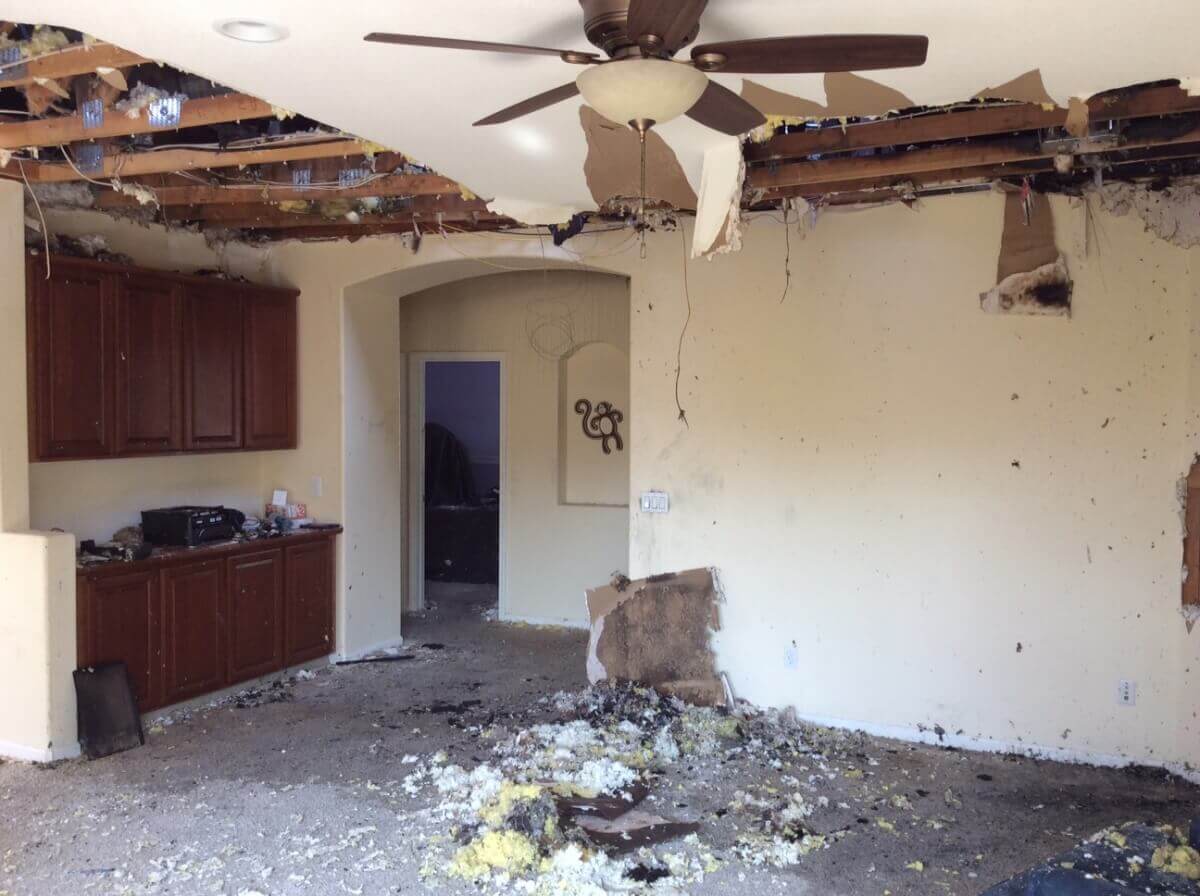
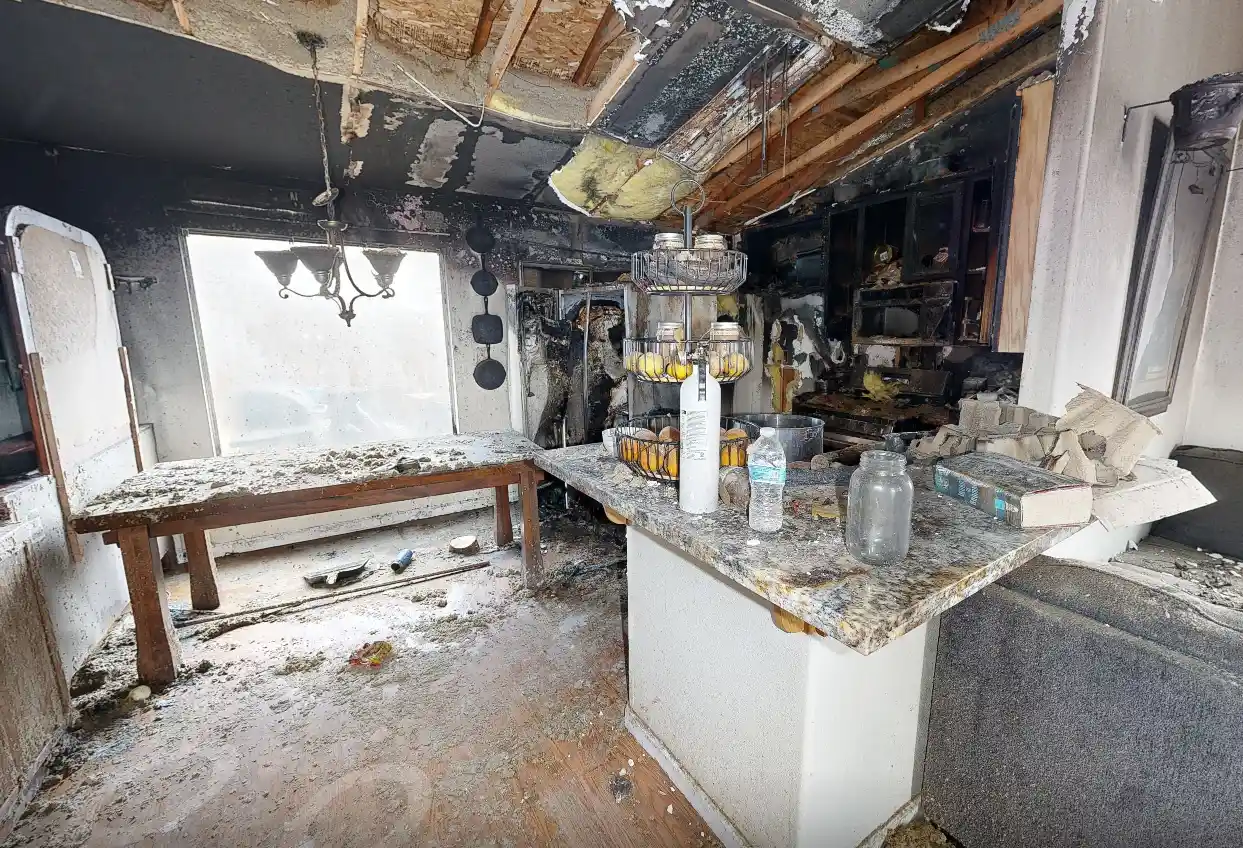
- Smoke and soot after a structure fire. This is not a ventilation problem. Residue has settled into surfaces and materials.
- Visible structural or electrical damage. Stop. This needs a professional assessment, not a cleaning routine.
Opening windows only helps when the outdoor air is actually clean. An AirNow AQI of 0 to 50 is “good” and a reasonable sign the fresh air outside won’t make things worse, but it is not a test that the interior of a fire-affected building is safe. Smoke particles are oily and microscopic. They cling to walls, carpets, curtains, and ducts, which is why some situations can’t be fixed by airflow at all. The question underneath all of this is a fair one: is my house safe to be in? Sorting your situation honestly is how you start to answer it.
Document the smoke damage before you clean anything
Clean too soon and you can erase the evidence your insurance claim depends on. Before you wash a single wall:
- Photograph and video everything, room by room, including odor-affected areas even if damage looks light.
- Notify your insurance company promptly to open the claim.
- Keep receipts for anything you buy, clean, or replace.
- Don’t discard damaged property until the adjuster has approved it.
- Avoid extensive permanent repairs before the loss is inspected.
California readers can follow the California Department of Insurance residential property claim guidance for the specifics. Treat this as protection for you, not paperwork for its own sake.
Clearing the air: ventilation and the right filters

This section is for light smoke with no visible soot. The first step is to remove the extinguished source if it’s safe to handle. Then open windows and doors to create cross-ventilation, pulling fresh air through and out of the house, but only when the outdoor air is clean. Run correctly sized portable air filtration, and inspect or replace your HVAC filters.
A good portable air cleaner captures airborne smoke particles well. A true HEPA filter can capture at least 99.97% of airborne particles at 0.3 microns, its hardest size to catch, with larger and smaller particles caught even more efficiently. That matters because a major concern in smoke is PM2.5, fine particles 2.5 microns or smaller. Activated carbon handles a different job: it absorbs some of the gases and the smoke smell that HEPA can’t. Here’s what each method does and doesn’t do:
| Method | Helps with | Doesn’t solve by itself |
|---|---|---|
| Fresh-air ventilation | Airborne smoke and gases when outdoor air is clean | Embedded soot in surfaces |
| HEPA air cleaner | Airborne particles (99.97% at 0.3 microns) | Most gases and embedded odor |
| Activated carbon | Some gases and the smell of smoke | Settled soot or charred materials |
| HEPA vacuum + damp cleaning | Loose surface residue | Deeply contaminated porous materials |
| Professional source removal | Persistent contamination and odor | Structural replacement where assemblies are damaged |
For sizing, the EPA suggests a portable cleaner with a smoke CADR at least two-thirds of the room’s square footage. For central systems, use a MERV 13 filter or the highest rating your system can safely handle, and change it when it’s dirty or starts to smell. One caution: don’t drop a portable “HEPA filter” into a central HVAC system unless the system was designed for one. Portable cleaners and HVAC filters use different rating scales and create different pressure demands. Filtration reduces airborne particles. It cannot clean walls, insulation, contents, or charred materials.
Removing soot, ash, and smoke odor from surfaces with baking soda and more
This is for light-to-moderate settled residue. Anything heavier belongs in the “stop” list further down. Protect yourself first. California public-health guidance recommends a close-fitting N95 or P100 respirator, gloves, long sleeves, and eye protection when cleaning ash and debris.
Work in order. HEPA-vacuum loose particles gently first, then clean top to bottom: ceilings, walls, then floors. Damp-wipe hard surfaces and wet-mop floors. A trisodium phosphate (TSP) and water solution cuts the oily film smoke leaves on painted walls, wood trim, and other hard surfaces; rinse afterward. A few firm rules:
- No dry sweeping with a broom.
- No ordinary household vacuum.
- No shop vacuum.
All three throw fine particles back into the air. For odor on soft items, wash washable fabrics according to their care labels. Baking soda and white vinegar neutralize the smoke odor rather than mask it, and they can help as absorbers in a small area you’ve already cleaned, but they’re limited aids, not a fix for the sticky residue baked into materials. A bowl of vinegar or an open box of baking soda left out overnight will pull a little odor from the air, nothing more. Carpets, curtains, and blinds hold the smell stubbornly, so remove curtains for laundering rather than wiping them in place, and smoke can discolor both walls and fabric, so treat heavily affected contents in a dedicated contents-and-clothing guide rather than overreaching here. If odor keeps coming back, hidden residue in walls, ceilings, or ducts is still there.
How to clear smoke from house for good: what not to do, and when DIY should stop

Skip these, no matter what a product label promises:
- Ozone generator and ionizer setups. The EPA says the ozone an ozone generator produces can damage the lungs, is often ineffective at safe concentrations, and can create irritating byproducts. It’s never for occupied spaces, and dogs and other pets are at risk there too.
- Scented air fresheners and masking products. They hide the scent while the source stays put.
- Unverified chemical mixtures. Mixing cleaning chemicals can release fumes more dangerous than the smell you’re fighting.
- Paint or sealers before residue is removed. Odor-blocking primer and fresh paint only help on cleaned, dry structural materials like sheet rock and wood framing.
- Fans that blow visible soot into clean rooms. Point fans out of a window to exhaust air, not across soot-covered surfaces.
Smoke penetrates insulation, drywall cavities, and ductwork, so inspect your HVAC system filters and returns and watch for it spreading the smell of smoke back through the house. Don’t push a shop-vac hose into vents, a tip you’ll see in other guides that only drives residue deeper. If firefighting water soaked walls, flooring, or insulation, dry those materials within 24 to 48 hours to help prevent mold, per EPA. That’s part of fire recovery, not a separate water job.
Stop the DIY and call for an assessment when you see any of these:
- Heavy or visible soot.
- Ash from a burned structure, which can contain asbestos, lead, and other contaminants, especially in homes built before 1978.
- Whole-house odor that lingers after basic cleaning.
- HVAC contamination.
- Suspected asbestos or lead.
- Structural, electrical, roof, window, or door damage.
- Wet wall, ceiling, floor, or insulation assemblies.
- Occupants who are children, older adults, pregnant, or have asthma or other sensitivities.
Smoke exposure carries long-term health risks, so these are observable triggers, not a vague “call a pro.” When the job is bigger than a DIY weekend, professional cleaning and professional help are the honest next step, and badly contaminated porous materials sometimes need to be replaced rather than saved.
Removing cigarette smell left by previous owners
If the smell of smoke came from the previous owners rather than a fire, the chemistry is similar but the source is different. Cigarette smoke from a heavy smoker leaves an oily film, and the nicotine in it clings to walls, ceilings, carpets, and ducts. The cigarette smell will linger until surfaces are professionally cleaned or washed with a degreasing solution and fabrics are soaked and laundered. An ozone treatment still isn’t the answer in an occupied home. Finally, if the residue is baked into materials, no amount of wiping will fully get rid of it, and some surfaces may need to be repainted or replaced.
Restoration vs. rebuilding, and a note for California homeowners

These two words get mixed up, and the difference matters. Restoration is cleaning, drying, salvage, and odor removal, the work of washing surfaces and saving what can be saved. Rebuilding is replacing damaged structural assemblies, the drywall, framing, and finishes you have to replace outright. A small fire may need only restoration. A major loss needs both, and no one should describe one at the scale of the other. Good fire-restoration work follows a phased process, and there’s now a published standard for it: the first edition of ANSI/IICRC S700, the standard for professional fire and smoke damage restoration, came out in 2025. Worth knowing it doesn’t fully cover wildfires or reconstruction, so no one should treat it as the last word on either.
If you’re in Southern California, Pasadena Public Health publishes wet-cleaning and HEPA-vacuuming guidance for ash and soot, and it states plainly that its homeowner guidance is not meant for partially burned or structurally damaged homes. Before hiring anyone, verify the contractor’s license through the CSLB.
Talk to a licensed fire-restoration team before the scope grows
When conditions go past light smoke, an on-site assessment is the honest next step. No one can determine the true scope or quote a firm price without inspecting the property, and anyone who quotes a firm number sight-unseen is a red flag. So is “sign by Friday” pressure. Golden Coast Construction & Restoration is IICRC-certified in fire restoration, works from a permanent Pasadena office serving Southern California, offers 24/7 emergency board-up, uses by-the-book milestone payments, works directly with insurance adjusters, provides a signed certificate of completion, and can continue from mitigation into reconstruction if the inspection finds structural loss. Licensed California contractor, CSLB #838443. No pressure. Contact us when you’re ready.
Frequently Asked Questions
How do I get rid of the smoke smell in a house?
Remove and clean the source, ventilate with fresh air, run HEPA filtration, and wash residue off hard surfaces. Baking soda and activated charcoal absorb some lingering smoke odor, but the smell returns if hidden residue stays behind. There’s no fixed timeframe; it depends on what burned and whether the source is truly gone.
How do I get the smoke smell out of an apartment?
The same phased process, just at a smaller scale. Wash the walls, launder curtains and fabrics, and coordinate with your landlord or management on the HVAC and shared walls. Document the damage for any claim.
Why does cigarette smoke linger so badly?
Cigarette smoke leaves an oily, microscopic residue, sometimes called thirdhand smoke, that clings to walls, carpets, fabrics, and ducts. That’s why the cigarette odor hangs on long after the source is gone, and masking won’t work. Hard surfaces and painted walls need washing with a degreasing cleaner, and fabrics need laundering. Running fans or airing out a room helps the air but not the surfaces holding the smell, and a break of a day or two won’t clear it on its own.
How do I get rid of a burnt smell after a small cooking fire?
Ventilate, run HEPA filtration, wipe the nearby hard surfaces, and launder affected fabrics and curtains. A little vinegar or baking soda left out can absolutely absorb what’s left in the air. If the smell of smoke hangs on after that, hidden residue is still present.