


Key Takeaway
Your interest rate if your house burns down does not change. A fixed rate stays fixed and an adjustable rate keeps adjusting on its own schedule, because a fire is not a rate-change event under your loan documents. You still owe the debt and must keep making payments while your insurance claim is processed. The real rate risk only appears if insurance pays off the old loan entirely and you need new financing at current market rates.
No. A house fire does not change the interest rate on your existing mortgage. A fixed rate stays fixed, and an adjustable rate keeps adjusting on the schedule already written into your loan. The fire is not a rate-change event. The debt doesn’t vanish either, so you keep paying while the insurance claim is handled. The fear behind this question is real: no homeowner wants to lose a low rate and be pushed into a new, costlier loan while rebuilding. Below we separate the three different “interest” questions a fire raises, so you can see exactly where you stand.
The three different kinds of “interest” after a house fire

“Interest” means three separate things after a fire, and mixing them up is where most of the confusion comes from. Here’s the short version.
| Question | Short answer |
|---|---|
| Does my mortgage rate change? | Not merely because of the fire. |
| Does interest continue during forbearance? | Depends on the program and repayment option. |
| Does the bank pay interest on insurance money it holds? | Depends on applicable law; California generally requires 2% on covered loss-draft funds. |
The rest of this article takes each one in turn.
Why you still owe your mortgage after a total loss
Your mortgage is a promissory note, a debt secured by the property, not by the standing house. The fire destroys the collateral. It doesn’t erase the obligation. A fixed rate stays fixed. An adjustable rate keeps adjusting on its own schedule, but again, the fire isn’t the trigger. Even when the home is destroyed, your mortgage payments continue on their normal due dates. When disaster strikes, forget the idea that a burned structure cancels the loan.
The Consumer Financial Protection Bureau confirms that you remain responsible for payments while the insurance claim is being processed. Your mortgage documents generally require you to notify the lender of the loss, so call your servicer or bank early. And correct one common myth: the bank does not own your home, nor the land beneath it. It holds a secured financial interest in it. You still own the property, and you still direct how the insurance company’s payout is used within your policy’s rules.
Can you keep the same mortgage and rate while rebuilding?
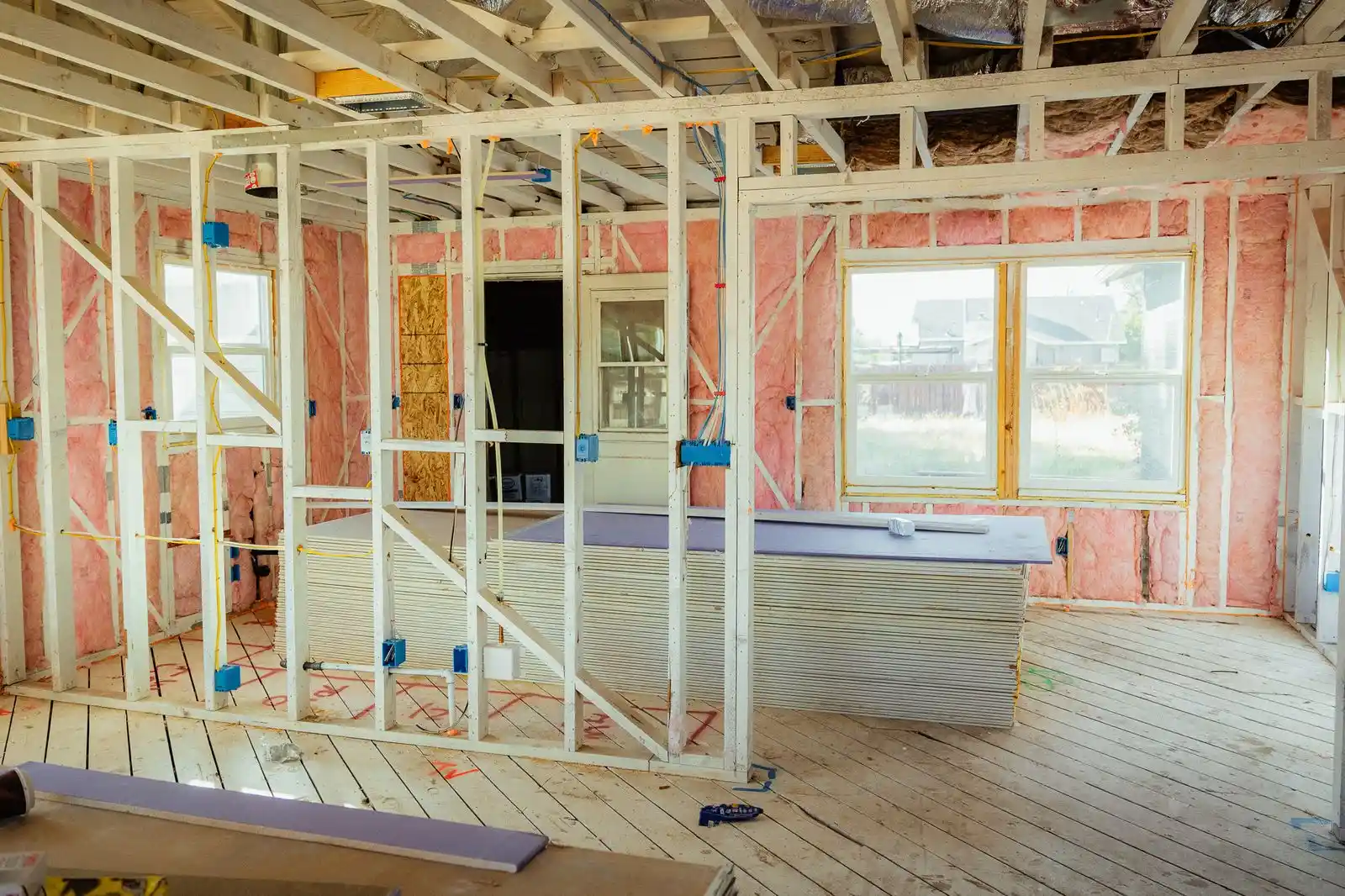
Usually, yes. If you continue the existing fixed-rate loan while rebuilding, you ordinarily keep your rate. That’s the reassuring core answer.
Here’s how the mechanics work. Your insurance settlement check is commonly made payable to both you and your mortgage servicer. The bank places the dwelling proceeds in a loss-draft account and releases them in stages as reconstruction progresses, with later releases tied to inspections and completed milestones (CFPB; Fannie Mae servicing rules). To release those draws, the servicer needs plans, bids, contractor licensing, and milestone documentation. That’s a normal protection of the funds, not an obstacle.
Be clear-eyed, though. No lender has to treat every loan or every project the same way. Your loan documents, the condition of the property, how much insurance coverage is available, and investor rules all still matter. This is reconstruction after major or total loss, not minor repair or restoration, and a documented reconstruction scope is what keeps the draws moving. Your insurance payout should be measured against what it actually costs to rebuild.
What happens to your rate if your insurance company pays off the loan?
Paying off the old loan with insurance proceeds ends that loan, and its rate, for good. If you later need a construction loan, a replacement-home mortgage, or a refinance, that’s a new loan at whatever interest rate is available then. That is the real risk behind the “interest rate if house burns down” question: not the fire itself, but what a later loan would cost.
There’s no universal “right” answer here. Before you direct any insurance money toward a payoff, understand three things: whether reconstruction can proceed under your existing loan, how much the servicer will release and when, and whether you’d need additional financing to finish. An insurance company may calculate your settlement on an actual cash value basis rather than the replacement cost of a full rebuild, and an actual cash figure can fall well short of what a rebuild will incur. Know that number before you decide.
Does interest keep accruing during disaster forbearance?

Forbearance pauses or reduces your mortgage payments for a set time. It is not a repayment plan, a payment deferral, or a loan modification, and “no payment now” is not debt forgiveness. The missed amounts still come due.
On interest, the honest answer is that it depends. The CFPB says interest could continue to accrue depending on the arrangement. But eligible Fannie Mae and Freddie Mac disaster payment-deferral options can move up to 12 missed payments to the end of the loan with no added interest on the deferred amount. Fannie and Freddie disaster forbearance can run up to 12 months for eligible borrowers. For FHA-insured loans, HUD provides a 90-day foreclosure moratorium for qualifying borrowers in Presidentially Declared Major Disaster Areas after a natural disaster. That kind of relief is one reason wildfires across America cause billions in damage yet leave families a path to recover. Ask your servicer exactly how interest is treated and how your missed payments must be repaid.
California and Pasadena homeowners insurance protections (as of this writing)
This section is date-sensitive. Verify current DFPI guidance before you act on it.
California now addresses interest on the insurance money itself. Under California Civil Code §2954.85 (AB 493), effective August 29, 2025, a covered bank or financial institution holding hazard-insurance proceeds in a loss-draft account for a one- to four-unit residence generally must pay at least 2% simple interest per year, credited annually or when the account closes, whichever comes first. This is interest on held insurance money, not your mortgage rate.
For the January 2025 Los Angeles-area wildfires, AB 238 lets eligible borrowers get up to 12 months of forbearance in 90-day increments, with limits on late fees and default interest during that period. Two more laws, AB 1842 and AB 1847, take effect January 1, 2027, so for now they’re upcoming protections, not current rights. Eaton-area and Pasadena homeowners should confirm their eligibility directly with their servicer, bank, and DFPI. For assistance with the claim itself, most homeowners insurance policies also fund temporary housing and other living expenses while you rebuild. Be aware that flood is its own category: flood insurance is separate, so a flood is not covered under standard fire coverage.
First steps: questions to ask your servicer, and how a reconstruction contractor helps

Before you decide anything, call your bank or servicer with this short list:
- Who owns or guarantees my loan, and is it fixed or adjustable?
- Can reconstruction proceed without paying off the mortgage?
- What is your written loss-draft procedure, and how are draws and inspections scheduled?
- Does interest continue during forbearance, and what happens to my missed mortgage payments afterward?
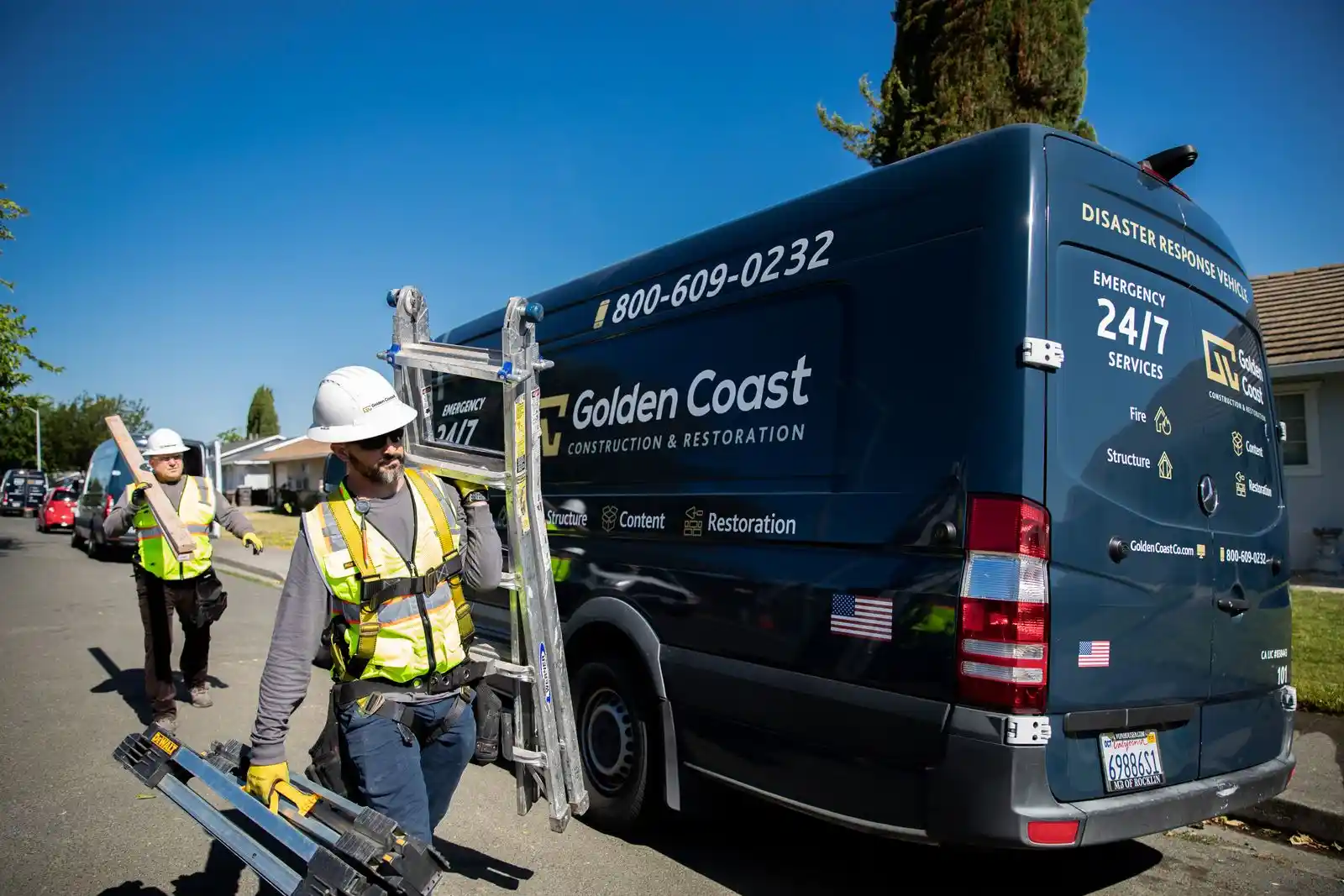
A contractor can’t change your rate or decide your forbearance. But a licensed, specialized one produces what a lender needs to release draws: a documented reconstruction scope that matches your coverage, plans, permitting support, milestone records, inspection support, and a certificate of completion. That documentation also helps the insurance company and your bank agree on the value of the work. We build that relationship with your adjuster so you are not dealing with the paperwork alone at the worst moment of your life. Golden Coast Construction & Restoration works on the merits here: California General Contractor CSLB #838443 (verify it on the CSLB lookup), IICRC-certified, a permanent Pasadena office serving our community, 24/7 emergency board-up, direct adjuster coordination, and by-the-book milestone payments across full fire recovery through reconstruction. When you’re ready, fill out the request on our website or call to set an appointment, and we’ll come out for an on-site assessment of your home so no detail goes overlooked and you don’t have to face it alone anymore.
Frequently Asked Questions
What happens to your mortgage if the house burns down?
The debt and your interest rate stay the same, and you keep paying while the claim is processed. Insurance proceeds may go toward repair and rebuilding the home or toward paying off the loan.
Does homeowners insurance cover you for fire?
Fire is a standard covered peril in most homeowners insurance policies, and loss-of-use coverage typically helps with temporary housing and living expenses while you rebuild. The typical policy treats flood as a separate line, so water from a flood is not covered under standard fire coverage. Read your policy and document your expenses.
Will I lose my low mortgage rate if I rebuild?
Ordinarily no. Continuing the existing fixed-rate loan while rebuilding keeps your rate. Paying the loan off with insurance proceeds ends it, and new financing comes at then-current costs and terms.
Does interest keep accruing while my mortgage is in forbearance?
It depends on the program, so ask your servicer. Some eligible disaster deferral options add no interest on the deferred amount.