Key Takeaway
Pasadena historic district design review requires a Certificate of Appropriateness or commission approval before a building permit is issued for exterior alterations, demolition, or reconstruction on designated and eligible properties. After a fire, this review determines what you can repair, replace, or remove, and it comes before the building permit, not after. A preliminary consultation with Design and Historic Preservation staff can reduce delays, which the City estimates at roughly two months for Certificate of Appropriateness review.
If your Pasadena home carries a historic designation, or sits inside one of the city’s historic districts or landmark districts, exterior alterations, additions, demolition, and new construction can require a Certificate of Appropriateness or design review before the City will issue a building permit. Start by looking the property up in the City’s historic-property database, then talk with Design & Historic Preservation staff. The approval path depends on the property’s contributing status, which district it sits in, whether the work is visible from the street, and whether the City classifies the scope as minor or major.
That matters after a fire in a way it doesn’t during an ordinary remodel. Review shapes what you repair, what you may replace, and what you should photograph before anything gets hauled away. It comes ahead of the building permit, not after it.
How do I find out if my property has a historic designation or sits in one of Pasadena’s landmark districts?

Search the City’s California Historical Resources Inventory Database (CHRID). It lists designated historic properties, landmark districts, and historic districts, along with properties identified through the City’s historic-resource surveys. No plaque and no individual designation? Review can still apply, because eligible and potentially eligible resources are regulated too.
Then confirm what you found with the City’s Design & Historic Preservation section, reachable at the historic preservation counter or by appointment through the historic-preservation portal. Neighborhood associations in districts like Bungalow Heaven and Madison Heights usually know their boundaries cold, but the written determination from the City of Pasadena is the one that governs. Get that determination in writing before you order custom materials or authorize any demolition.
What Pasadena landmark district status means for your repairs
Pasadena’s zoning code treats landmark districts and historic districts as separate designation categories, alongside individual landmarks, historic monuments, and historic signs. Bungalow Heaven, Madison Heights, and Garfield Heights are among the designated neighborhoods, while Old Pasadena falls inside the Central District, where the city’s design review runs through the Design Commission. Landmark district status doesn’t freeze your house in place. It means exterior changes get measured against adopted standards before city planning signs off on a permit.
Like most California cities with designated districts, Pasadena reviews that work to protect the neighborhood character and architectural heritage the designation was meant to hold onto, the same qualities buyers seek in these streets and many owners tie to property values.
One jurisdictional note worth checking early: Altadena and unincorporated areas follow LA County rules, not Pasadena’s municipal code. Neighboring streets can sit under entirely different processes.
Designated historic resources, contributing properties, and what the terms actually mean
| Term | What it means for your project |
|---|---|
| Designated | Formally listed as a landmark, monument, or historic sign, or as a contributor in a designated district. Review applies. |
| Eligible | Identified by survey or evaluation as meeting designation criteria, without formal designation. Review can still apply. |
| Contributing | Contributing homes inside a district that help convey its historic character. |
| Non-contributing | Inside the boundary but not a contributor. This does not mean unrestricted. |
Non-contributing properties can still face review for new primary structures, demolition, larger additions, accessory structures, and fences. Separately, when demolition or a major project is proposed on a building, structure, site, or object 45 years old or older, the code can require a Historic Resource Evaluation. A fresh evaluation is generally unnecessary if the property was evaluated or surveyed within the preceding five years, or if the City prepares one through the CEQA process. Age by itself doesn’t make a house historically significant. It triggers the evaluation when the scope crosses the code threshold.
Pasadena design review vs. a Certificate of Appropriateness: which zoning code process applies?

These are two different processes, and homeowners mix them up constantly. A Certificate of Appropriateness is the historic-resource approval used for covered work outside the Central District (except CD-RM districts). Ordinary design review is the City’s architectural review process, and within most of the Central District, which takes in Old Pasadena, the Design Commission handles covered additions, alterations, demolition, relocation, and new construction that way.
| Where the property is / what the project is | Likely process |
|---|---|
| Historic or landmark district outside the Central District | Certificate of Appropriateness |
| Central District (except CD-RM) | Design Commission / design-review thresholds |
| Minor project, designated resource | City staff review |
| Major project, designated resource | Historic Preservation Commission |
| Eligible but undesignated resource | Staff for major alterations; Commission for demolition |
| Project triggering both | Director or Design Commission, with a Historic Preservation Commission recommendation |
When both reviews are triggered, the Historic Preservation Commission’s recommendation is based on the Secretary of the Interior’s Standards. Treat the table as a screening guide only. The controlling rules live in Pasadena Municipal Code Chapter 17.62, and only the City can make a property-specific determination.
What exterior alterations in Pasadena historic districts are exempt, minor, or major?
Work that is usually exempt
Outside the Central District, the code exempts paint colors and stains, routine maintenance and minor repairs, most landscaping (protected trees excluded), interior alterations, screens and awnings, flat concrete work, rear-yard walls and fences, re-roofing when the material doesn’t change, exterior light fixtures, and window and door grilles. Central District thresholds may still capture comparable exterior work. And exempt from historic review is not exempt from building, zoning, fire, or tree permits.
Minor projects city staff can review
Minor alterations include in-kind replacement of deteriorated historic features, like-for-like window and door replacement, re-roofing in a different material that replicates the existing or original, some secondary-elevation additions, work on period garages and accessory structures, and new fences, walls, retaining walls, and driveway gates in a historic or landmark district.
Major projects that go to the Historic Preservation Commission
Major work includes demolition or relocation, removal of a character-defining feature, significant changes to a street-facing elevation, changes to two or more window design features, changes to door or opening sizes, new cladding that alters appearance or texture, square footage added to a primary elevation, a new primary structure in a designated or eligible district, demolition of a non-contributing resource in a designated district, and an addition taller than the existing building when visible from the street. Certain additions or new houses on non-contributing properties are measured against a 500-square-foot threshold and a median-house-size test within a 500-foot radius inside the district.
Here’s the part that catches fire-damaged homes: a scope your contractor describes as “repair” can become a major alteration once enough exterior material comes off. Ask where the line sits before the siding does.
Does “not visible from the street” mean no historic review?

Not reliably. Inside designated or eligible districts, review generally reaches exterior alterations visible from public and private streets, and alley views are excluded. Individually designated landmarks and monuments are different. Work outside public view can still be reviewed when it affects character defining features or the building’s overall historic integrity.
What to do first after a fire in one of Pasadena’s historic districts
- Follow the City’s safety placard and entry restrictions. Don’t enter a posted building until you’re cleared to.
- Get emergency board-up and roof tarping in place so weather stops adding damage.
- Photograph every elevation and surviving detail, with a photo key tying images to locations, before cleanup or selective demolition. See documenting fire damage for your insurance adjuster.
- Get structural and hazardous-material assessments where warranted. Older Pasadena homes often need asbestos and lead testing.
- Separate and label salvageable material rather than dumpstering it. More on emergency board-up and salvage.
- Ask the City to confirm your historic status and review path in writing.
- Develop the permanent repair or reconstruction scope, then submit for historic review before the building permit where required.
One distinction worth holding onto: the Director may authorize work necessary to protect public health and safety, but that covers the immediate hazard only. Emergency stabilization is not approval for permanent demolition or alteration.
How the city evaluates your design: the Secretary of the Interior’s Standards

The Pasadena design guidelines for historic districts and the NPS rehabilitation guidelines start from the same principle: repair before replacement. Retain historic material where it can be saved, limit replacement to what genuinely cannot be repaired, and match design, color, texture, visual qualities, and where possible material. Missing features can be reconstructed when physical, photographic, or documentary evidence supports the design.
Additions should be compatible with the historic building but distinguishable from it. Reviewers push back on conjectural detail, the “historic-looking” bracket the house never had. Massing, scale, roof form, materials, and street-facing character are what the Standards protect.
What a Certificate of Appropriateness application has to include
The City’s Certificate of Appropriateness packet dated May 22, 2026 asks for:
- The application form and a project narrative
- Photographs of the property, the affected features, and surrounding context, with a photo key
- Architectural drawings where required: site plan, floor plans, existing and proposed elevations
- Demolition calculations where relevant
- Detailed window and door schedules
- Material information, product data, samples, or installation details
- Structural or historic-professional reports where required
On fees, the City’s general FAQ says no fee is charged for Certificate of Appropriateness review, while the 2026 packet requires fees for undesignated historic properties and points to the current fee schedule. Treat the 2026 packet as the newer source and confirm with staff. Our walkthrough of how to apply for a Certificate of Appropriateness covers the submittal in more detail.
What happens if the home is severely damaged or a total loss?
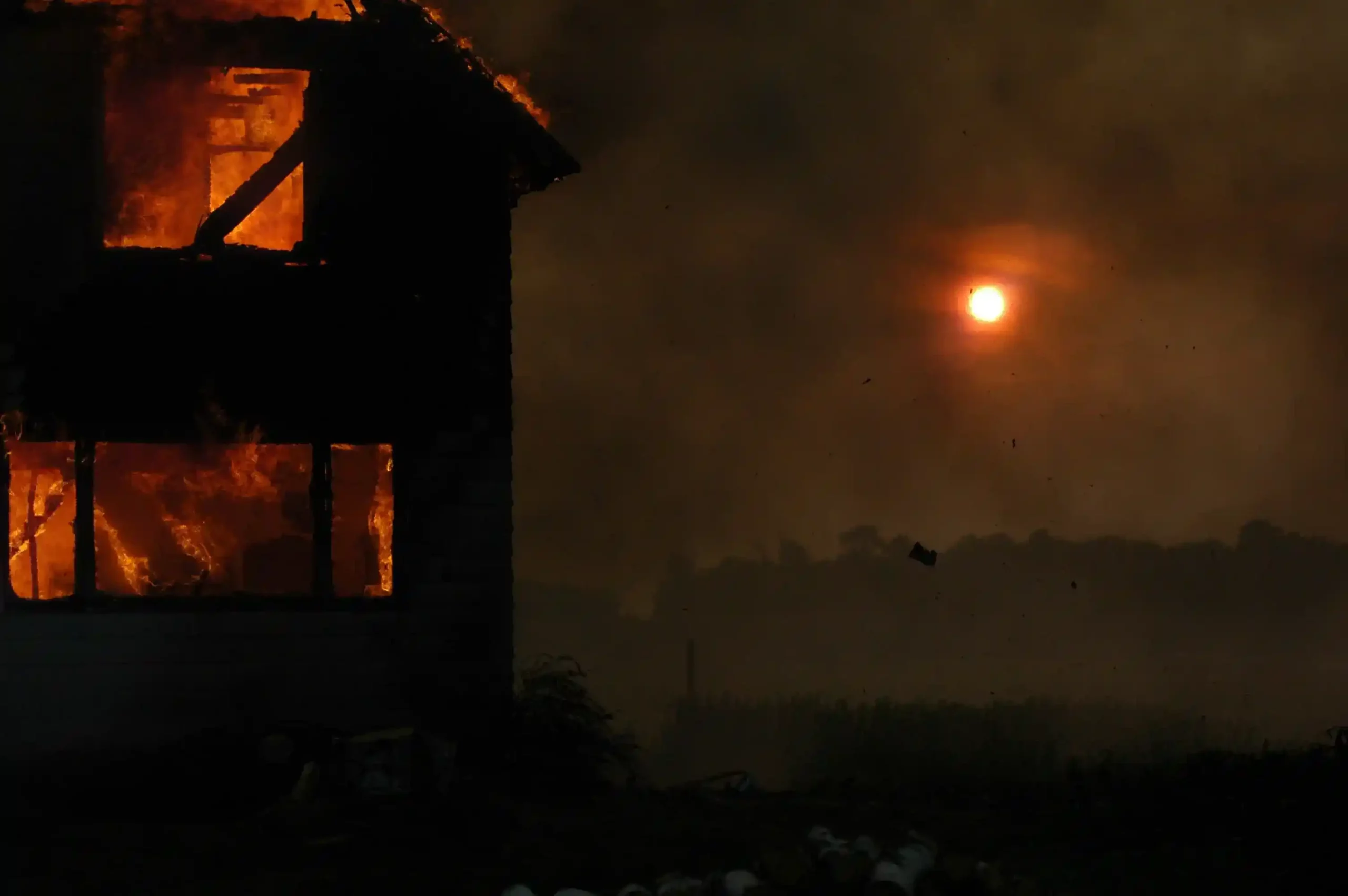
Pasadena’s code defines demolition broadly: complete destruction or removal, removal of more than 50% of a building’s perimeter walls, and substantial removal of a structural wall on a primary or street-facing elevation where that may adversely affect historical significance.
To approve demolition of a designated or eligible resource, the Commission must make the general required finding plus one additional finding. One route requires substantial evidence of severe structural damage that cannot be repaired, from at least two qualified professionals managed by the City and paid for by the applicant. Others involve the absence of economically reasonable rehabilitation options or a compelling public interest. Salvage of historic materials and archival-quality documentation can be imposed as conditions. Demolition of a contributing primary structure in a district under eligibility review can be delayed up to 365 days.
A red placard does not by itself establish that demolition is the only option. Rehabilitating a surviving historic building is a different scope, approval, and contract from constructing a replacement after total loss. We break that down in repair, rehabilitation, or full reconstruction.
For properties red-tagged after the January 7, 2025 Eaton Fire: Pasadena adopted Ordinance 7444, allowing eligible red-tagged structures to use modified rebuilding standards where the project meets requirements such as substantially similar placement, with limits involving 10% or 200 square feet for certain projects. City Council materials dated May 5, 2025 called for extending the ordinance by 22 months and 15 days. That figure is a recovery provision, not a general allowance for historic properties. Get written confirmation from your recovery planner and preservation staff, and check current status on the City’s Eaton Fire recovery page. See also our Eaton Fire rebuild rules and permit path.
Building codes, fire-resistant materials, and solar panels on historic homes
Historic approval doesn’t replace life-safety and building-code review. The 2025 California Building Standards Code took effect January 1, 2026, and the 2025 California Historical Building Code carried forward the substantive provisions of the 2022 edition. The CHBC is state law offering alternative regulations for qualified historic buildings while maintaining occupant safety. A designated resource may use it on request when work must meet the Secretary of the Interior’s Standards, and an undesignated property may qualify if the Director finds it eligible.
Can you use modern fire-resistant materials? Can you add solar? Both are commonly workable, and many mechanical upgrades sit largely out of public view. Each turns on compatibility, placement, and visibility from the street, and approval is project-specific. No contractor can promise the City will approve a particular product. More in our piece on the CHBC for fire-damaged historic properties.
Bungalow Heaven, Garfield Heights, and landmark districts with their own conservation plan
Projects in Bungalow Heaven, Garfield Heights, and Banbury Oaks are processed under their district conservation plans. Where a plan conflicts with the general ordinance, the plan controls, except for the citywide appeal and call-for-review procedures. In Bungalow Heaven, the plan speaks directly to porches, roof pitches, and Craftsman detailing, so a fire scope there is measured against it first.
Working with neighborhood associations in your district
Find your plan on the City’s historic-preservation documents page. Active associations publish plain-language summaries worth reading, and Pasadena Heritage tracks proposed changes across the districts. Some associations ask to see plans before a public hearing, which is usually time well spent. The City’s determination still governs your permit.
Mills Act contracts and property tax on a fire-damaged historic home
The Mills Act is state law. It lets a city and the owner of a qualified historic property enter a contract that can reduce property tax in exchange for a schedule of restoration, rehabilitation, and maintenance work. Pasadena administers its own program, with City Council approval of contracts.
If your property is already under contract, your fire repair and rehabilitation work interacts with that schedule, and some of it may count toward maintenance obligations you already committed to. Raise it with preservation staff early rather than after the scope is set. Owners weighing a new application after a fire should ask how a contract would sit alongside the review path for their scope, and confirm current terms on the City’s Mills Act page. Mills Act contracts run with the property, so they matter at resale too.
Permit timeline: how much time does historic review add?

A City FAQ estimates that Certificate of Appropriateness review generally delays a building permit by about two months. That’s an estimate, not a guaranteed deadline, and the 2026 packet makes no processing-time promise. What moves the number: hearing schedules, incomplete submittals, revisions, appeals, and plan check running alongside the design review process.
A preliminary consultation at the historic preservation counter, before drawings are finalized, usually saves more time than it costs.
Choosing a contractor for historic fire repair or reconstruction
Verify any contractor’s license yourself in the CSLB license lookup. Then ask about historic work specifically: who prepares the photo, salvage, and change documentation, and who has done this in a Pasadena landmark district before.
Require a written scope that separates emergency mitigation, historic repair, and reconstruction as distinct phases with distinct approvals. Never authorize permanent demolition on a verbal opinion. Use milestone payments tied to completed work and written change orders for anything added.
Two California protections are worth knowing. A down payment on a home improvement contract cannot exceed 10% of the contract price or $1,000, whichever is less, and you have a three-day right to cancel. Get three estimates. Free consultations are common in this trade; a firm price quoted without an on-site inspection is not, and “sign by Friday” pressure is a reason to slow down. Your contractor doesn’t decide historic eligibility or code compliance. City staff and the applicable review authority do.
Getting an on-site assessment

Golden Coast Construction & Restoration works fire recovery only, from emergency board-up through reconstruction, with a permanent office in Pasadena and 24/7 emergency response. We’re IICRC-certified and licensed as a California General Contractor, CSLB #838443, which you can confirm in the lookup above. We stabilize a property without destroying material that may still be recoverable, produce photographs and scope documentation the adjuster and the City can both use, and tell you honestly whether what’s standing is a repair or a rebuild. Payments follow milestones.
We can’t promise City approval, a review timeline, or a price without walking the property. If you’d like an on-site assessment, reach out and we’ll come look.
Frequently Asked Questions
Does a non-contributing house in a historic district still need design review?
It can. New primary structures, demolition of a non-contributing resource in a designated district, larger additions, accessory structures, and fences may all be reviewable. Confirm your specific scope with staff.
Can I replace fire-damaged windows on a historic home in Pasadena?
Like-for-like replacement of deteriorated windows is typically minor. Changes to two or more window design features, or to opening sizes, are major. Schedules are part of the application either way. More in repairing or replacing historic windows after a fire.
Are interior fire repairs subject to historic review?
Interior alterations are listed among the exemptions outside the Central District, though individually designated landmarks can face broader review. Interior work still requires building, electrical, mechanical, and plumbing permits, plus hazardous-material clearances.
Does the Eaton Fire Rebuild Ordinance waive historic review?
Ordinance 7444 modifies certain rebuilding standards for eligible red-tagged structures. Available City materials do not establish that it removes every historic-review requirement, so get written confirmation before relying on it.