

The fire’s out, and now you’re standing in the middle of the aftermath trying to figure out what happens next. Golden Coast Construction & Restoration helps Los Angeles homeowners and business owners through every stage of fire recovery — from emergency board-up through full reconstruction — and we work directly with your insurance carrier so you’re not managing that process alone.
Call us any time, day or night, at (626) 514-0485. We maintain a permanent local office serving the Los Angeles area.
Request an On-Site Assessment
Tell us what happened. We call you back fast; our 24/7 emergency line is always answered.
We never share or sell your information.
24 Hour Emergency Service
IICRC-certified crews on-site in under 60 minutes, 24 hours a day, 7 days a week.
Full Fire & Smoke Restoration
Soot removal, odor elimination, structural drying, and complete reconstruction.
Insurance Claim Advocacy
We work directly with your adjuster using our all in one platform software to maximize your claim.
- 24/7 Emergency Line
- Top RatedGoogle · Yelp · BBB

- CSLB Lic. #838443
- Pasadena office · 9 mi away
If your house has just burned, here is the short version of what we do. Golden Coast Construction & Restoration handles fire damage restoration in Los Angeles from the first emergency board-up through the last signed inspection, including full reconstruction when the structure can’t be saved. We are a licensed California general contractor, CSLB #838443, and you can confirm that yourself in about a minute. Our fire restoration team is IICRC-certified, our Southern California office is in Pasadena, and our emergency line answers 24 hours a day.
Securing the property comes first. Boarding broken windows and tarping an open roof keeps weather and unauthorized entry from causing further damage on top of the fire, and it protects your claim while the adjuster is still scheduling.
We won’t quote your job over the phone. No honest price exists until someone stands in the house and opens up what the fire hid. Call (626) 514-0485 or send us the address and we’ll come look.
Our Fire Damage Restoration Services in Los Angeles
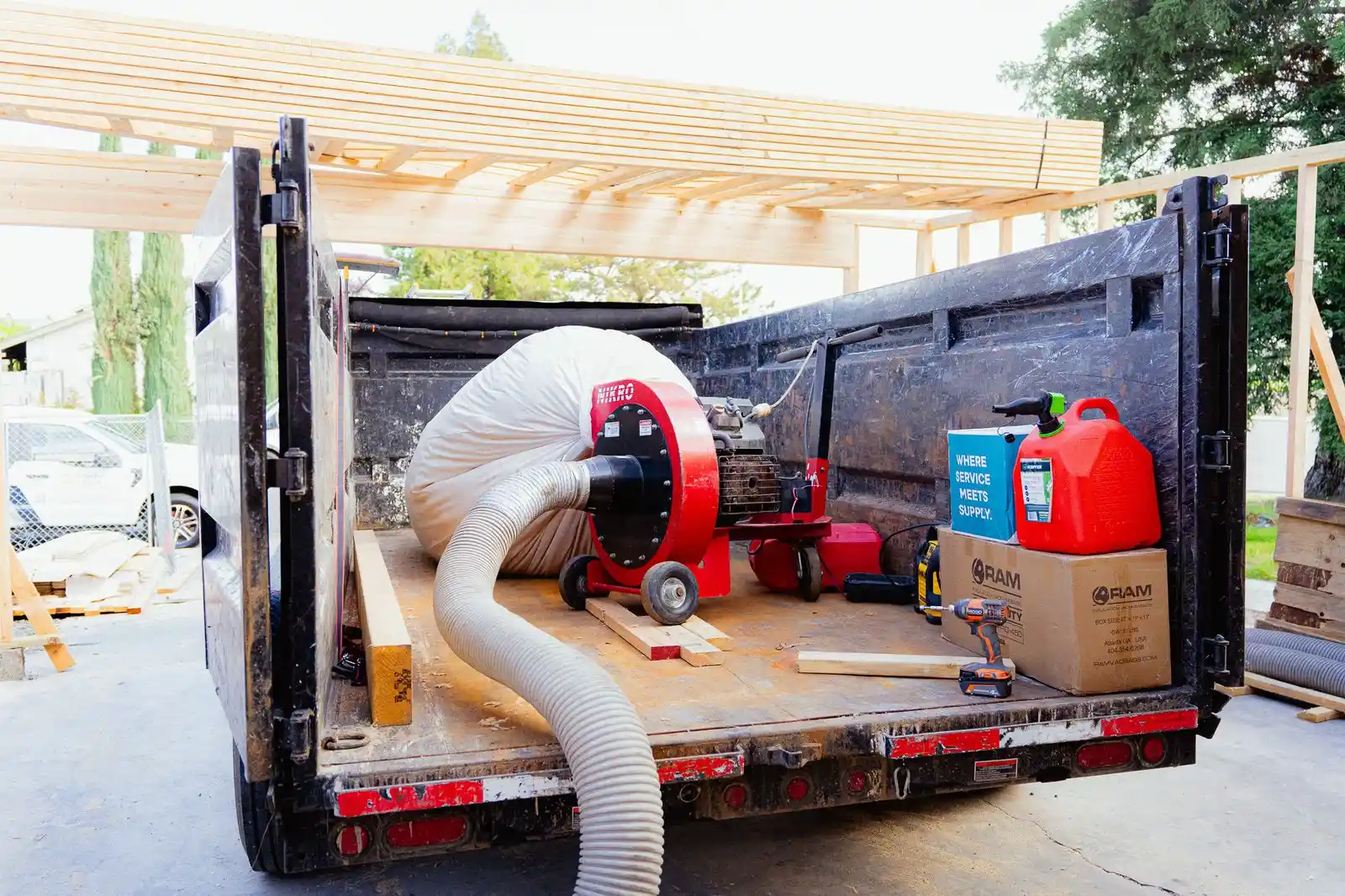
We cover the whole arc of fire recovery, and we tell you in writing where restoration ends and reconstruction begins. When affected materials can be cleaned, dried, deodorized, and repaired, that is restoration. When framing, roof structure, or whole rooms have to be replaced under permit and inspection, that is reconstruction, a different kind of project on a different schedule. Fire recovery is the only work we take, which is why our fire damage restoration scopes separate those two things instead of blurring them.
Our fire damage restoration services in Los Angeles cover:
- Emergency services: 24/7 board-up, roof tarping, and site security
- Smoke damage cleanup, including smoke and soot residue on structure and contents
- Odor removal for lingering smoke odors and indoor air quality work
- Water removal, structural drying, and mold remediation after firefighting efforts
- Debris removal, specialized cleaning of affected areas, and fire damage repair
- Contents restoration for salvageable personal items, pack-out, and storage
- Reconstruction and construction services under LADBS permit
- Asbestos and lead testing where the age of the property warrants it
Emergency services: board-up, roof tarping, and site security
Emergency response is the stage where speed genuinely changes the outcome. The hour the fire authority releases the property, we close it up. Openings get boarded, burned roof sections get tarped, and the perimeter is secured so the house stops taking on rain, wind, and foot traffic that nobody authorized. A quick response also keeps the property safe from people wandering into a structure no one has cleared.
This protects the claim as much as the structure. Water damage that happens after the fire, because a window sat open for a week, is an argument you do not want to have with an adjuster. We photograph the damaged property before and after stabilization for insurance purposes, so the record of what the fire did is fixed on day one.
Smoke, soot, and smoke residue removal, including rooms the fire never reached
Smoke damage is almost always larger than the burn, because smoke travels. It moves through ventilation ducts and wall cavities and settles in rooms on the far side of the house, which is why a Los Angeles fire damage restoration scope has to account for the HVAC system, not just the visibly charred area. Soot particles are small enough to ride air currents into closets and drawers two rooms away.
Wiping surfaces is not cleaning soot. Smoke residue is oily and acidic, it smears into finishes, and it spreads when handled wrong, so smoke damage restoration is matched to the material: dry sponge on some surfaces, solvent or alkaline cleaning on others, and removal where the residue has penetrated too far to clean. Contents go through the same sorting, with salvageable items cleaned and inventoried rather than thrown in a dumpster to save time.
Odor removal and air quality
Odor issues are treated with specialized equipment, not air freshener. HEPA-filtered air scrubbers pull smoke particulate out of the indoor air and keep it from resettling on cleaned surfaces. Thermal foggers push a deodorizing agent into the same cracks and porous materials the smoke entered, neutralizing odor where wiping cannot reach. Ozone generators are used on unoccupied, sealed spaces for persistent smoke odor.
Ask any restoration company you’re comparing which of those they use and on what. The answer tells you a great deal.
Water damage removal, structural drying, and mold remediation
Putting the fire out soaks the building. Suppression water saturates drywall, insulation, framing, and flooring, and in an older Los Angeles house it runs into cavities nobody can see from the hallway. That hidden water damage is one of the most common reasons a fire loss turns out bigger than it first looked.
Mold growth can begin within 24 to 48 hours when that moisture isn’t managed, so we pull standing water first, set air movers and dehumidifiers, and track progress with moisture meters until materials meet dry standard. Where mold damage has already started, mold removal is handled under containment before any repairs close a wall back up. We take water damage and mold work strictly as part of fire recovery, never as a separate line of business.
Debris removal and structural fire damage repair
Nothing gets rebuilt before the damage is assessed and the debris is out. We inspect first, remove charred building materials and unsalvageable contents, then clean the exposed structure with professional grade equipment made for soot-loaded framing.
Fire damage repair follows: walls, floors, ceilings, and framing damaged by heat, flames, or suppression water. Structural damage isn’t always visible, because heat weakens members that still look intact, which is why the assessment drives this stage rather than what’s visible from the curb. Where framing has to be replaced instead of cleaned, that structural repair is done under permit and inspected before anything covers it.
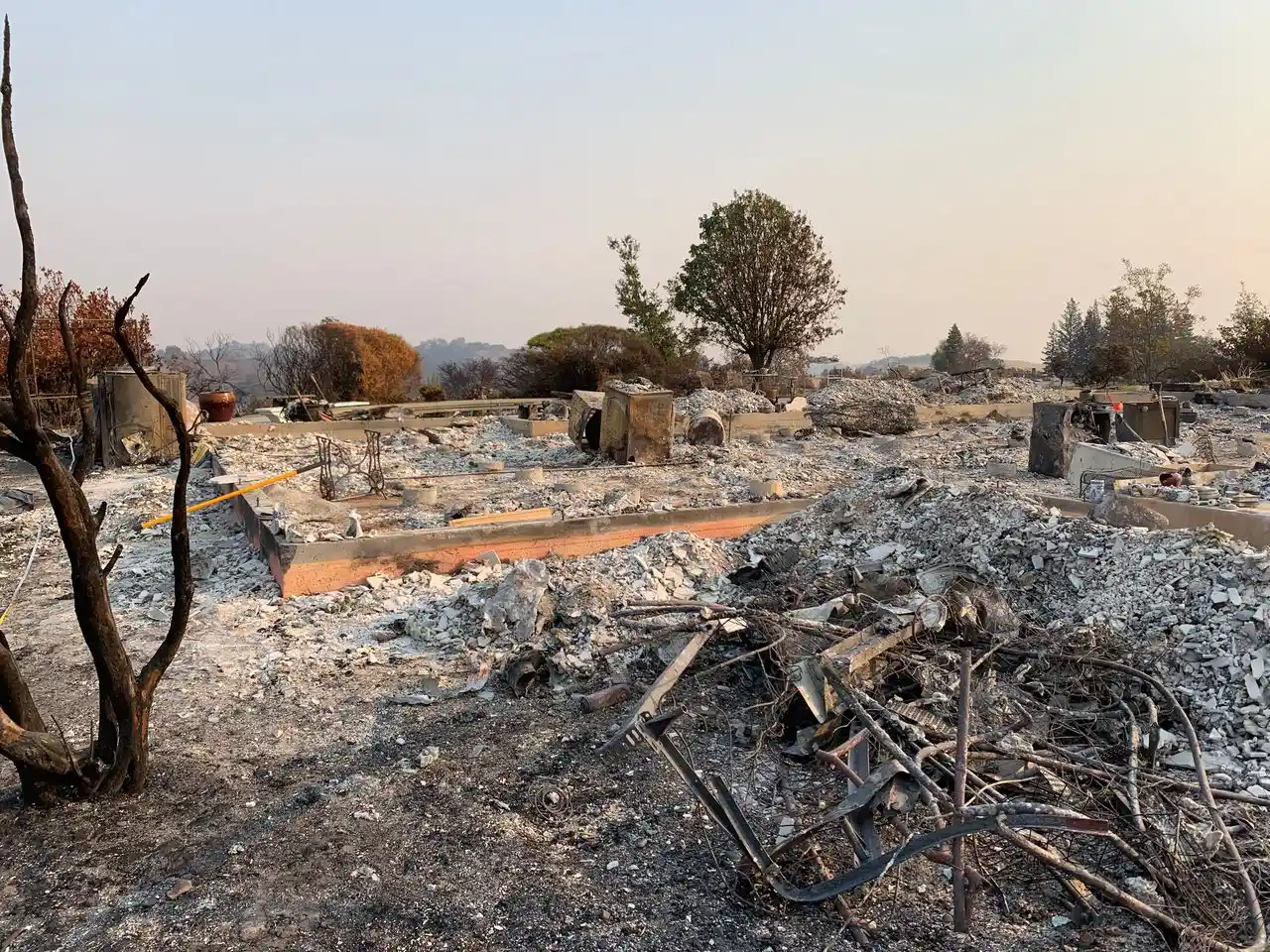
Reconstruction and construction services after a major or total loss
Rebuilding is not an enlarged cleanup. A major or total loss means drawings, plan check, permits, inspections, and compliance with current Los Angeles building code, even where the original house predated it.
We carry residential and commercial reconstruction through to a signed certificate of completion, with the same contractor responsible from the board-up to the final walkthrough. One company, one contract, one point of contact.
Why Los Angeles Property Owners Choose Golden Coast
One licensed contractor handles the job from emergency board-up through move-in, with the homeowner’s protections built into how the contract works rather than mentioned once and forgotten. Our Southern California office is in Pasadena, not a call center in another state routing your address to whoever is available.
Verify us before you call us. Then call (626) 514-0485 or request an on-site assessment.
Licensed, verifiable, and certified: check us yourself
Our California contractor license is CSLB #838443. Look it up on the CSLB license check and confirm the license is current, the classification fits the work, and the name on the license matches the name on your contract. Do that for every fire damage company you’re considering.
IICRC certification is the technical half. It means our restoration team is trained to published industry standards for smoke and soot remediation, water damage mitigation, and structural drying, including how materials are tested, documented, and released as dry. A license permits the work. The certification is about doing it correctly.
Payments tied to completed work, not to a signature
Our contracts use a milestone payment schedule, so money moves after work is finished and verified, never as a lump sum up front. CSLB sets the down payment on a home improvement contract at no more than 10 percent of the contract price or $1,000, whichever is less. Any Los Angeles contractor asking for more than that at signing is a reason to stop.
Added work gets a written change order before it starts. We run QA inspections at milestones and issue a signed certificate of completion at the end. Your written contract must state the cancellation period that applies to that agreement, so read that clause before you sign anything, including ours.
Documentation your insurance company can actually use
Most homeowner’s policies cover fire damage, and the claim is won or lost on documentation. We photograph conditions room by room, take measurements, record moisture readings through drying, keep testing results, and write a line-item scope your insurance provider can price against.
We talk directly to your adjuster and the other insurance representatives on the file so you aren’t relaying technical answers you shouldn’t have to know. You stay the client, and in California you choose your own contractor. We work with your insurer; we don’t work for them.
How the Fire Damage Restoration Process Works
Five steps run from your first call to final inspection, so you know what the next stretch of the recovery process actually looks like.
Step 1: Emergency call and site stabilization
You call, we answer, day or night. Once the fire department has released the property, a crew boards openings, tarps the roof, and shuts down anything still creating risk, including electrical systems that suppression water reached. We document the condition we found before anything is touched or moved.
Step 2: On-site damage assessment and testing
A complete inspection determines the integrity of the affected structure, which is the only honest basis for a number. We examine framing, the attic and accessible cavities, the HVAC system and its ductwork, moisture levels throughout, and contents that may be salvageable. Anything needing immediate attention, like an unstable wall, gets flagged on the spot. Asbestos or lead testing is performed where the age of the construction warrants it, before any destructive work begins.
Step 3: Written scope, insurance review, and your approval
You get a line-item scope that separates emergency services, restoration, code-required upgrades, and reconstruction. We review it against the insurer’s estimate and document supplements with photographs, measurements, and permit requirements where their scope misses work the property genuinely needs. Insurance claims in Los Angeles often turn on local code and permitting requirements an out-of-area estimator didn’t account for.
Step 4: Cleaning, drying, structural cleaning, and repairs
Crews work the agreed scope in sequence: contents handling, soot residue removal, drying to standard, deodorization, structural cleaning, then repairs. You’ll know who is in your house on a given day. Progress is verified at each milestone before a payment moves, which keeps the money behind the work rather than ahead of it.
Step 5: Permits, inspections, and signed completion
Permitted work is inspected before it gets covered up. Depending on scope, LADBS inspections can include foundation, concrete, framing, shear-wall and roof nailing, plumbing, electrical, mechanical, and a final inspection. We schedule them, meet the inspector, and hand you the completion documentation at the end.
What Fire Recovery Looks Like Across Los Angeles
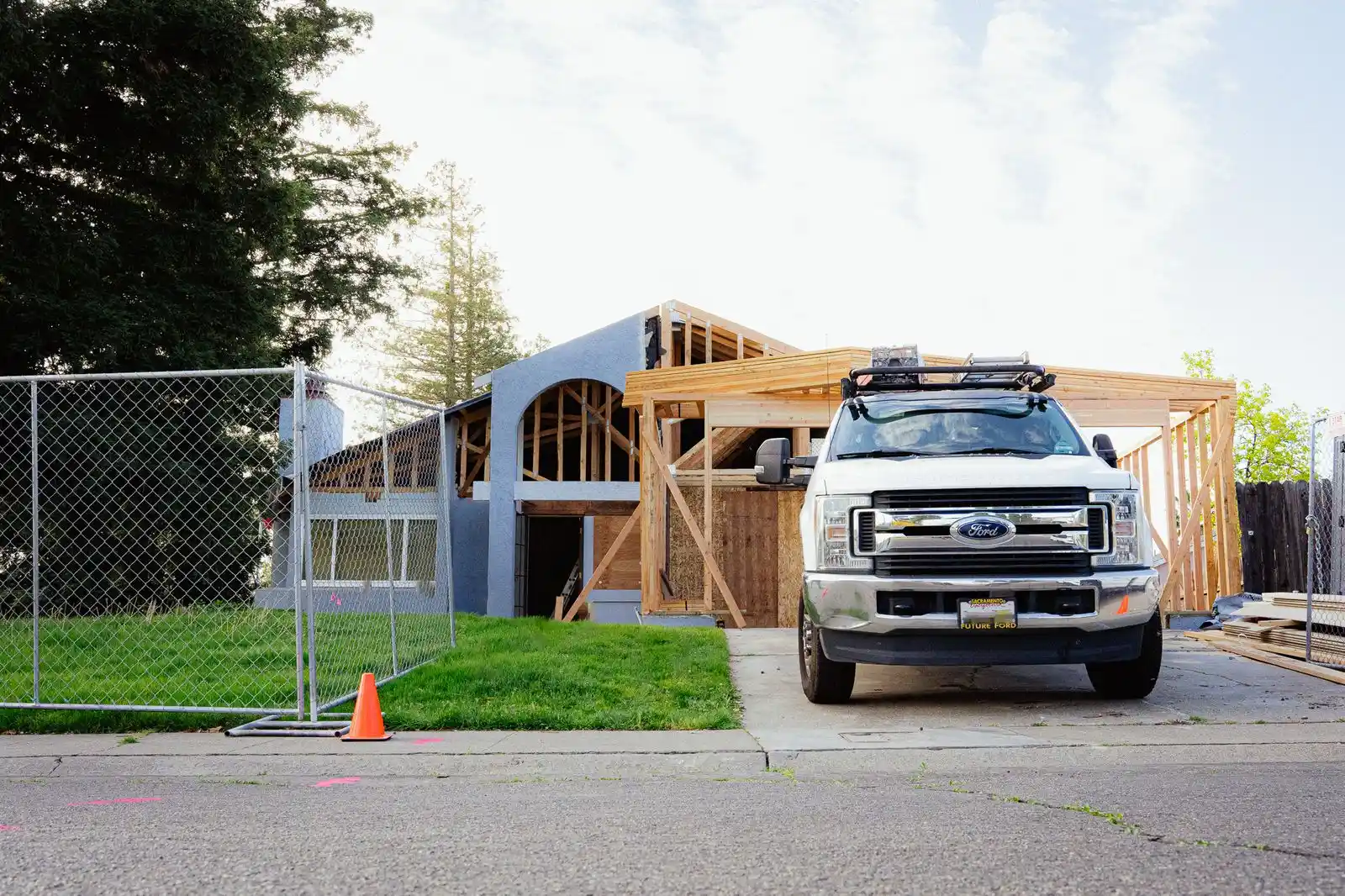
An older Los Angeles house is not a production home, and the permit path gets checked before anything is demolished or ordered. Getting that sequence backwards is how a repair stalls for months.
Older housing stock and historic neighborhoods
Roughly 70 percent of Los Angeles housing units were built before 1980, based on the 2020 to 2024 American Community Survey distribution published by City Planning. That age shapes fire damage restoration here: plaster instead of drywall, custom millwork, and construction old enough that asbestos or lead testing is a reasonable precaution rather than an upsell.
It also shapes what gets ordered. Highland Park-Garvanza holds Queen Anne, Shingle, Craftsman, Mission Revival, and Tudor Revival houses from the 1880s through the 1940s. The 1300 block of Carroll Avenue in Angelino Heights has the city’s densest concentration of 19th-century Victorians. Jefferson Park, known locally as “The Bungalows,” is full of early-1900s single-story Arts and Crafts houses. Hancock Park went up largely in the 1920s with two-story Period Revival homes on deep setbacks. Damaged siding, windows, and trim on these houses usually have to be salvaged and matched, which is what home restoration in these neighborhoods really means.
Exterior alterations, additions, landscaping, and new construction inside a Historic Preservation Overlay Zone receive an additional historic-preservation review. The Miracle Mile HPOZ, for one, runs between Wilshire and San Vicente, from La Brea to Orange Grove.
Commercial property and multifamily fire damage restoration needs
Fire restoration services for a multifamily building or a commercial property mean unit-by-unit documentation, clear responsibility for shared systems, and coordination with more than one insurance company. Smoke and water damage rarely respect a demising wall, so we scope each unit separately while treating ducts, risers, and common corridors as one system. Owners also need a realistic sequence for which areas can reopen first, and we put that in the schedule rather than leaving it to guesswork.
LADBS permits, plan check, and jurisdiction
The Los Angeles Department of Building and Safety handles building permits, plan review, inspections, and code enforcement for properties inside the City of Los Angeles. We confirm jurisdiction in ZIMAS first, because a property that doesn’t appear there may sit outside city limits and be served by another city or by Los Angeles County.
Structural alterations, floor-plan changes, additions, demolition, and new construction require building permits and generally require plan check. Plan-check and permit fees are calculated from project valuation, so there is no typical fire-repair permit fee to quote you.
Review channels differ by project. Qualifying counter plan checks can finish the same day, while regular plan checks are returned within weeks depending on workload, with expedited review carrying an extra charge. Those are descriptions of the channels, not a schedule promise for your rebuild. For eligible 2025 wildfire repair and rebuild projects only, the L.A. One-Stop Rebuilding Center on Sawtelle Boulevard applies; it does not cover every fire loss in the city.
Hillsides, fire hazard zones, and weather on an open site
A hillside rebuild cannot be scheduled like a level-lot repair. Grading, recompaction, backfill, slope repairs, and substantial cuts or fills can require a grading permit plus soils or geology review, and that review often controls the critical path.
Projects in mapped High or Very High Fire Hazard Severity Zones can require Wildland-Urban Interface Code compliance and Fire Department Hydrant and Access Unit clearance. Grading work running between October 1 and April 15 requires rainy-season erosion-control planning, which also protects an open structure from new water intrusion. In designated Hillside Construction Regulation districts, weekday work is limited to 8:00 a.m. to 6:00 p.m., with only interior work allowed on Saturdays.
Reaching you from our Pasadena office
Our Southern California office is in Pasadena. Downtown and Northeast Los Angeles are reached through the 110 corridor, roughly 13 miles, while response time elsewhere depends on traffic, neighborhood, and site access, so we won’t promise an arrival time we can’t control.
Got Another Question?
Feel free to contact our office and one of our representatives will be glad to help you address all of your concerns and answer all questions you might have.
Pasadena officePasadena
Pasadena, CAAbout 9 miles from our Pasadena office, 260 N Los Robles Ave, Pasadena
Top RatedGoogle · Yelp · BBB
“Golden Coast Construction delivers world-class fire restoration … If you are in Altadena or have fire damage and need construction, this is the team you want to hire.”
Lee M. · Pasadena, CA
“When it comes to customer service and fire restoration their team is second to none.”
Lena A. · Pasadena, CA
“They are experts in the insurance and fire restoration business.”
Brenda S. · Pasadena, CA
“They have been very helpful getting us through one of the most difficult times of our lives.”
Lakisha J. · Pasadena, CA
“From the first day that we met the team from Golden Coast, we felt a sense of hope. They carefully planned the rebuild and kept us in the loop.”
Lawana C. · Roseville, CA
“If you’re going thru this kind of situation like I was after a fire you have come to the right company. They will make you feel at home and like family.”
Duaine M. · Roseville, CA
“November 7th 2025 we were given the keys back to our restored dream home with tears of joy.”
Al H. · Renton, WA
“Rebuilding a home after a fire is never easy, but Golden Coast Construction made it manageable—and even hopeful.”
Bobby C. · Roseville, CA
Kind Words From Our Neighbors
Real families from Pasadena to Renton share what it was like to call us on the worst day, and how our team stayed with them through the claim, the cleanup and the rebuild until they were home again.
From our reviews on Google, Yelp & BBB All reviews
“From the first day that we met the team from Golden Coast, we felt a sense of hope. They carefully planned the rebuild and kept us in the loop.”
“If you’re going thru this kind of situation like I was after a fire you have come to the right company. They will make you feel at home and like family.”
“November 7th 2025 we were given the keys back to our restored dream home with tears of joy.”
“Rebuilding a home after a fire is never easy, but Golden Coast Construction made it manageable—and even hopeful.”
“We are beyond grateful for the care, craftsmanship, and professionalism their team brought to every step of the project.”
“Their team of professionals made the process of rebuilding seamless and stress free. They took care of everything.”
GuileRoseville, CA “Golden Coast was there for us every step of the way. … The finished house is beautiful, and does not smell like smoke.”
Todd P.Roseville, CA “Golden Coast Construction delivers world-class fire restoration … If you are in Altadena or have fire damage and need construction, this is the team you want to hire.”
Lee M.Pasadena, CA “Golden Coast fought for me with my Insurance company when my insurance wanted to lowball the claim and cut corners. Golden Coast made sure things were done right.”
Donna P.Renton, WA “The finish work and attention to detail was top-notch and the resulting repairs look as if no damage had ever occurred before.”
Brian S.Renton, WA “Golden Coast did a phenomenal job.”
Sharon K.Roseville, CA “Best fire/water restoration and reconstruction company in Washington!”
Dave C.Renton, WA “When it comes to customer service and fire restoration their team is second to none.”
Lena A.Pasadena, CA “They are experts in the insurance and fire restoration business.”
Brenda S.Pasadena, CA “They have been very helpful getting us through one of the most difficult times of our lives.”
Lakisha J.Pasadena, CA “Home was completed a month earlier than the original estimated time.”
Jennifer J.Roseville, CA “The team assured me they could restore my home and they did it in less time than the original time line.”
Dee J.Renton, WA “I could not have gone through this without him. Very responsive and walked me through the entire process.”
Raquel C.Roseville, CA “The detailed workmanship made my home look almost brand new!”
Guyla M.Roseville, CA “Working with Golden Coast construction was the most effortless part of our home restoration.”
Dustin K.Renton, WA “Their combination of knowledge and care is truly unique and special.”
Charlie O.Roseville, CA “They just do top-notch work.”
Jennifer J.Roseville, CA “I would strongly recommend them to anyone.”
Thomasina H.Roseville, CA
From our Clients
Homeowners share, in their own words, what life was like after the fire and how our team helped them rebuild, from the first call to moving back home.
Rebuilding Dreams, One Story at a Time – Our Work Through their Eyes

Your Road Back Home
Our restoration process, step by step. From the first call on the day of loss to handing you the keys, you always know what happens next, who is handling it and how long it should take.
Frequently Asked Questions
Got Another Question?
Feel free to contact our office and one of our representatives will be glad to help you address all of your concerns and answer all questions you might have.
No honest figure exists without an on-site inspection. Severity, damage hidden in cavities and ductwork, the age of the materials, and whether the job is restoration or reconstruction all move the number substantially. Anyone who gives you a firm price from photographs or a phone call is guessing, and that is a red flag worth walking away from.
Most fire-damaged homes are restored rather than rebuilt. Restoration means cleaning, drying, deodorizing, salvaging contents, and repairing damaged materials. Reconstruction applies after a major or total loss, where structure is replaced under permit and current code. The inspection decides which one you have, and the two should never be priced or scheduled the same way.
Yes. Extraction, structural drying, and mold remediation are part of our fire damage restoration services because suppression water is part of the fire loss. We don’t sell water damage work on its own; it belongs to the fire claim, and it is documented in the same scope your adjuster reviews.
It depends on the scope. Replacing like-for-like finishes is different from structural alteration, and structural alterations, floor-plan changes, additions, demolition, and new construction require building permits and generally require plan check. Confirm jurisdiction first: a property that doesn’t appear in ZIMAS may be served by another city or by Los Angeles County rather than LADBS.
There is no honest citywide average. The sequence runs stabilization, inspection and insurance assessment, drying, agreement on scope, plan check if the work is structural, then construction inspections. Which plan-check channel the project qualifies for, and how many correction cycles come back, move the schedule more than anything on the job site.
Most homeowner’s policies cover fire damage, and we document the loss so your adjuster has what they need: photographs, measurements, moisture logs, testing results, and a line-item scope. You remain the client and you choose your contractor.
The City of Los Angeles and the surrounding metro, from our Pasadena office: Highland Park, Angelino Heights, Echo Park, Hollywood, Mid-Wilshire, Hancock Park, Jefferson Park, West Adams, the hillside communities, and the Valley. Neighboring incorporated cities have their own permit authorities, which we confirm before any work is scoped.
Talk to a Licensed Fire Restoration Contractor in Los Angeles
Here is what happens when you call. We ask what burned, whether the fire department has released the property, and whether anything needs securing tonight. If it does, a board-up crew goes out. Then we schedule the on-site assessment, which is how you get a real restoration scope instead of a guess.
Before you sign with anyone, including us, look up the license, read the cancellation clause in the written contract, and compare written scopes side by side rather than bottom-line numbers. Plenty of companies advertise free estimates; what matters is whether the estimate follows an on-site inspection and arrives as a line-item scope. We won’t ask you to decide on the spot. The fire already created all the urgency this situation needs.
Call (626) 514-0485 any hour for emergency board-up, or send us the details and we’ll set a time. Our Southern California office is at 260 N Los Robles Ave in Pasadena, about 13 miles from Downtown Los Angeles on the 110, and the people who answer are the people who show up.
Pasadena