

Key Takeaway
Restoration after wildfires starts only after officials clear your property and damage is fully documented, covering structural safety, smoke and ash removal, HVAC systems, contents, and suppression water drying. A qualified fire-recovery team stabilizes the home first, then determines whether selective repair or full reconstruction is needed. Wildfire ash can contain asbestos, lead, and heavy metals, so professional remediation is often required.
Restoration after a wildfire begins only after officials clear the property and the damage is documented. From there, a qualified fire-recovery team assesses structural safety, smoke and ash, HVAC systems, contents, and any water used during suppression. They stabilize and dry the property, remove contamination, verify the work, and reconstruct only the parts that can’t be safely restored. If you’re just back home or still waiting to return, this guide walks you through that sequence in order.
One note before we start. The phrase “restoration after wildfires” also describes the recovery of forests and burned land: the natural regeneration of trees, the planting of seedlings, the return of wildlife to damaged ecosystems. That is important work, and we touch on it below so you can tell the two apart. But this article is about your home.
Before Any Cleanup: Make Sure the Property Is Safe
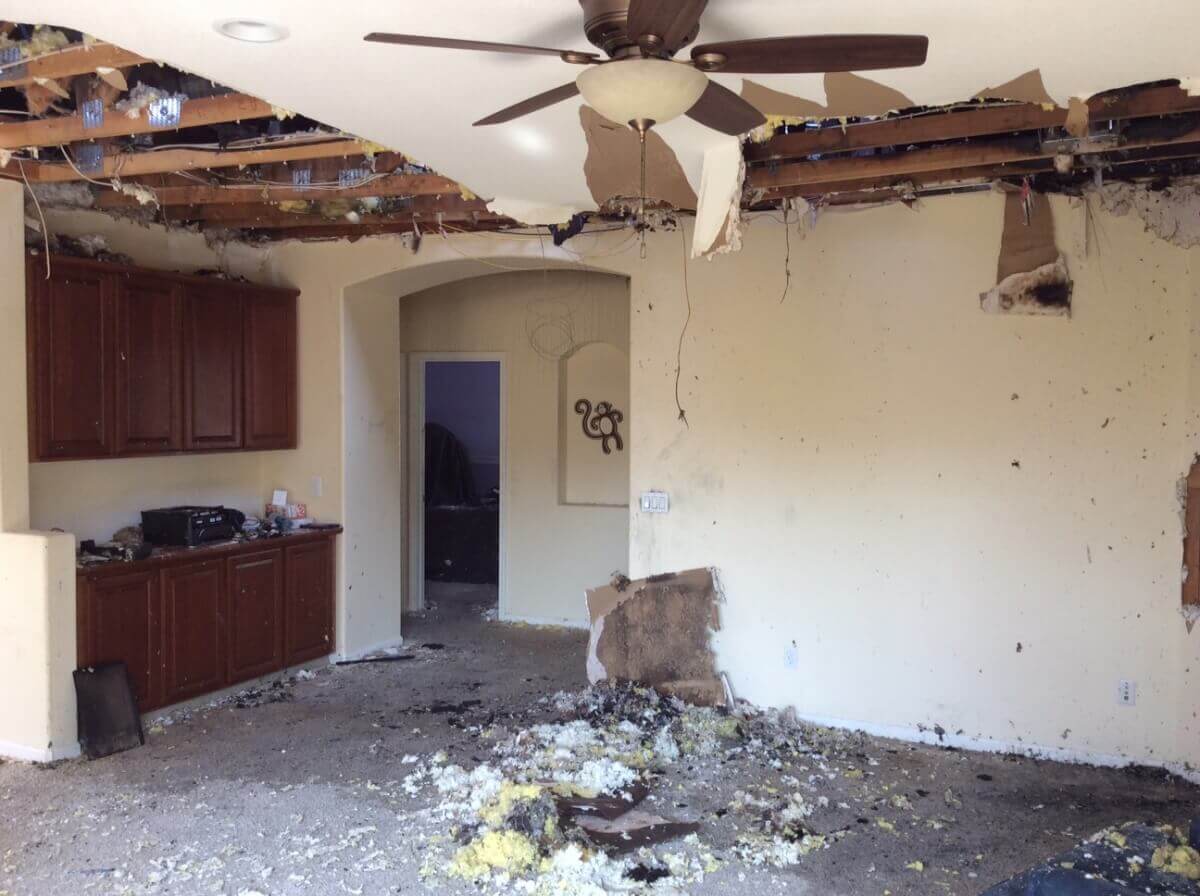
Don’t go back until local authorities have lifted evacuation restrictions and said the area is safe. Watch for colored placards on structures and follow any entry limits. Unstable buildings, downed power lines, damaged propane tanks, and hot ash are real hazards to your safety after a fire. Before you move or clean anything, photograph it. Ash from burned structures isn’t ordinary dust. The EPA and county health agencies note it can contain asbestos, lead, and heavy metals, so limited DIY cleanup calls for a properly fitted N95 or P100 respirator, and never a household or shop vacuum (it blows fine particles back into the air). Substantial ash from burned buildings is work for professional remediation.
What “Restoration After a Wildfire” Actually Includes
Two words get used loosely, and the difference matters for your scope, your documentation, and your claim.
- Restoration means stabilization, structural drying, removal of smoke, soot, ash, and odor, contents evaluation and cleaning, and selective removal and repair of materials that can be saved.
- Reconstruction (rebuilding) means permitted structural repair or rebuilding after major damage, demolition, or total loss.
The clean line between them: restoration ends where unsafe or structurally damaged materials require reconstruction. Knowing which one your home needs shapes everything that follows.
Which Recovery Path Does Your Home Need?
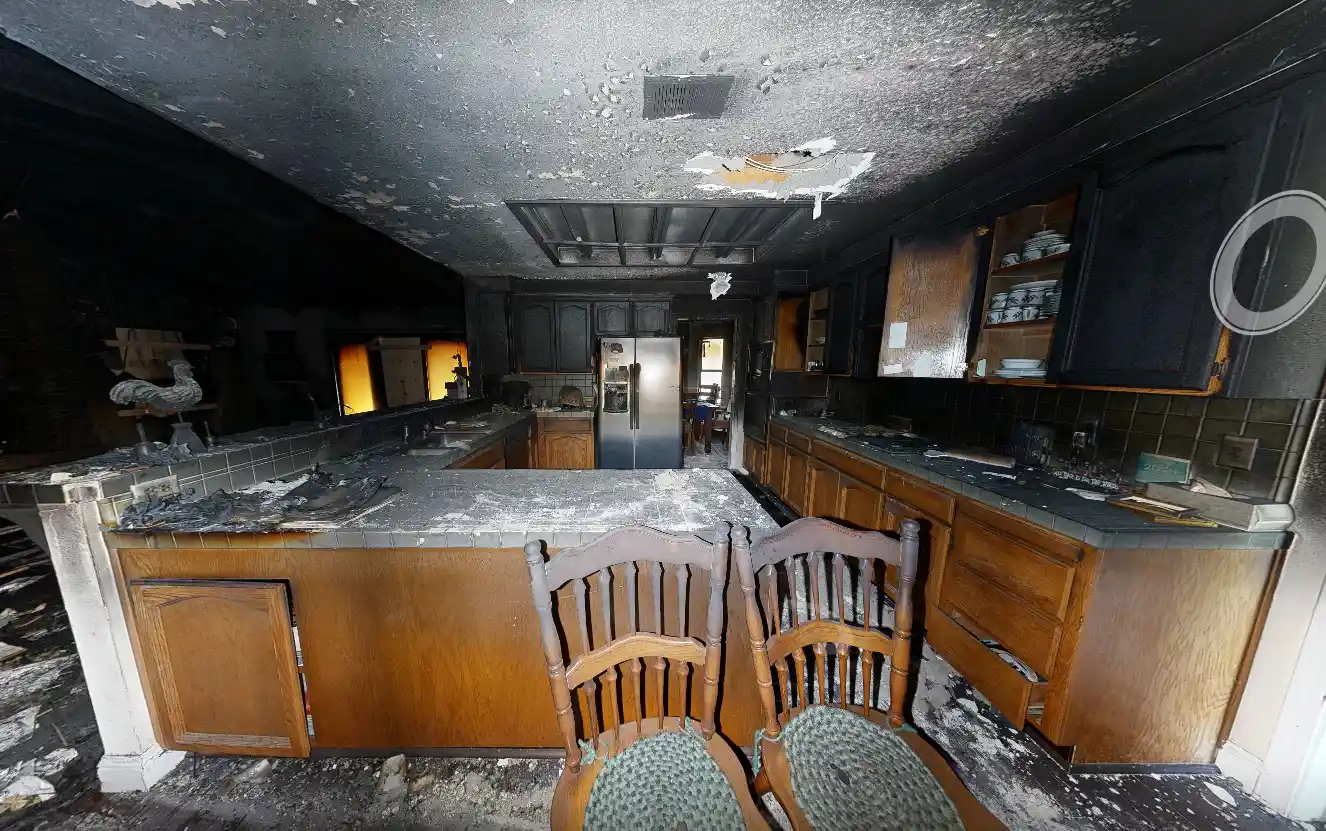
The right plan depends on what happened to the home, not just how close it stood to the flames. The behavior of wildfires is uneven. A house that never caught fire can still hold heavy smoke and ash in its cavities and ducts, depending on wind, nearby vegetation, and how long the fire burned around it. Here’s a rough map:
| Condition | Likely path |
|---|---|
| Standing, no direct flame contact | Detailed assessment and smoke/ash restoration |
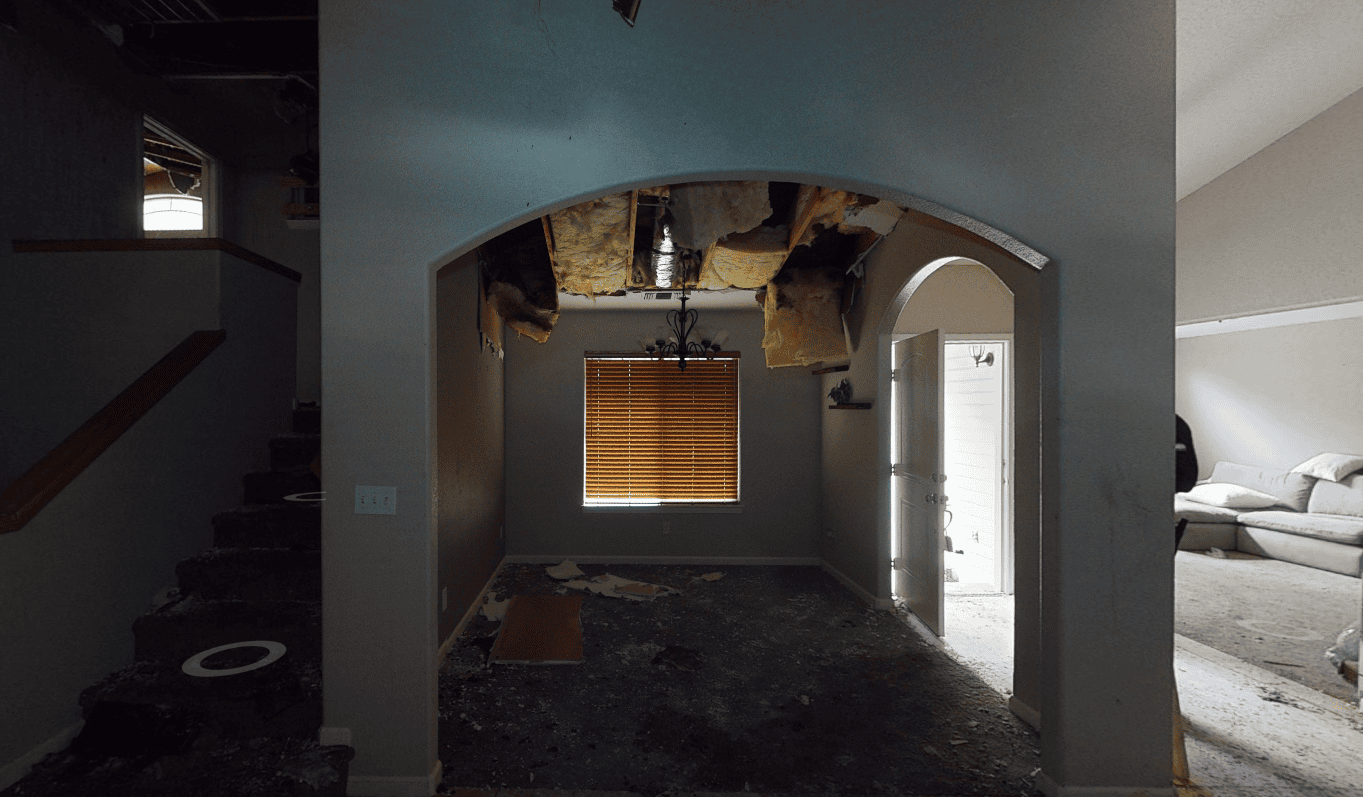
| Localized burning or suppression damage | Restoration plus selective structural repair |
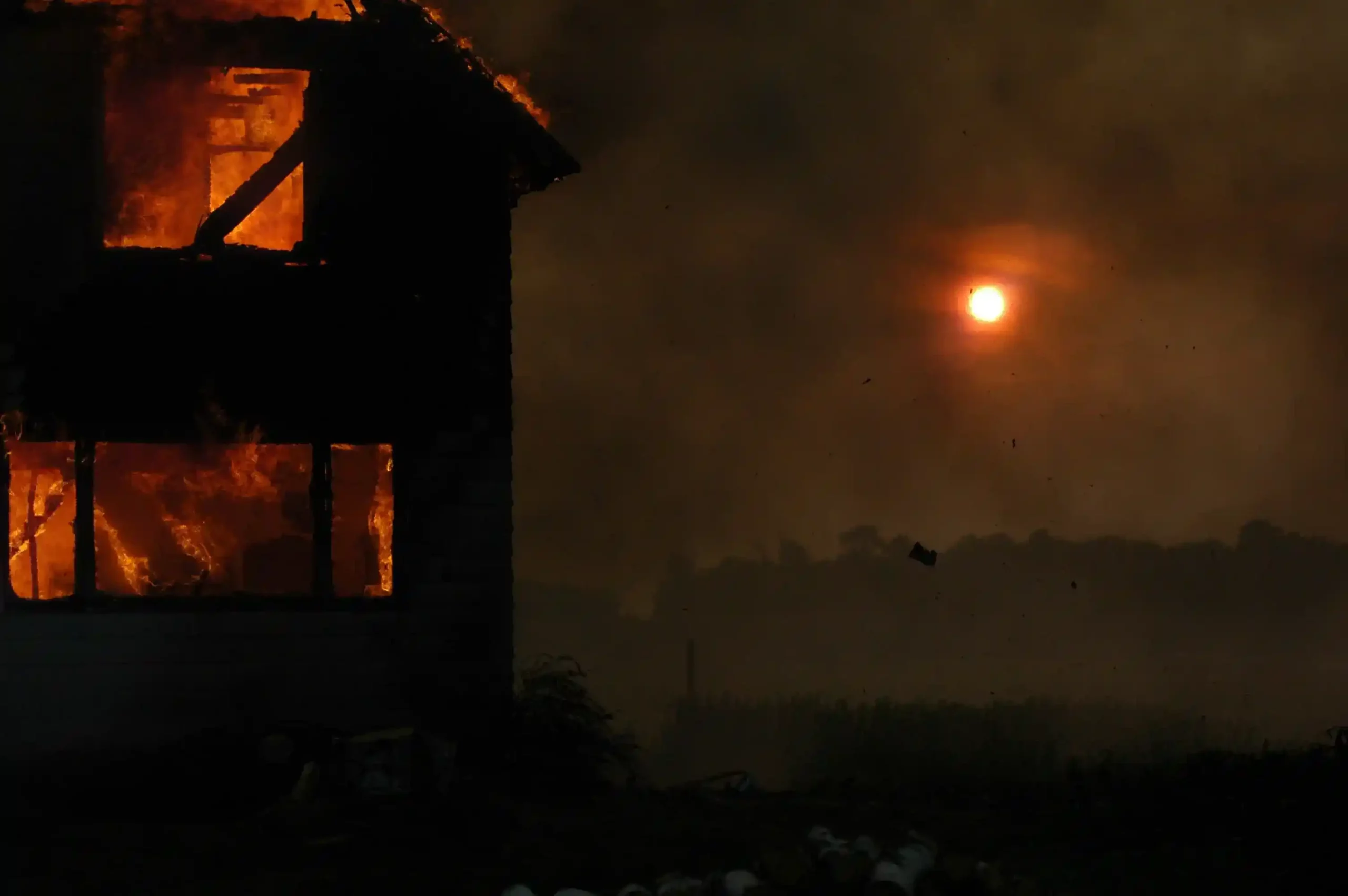
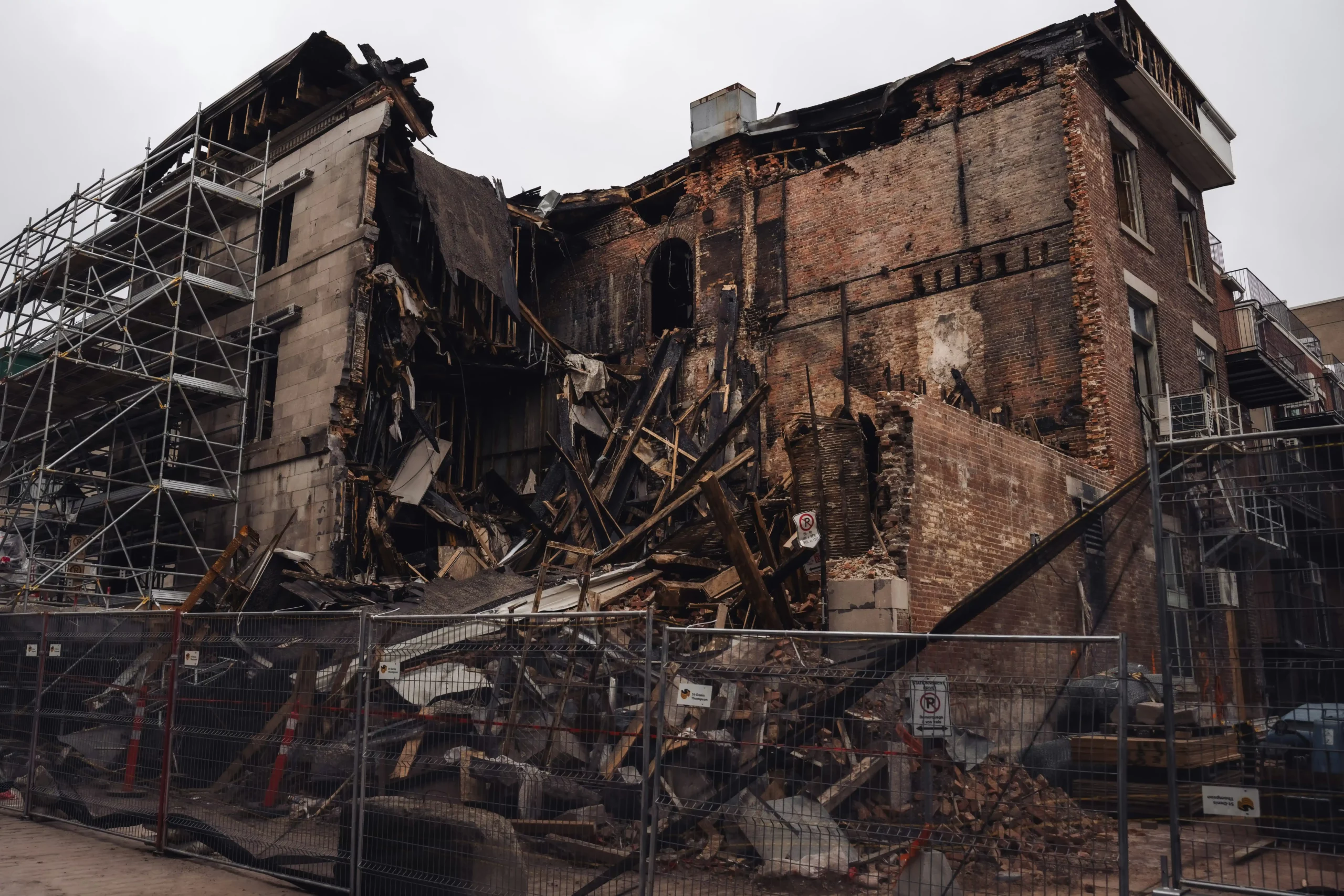
| Major structural failure or total loss | Debris clearance, then reconstruction |
No path is final without an on-site inspection. Damage is often worse, or different, than it looks from the curb.
The Professional Wildfire Assessment Comes Before Cleaning
A reliable recovery starts with an assessment, not a generic cleaning package. The current IICRC/RIA/CIRI technical guide describes a four-part approach: an initial evaluation by the restorer, a more formal independent assessment when conditions warrant, professional restoration based on the documented scope, and a completion check at the end. What the assessment weighs includes how close the fire came, what burned, the severity and duration of the smoke, whether windows or the HVAC were open, visible residue and lingering odor, and concealed spots like attics, crawl spaces, and wall cavities. Where asbestos or lead is a concern, testing may be warranted, and an independent industrial hygienist sometimes makes sense. Testing isn’t identical for every home. The 2025 ANSI/IICRC S700 standard exists, but IICRC states it does not comprehensively address wildfires, so ask whether a contractor uses wildfire-specific protocols.
How Wildfire Restoration Is Performed, and Drying After Suppression
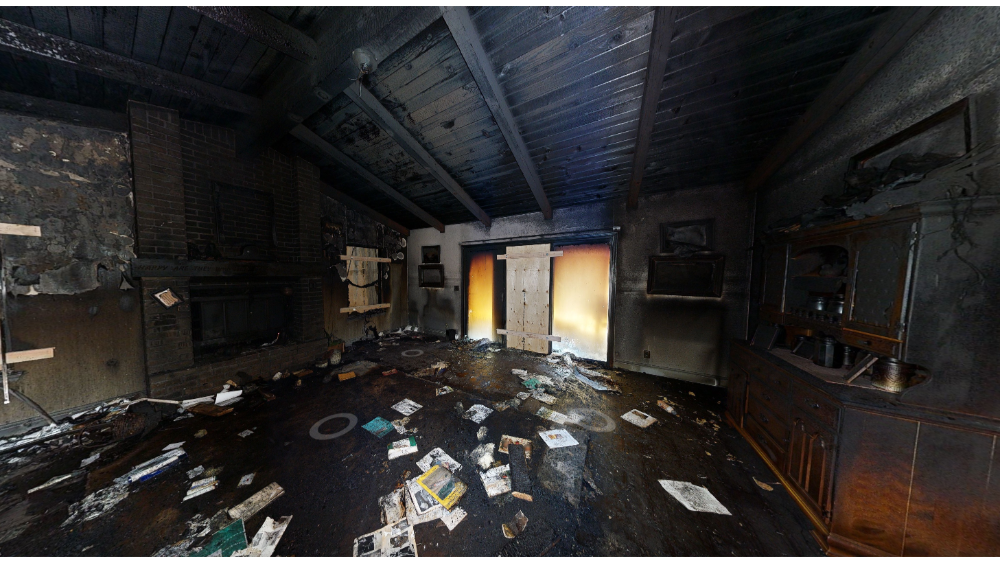
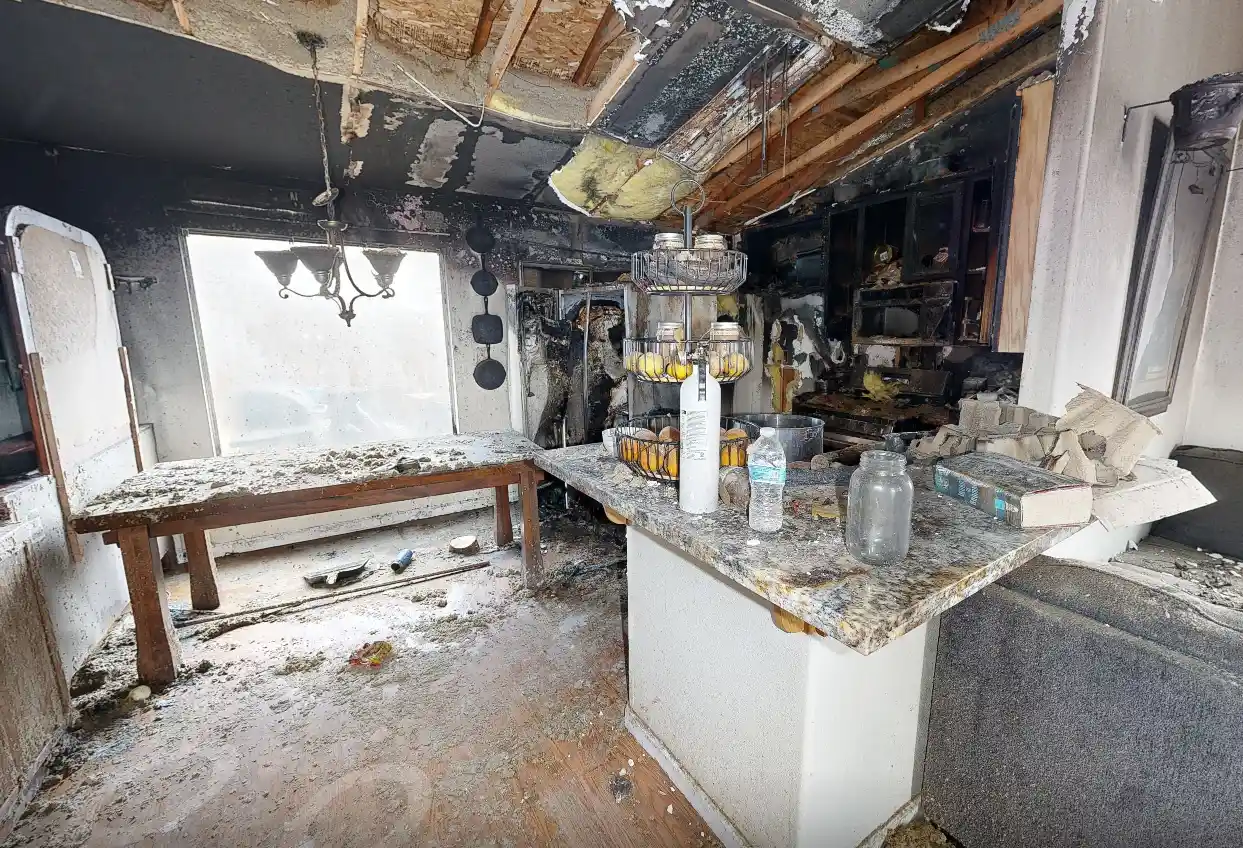
The method is source removal, not masking. Where needed, crews set up containment. Loose particulate comes off with HEPA-filtered equipment, then affected hard surfaces are damp-cleaned. Porous materials get judged one by one. Carpet, pad, insulation, and some textiles may not be salvageable. HVAC and ductwork matter because they can spread combustion byproducts through the whole house, so they belong in the plan, not as an afterthought.
Firefighting leaves its own mark. Opened roofs, broken windows, and suppression water soak building materials even when the loss was a fire. The EPA advises drying wet materials within 24 to 48 hours; most materials dried in that window won’t develop mold. This drying is part of wildfire recovery, handled inside the fire-restoration scope. A home that smells better isn’t proof the job is done; surfaces, cavities, contents, and HVAC all have to be addressed.
When Restoration Becomes Reconstruction
Some damage can’t be cleaned away. Structural instability, deep charring or heat damage, non-restorable assemblies, code-required replacement, major demolition, or total loss all push a project from restoration into reconstruction. The labels aren’t bureaucratic. They drive your scope, your documentation, and how your insurer treats the claim. One accountable company carrying the job from emergency board-up through permitted reconstruction keeps the scope and the paper trail consistent, which protects you if questions come up later in a complex process.
Working With Your Insurance Company (California Rules)

Open the claim early. Document every bit of damage and every expense, keep your pre-cleaning photos, and get an independent licensed-contractor scope so you can compare it against the insurer’s estimate. If a limit or exclusion is cited, ask for it in writing. The insurer’s estimate and the contractor’s actual scope are two different things, and the gap between them is where homeowners get squeezed.
A few protections are specific to California. The Department of Insurance says your insurer must provide a complete copy of your residential policy, free, within 30 days of your request. After a declared catastrophe, Additional Living Expense benefits run no less than 24 months, with up to 12 more (36 total) when delays are outside your reasonable control, subject to your policy limit. CDI also states an insurer may not summarily deny a smoke-damage claim without a proper investigation, and should pay for testing it requires. You have the right to choose your own contractor, not just one the insurer suggests. For a deeper walkthrough, see our guide on documenting a wildfire insurance claim.
California Contractor Protections for Wildfire Rebuilding
For repair or rebuilding in a declared disaster area, California law gives you real guardrails:
- Verify an active, appropriate CSLB license. B-General Building is the classification for home construction and major rebuilding.
- CSLB recommends getting at least three bids and not rushing a contract.
- Disaster-related home-improvement work must use a fixed-price contract, not time-and-materials or cost-plus.
- The down payment generally can’t exceed 10% of the contract or $1,000, whichever is less.
- Progress payments can’t exceed the value of completed work or materials delivered.
- Qualifying declared-disaster repair and restoration contracts generally carry a seven-business-day cancellation notice. Confirm the rule for your contract with CSLB.
Anyone pressing you to “sign by Friday” is a red flag, not a deal. The disaster already created the urgency; a good contractor won’t manufacture more.
One update to watch: California signed AB 1795 (the Smoke Damage Recovery Act) and AB 1642 on September 15, 2026. Phased implementation begins January 1, 2027, so not all of the new standards are operative yet. Check the current CDI and CSLB pages before relying on them.
Natural Regeneration, Planting Trees, and Forest Resilience After a Burn
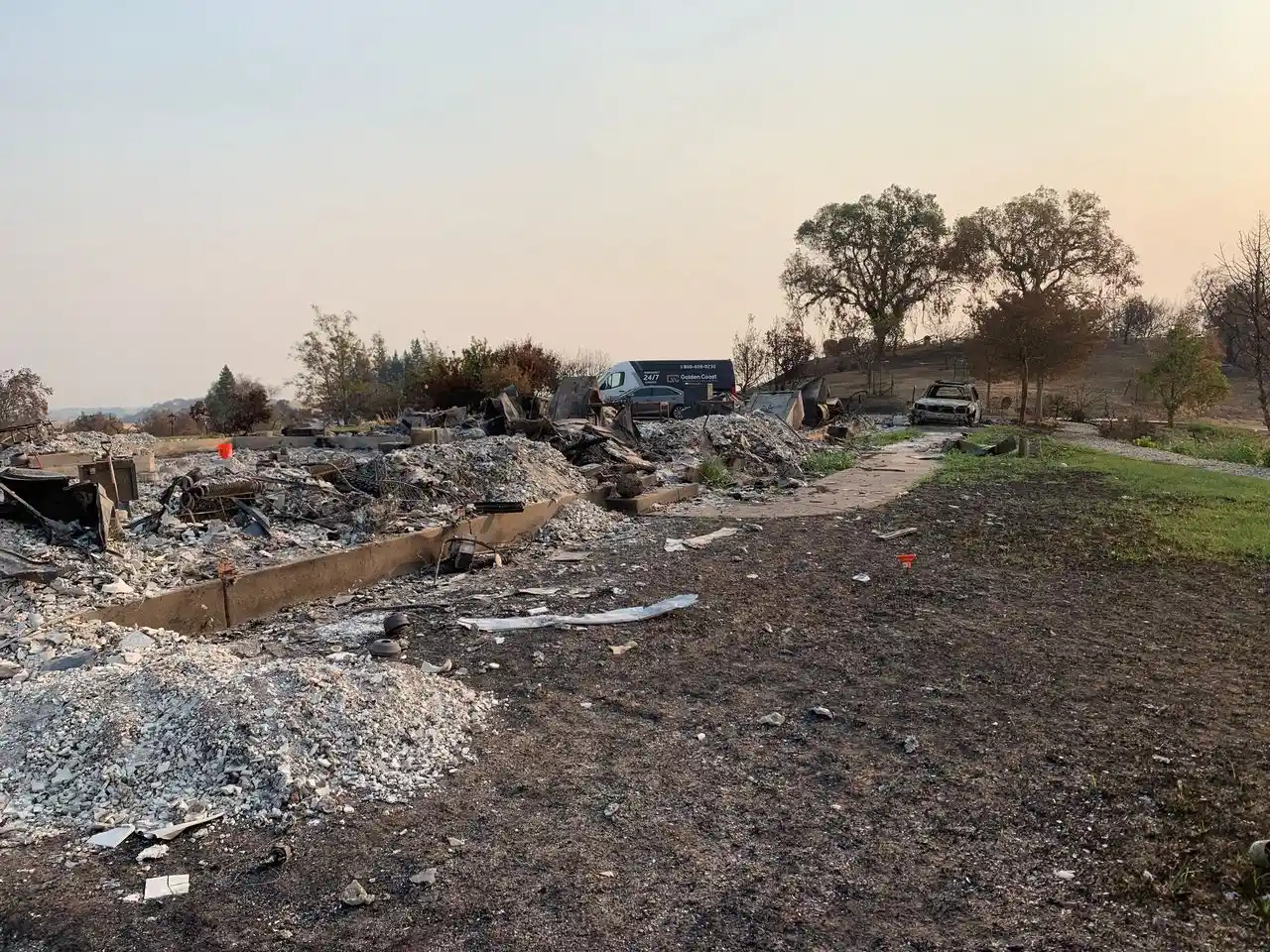
If your property borders open space, you may also be looking at scorched soil, dead trees, and bare land where vegetation used to hold the hillside together. This is a separate kind of post fire recovery from the work on your house, and it runs on a longer clock. After a high-severity burn, forests often regenerate through natural regeneration, with native species returning from a surviving seed bank and roots over several seasons. The intensity and severity of the fire shape how fast that happens, and in many burned areas the natural seed sources already in the soil are the most cost effective method of forest recovery. Where that process is slow, active reforestation matters. Agencies like CAL FIRE and the U.S. Forest Service, along with other federal agencies, may support reforestation efforts through seedling planting, matching stock to local seed zones, and erosion control that stabilizes the soil. Good forest management sometimes includes site preparation and steps to control competing vegetation so young trees get light instead of being crowded out by shrubs and competing vegetation. Climate change has made many wildfires hotter and larger, which raises the risk to both ecosystems and the wildlife habitat around them, so planting trees on burned ground is now a long-term investment in the ecosystem resilience and forest resilience of the land. Large-scale practices like timber harvesting and salvage logging carry their own economic value and trade-offs and are decisions for landowners and land managers, not something to rush. Research across the region and on lands such as Montana’s Flathead National Forest shows this knowledge keeps evolving over decades. For your own parcel, ask the local fire authority and county before clearing or replanting near a slope. Protecting bare soil in the first rainy season often matters more for the future of the site than how fast the greenery returns.
Pasadena and Los Angeles-Area Recovery Resources
If you’re near Pasadena, the city maintains a fire-recovery and rebuilding portal with permit-status search and assigned planners for red-tagged properties, and local building and fire department review still applies. Eaton Fire programs, deadlines, and fee waivers are incident-specific and change, so check current city and county pages rather than older write-ups. Golden Coast Construction & Restoration keeps a permanent office in Pasadena. These resources exist to help communities stand back up after a disturbance.
Choosing a Fire-Focused Restoration and Reconstruction Contractor

A few questions separate a specialist from a handyman or an unvetted crew:
- Is the California license active and appropriate (B-General for a rebuild)?
- Who performs the restoration, and who performs the reconstruction?
- What wildfire-specific protocol guides the scope?
- How are HVAC, cavities, contents, and suppression water handled?
- Who documents the work for the adjuster?
- Are progress payments tied to completed milestones?
- What completion records do you receive (written scope, signed certificate of completion, QA at milestones)?
- Is hazardous-material testing arranged where warranted?
That’s where Golden Coast fits, on the merits: California-licensed (CSLB #838443), IICRC-certified, a permanent Pasadena office, 24/7 emergency board-up, by-the-book milestone payments, and one accountable team from board-up through move-in. A licensed specialist keeps your documentation and scope intact in ways a general handyman or going it alone can’t, which matters most when you’re feeling vulnerable. No honest contractor can quote a firm price for your property sight-unseen. An on-site assessment comes first, and we’re glad to come look.
Frequently Asked Questions
Can wildfire smoke damage be removed completely?
Often yes, with proper source removal, surface cleaning, and HVAC work, but it depends on the materials involved and any concealed areas. A home smelling better alone doesn’t prove the work is done.
Does every wildfire-damaged home need environmental testing?
There’s no single rule. Current professional guidance selects testing case by case based on conditions, occupant health concerns, and insurer or regulatory requirements. See our guide on wildfire smoke testing and post-restoration verification.
Can clothing and furniture be saved after a wildfire?
It depends on the material, the level of contamination, the item’s condition, and how it responds to cleaning. Porous items are harder to restore, and some can’t be saved.
Does insurance cover smoke, soot, ash, and firefighting water?
Coverage depends on your policy and the facts of the claim. In California, an insurer can’t summarily deny a smoke claim without a proper investigation, so document everything.
What’s the difference between restoring my home and restoring the land?
Restoring your home means cleaning, drying, and repairing the structure, or rebuilding it after a severe burn. Restoring the surrounding land means recovering soil, trees, vegetation, and wildlife habitat, often through natural regeneration or reforestation over many seasons. They run on very different timelines, and at no point does one substitute for the other.
What’s the difference between restoration and rebuilding?
Restoration cleans, dries, and repairs materials that can be saved. Reconstruction is permitted structural repair or rebuilding after major damage or total loss.