Key Takeaway
A Roseville commercial rebuild permit is not a single form – the City of Roseville requires you to file under the application category that matches your actual scope, such as tenant improvement, interior demolition, or new commercial construction. That classification comes from a structural engineer’s site assessment, not a guess made before the building is examined. Plan review targets are 15 business days for the first cycle and 10 for each additional cycle, with at least two cycles expected.
Yes, you need a City of Roseville building permit to repair or rebuild a fire-damaged commercial building. The City of Roseville building department lists fire damage repair, demolition, renovation, roof framing and new construction as work requiring a permit. What Roseville does not have is a single form called a “commercial rebuild permit.” Which of the City’s permit applications you file to obtain that permit depends on the actual scope of the work, and that scope comes out of a structural assessment on site, not a guess.
So the fire department has released the scene, your tenants are out, and the business is closed. This guide walks through which application fits which level of damage, what has to happen before you file, what the City’s posted review targets really mean, and how permit issuance and inspections work after that. Updated September 2026. City forms, checklists, fees and code cycles change. Verify the current versions online before you file.
Why there is no single Roseville commercial rebuild building permit

Two words get used interchangeably after a fire, and they lead to different permit paths. Restoration means cleaning, mitigation and selective repair of a structure that is still standing and structurally sound. Reconstruction means replacing structural elements, or building back from the slab up. Same fire, different job, different application.
Roseville’s library of permit applications sorts commercial work by scope: commercial interior demolition, commercial tenant improvement, commercial building addition, new commercial building, commercial reroof, commercial electrical and HVAC, plus a separate family of fire-system applications. The building department classifies your post-fire project against those categories based on what you are actually proposing to do. Confirm the classification with the Building Division before anyone starts drawing plans, because project plans produced for the wrong path are money spent twice.
How this differs from residential projects
Commercial submittals carry requirements a house never sees: occupancy group, occupant load, accessible routes, rated assemblies and fire-protection systems. Commercial plans also draw more disciplines into review, and more inspections in the field. A residential checklist will not get you through commercial plan review.
Which permit application fits your project scope?
| What happened | Likely City application | Typical extra reviews | What can trigger reclassification |
|---|---|---|---|
| Smoke and soot damage, finishes affected, structure intact | Commercial tenant improvement | Air quality questionnaire, CUPA form | Framing or roof structure found compromised |
| Selective removal of damaged interior materials | Commercial interior demolition | Asbestos NESHAP, C&D waste documentation | Demolition extends to structural elements |
| Structural repair: framing, roof structure, shear | Tenant improvement with structural plans, or a broader building permit | Structural calculations, special inspections | Extent of structural replacement |
| Footprint or layout changes during build-back | Commercial building addition | Planning, accessibility, possibly Engineering | Site work, parking or setback changes |
| Total loss, ground-up rebuild | New commercial building | Civil improvement plans to Engineering before the building preapplication | Zoning, entitlements, utility capacity |
Treat that table as a planning aid. The building department makes the call, and severe damage is not automatically classified as new commercial construction. What decides it is the amount and type of structural replacement your engineer documents, which is why the site assessment comes before any of the permit applications.
What should happen before you submit permit applications

- Get the scene released by the fire department. Until then, nothing moves.
- Secure the building. Board-up, roof tarping and temporary shoring protect the structure from weather and entry. This is not the rebuild. Demolition and reconstruction wait for the permit.
- Document the damage. Photos, video and a written scope of loss become the backbone of the insurance claim and the plan set.
- Get a structural engineer’s site assessment. This one document drives three things at once: the permit classification, the plans, and the insurance scope.
- Test for asbestos and lead where warranted, before affected materials are disturbed.
If the structure has been posted unsafe, entry is limited to permitted repair, demolition or removal until the required work and approvals are done. If your building sits in a business park with an owners’ association, start any HOA approval for exterior changes in parallel, because it is separate from the City’s review and does not replace it. One more timing note: suppression water left in the building starts a mold clock of roughly 24 to 48 hours. That is a mitigation issue handled alongside the permit work, not a reason to skip either.
What documents does the City of Roseville building department require?
Roseville’s commercial tenant improvement electronic submittal checklist, revised April 21, 2026, spells out the required information and the submittal instructions. It calls for:
- Forms: Air Quality Supplemental Questionnaire for Commercial Construction; Unified Program Consolidated Agency (CUPA) form covering hazardous materials and waste; Accessibility Upgrade Worksheet; Special Inspection and Testing Agreement where applicable. These forms are posted online and are filed with the application, not after.
- Plans and calculations: complete stamped and signed plans covering architectural, structural, plumbing, mechanical, electrical, energy compliance and green building; structural and truss calculations where applicable; Title 24 energy calculations where applicable.
Plans should identify occupancy group, construction type, sprinkler status, tenant area, occupant load, accessible routes, exits and rated assemblies, and should show code compliance on their face rather than leaving a plan checker to infer it.
The new commercial building checklist, also revised April 21, 2026, adds civil improvement plans routed through the Engineering Division first. Download the current-revision checklist and forms rather than reusing a packet from a previous project. And make sure the plans agree with each other: when the structural sheets and the mechanical sheets describe two different buildings, corrections multiply and review cycles stack up.
Do fire sprinklers and alarms need separate permits?

Yes. Installation, replacement, alteration or repair of fire sprinklers, fire alarms, commercial hood suppression and related systems requires separate Fire Department permits, submitted through the Building Division. The Fire Department is the reviewing authority for those systems, and the City maintains distinct electronic checklists online for fire alarm, fire sprinkler, hood and duct, and other fire systems.
Roseville’s Fire Code requires automatic sprinklers in every new building with a total fire area of at least 3,600 square feet. That applies to new buildings, and it should not be read as an automatic requirement on every repair project. Get these submittals moving early. They run on their own schedule, carry their own permit fees and inspections, and are a common source of late surprise.
How the Roseville permit process works: preapplication, plan review and permit issuance
Every building application enters the system as a preapplication through Online Permitting Services (OPS). Plans and technical documents must be submitted digitally through that online portal. In-person submission is available by appointment at the permit center, but the packet still has to be in digital form.
Submitting your permit application online
The sequence: create an account and register in OPS, submit the preapplication online, clear the completeness check, pay the plan-review fees, go through review cycles, respond to corrections and resubmit, receive permit issuance, then schedule inspections. Review does not begin until the plan-review payment is received. Keep one person responsible for the OPS account, because correction notices and fee invoices land there, and a notice nobody opens is time off your schedule. If you are unable to get to the permit center during posted hours, the portal handles submittals, payments and inspection requests.
Roseville, California versus nearby cities
One verification note worth thirty seconds of your time: confirm you are on a City of Roseville, California site, meaning a .ca.gov address. Official-looking pages for Roseville, Minnesota surface online for the same searches. Nearby cities matter too. Rocklin, Lincoln and unincorporated Placer County each run their own building department with their own forms, fees and inspection scheduling. If your parcel sits just outside the Roseville city limits, none of the City of Roseville checklists apply to you. For the current phone number, permit center hours, location and appointment link, visit the City’s Development Services contact page rather than calling a number you found in an article, and do not plan on walking into city hall unannounced.
How long does plan review take in Roseville?

The City posts these targets:
- Action on a preapplication, generally within 1 business day of the last applicant action
- First plan-review cycle: 15 business days
- Each subsequent cycle: 10 business days
- Anticipate at least two review cycles; initial submittal fees include three, and additional cycles may be charged
Those are review-cycle targets, not a promise of total time to permit issuance. What stretches a fire rebuild is usually everything around the review: an incomplete submittal, engineering revisions, separate Planning or Fire review running in parallel, hidden damage found once demolition opens the walls, and how quickly your team turns corrections around.
Here is the part that does not help us sell anything: no contractor can shorten City review or guarantee approval. If someone hands you a permit issuance date before plans are submitted, they are telling you something they cannot know.
Current code issues that can change a “like-for-like” rebuild
Repairs to existing structures have to comply with the code in effect now, not the code the building was originally permitted under. Roseville has adopted the 2025 California Building Standards Code, effective statewide January 1, 2026, which includes the California Building Code along with the Existing Building, Electrical, Mechanical, Plumbing, Energy, Fire and CALGreen codes. The City’s Fire Code incorporates the 2025 California Fire Code with local amendments.
In practice, that touches accessibility (path of travel, entrances, restrooms, which is why the Accessibility Upgrade Worksheet exists), Title 24 energy compliance, CALGreen and construction-waste documentation, egress and occupant load, and fire protection. None of it surprises a plan checker, but it can surprise an owner who budgeted to replace exactly what burned. Bring it into the insurance conversation early, and look at whether your policy carries code-upgrade coverage.
What if the building or the business use is legally nonconforming?

Older commercial properties in established Roseville corridors sometimes do not match current zoning. Roseville’s nonconforming provisions address that directly. If fire destroys 50% or less of a nonconforming building’s value, as determined by the chief building inspector, it may be reconstructed without increasing the nonconformity. Above 50%, a nonconforming use may require a Conditional Use Permit, and a nonconforming building may require a variance. The code specifies a 12-month reconstruction period in those greater-than-50% cases, and a nonconforming use may be treated as abandoned after six months of discontinuance, subject to the code’s exceptions.
This is not a general “50% rule” for all commercial fire rebuilds. It applies to these specific provisions. If it might apply to you, raise it with Planning before a single plan sheet is drawn, because it can change the entitlement path entirely.
Asbestos, demolition, and the rules that come before the wrecking bar
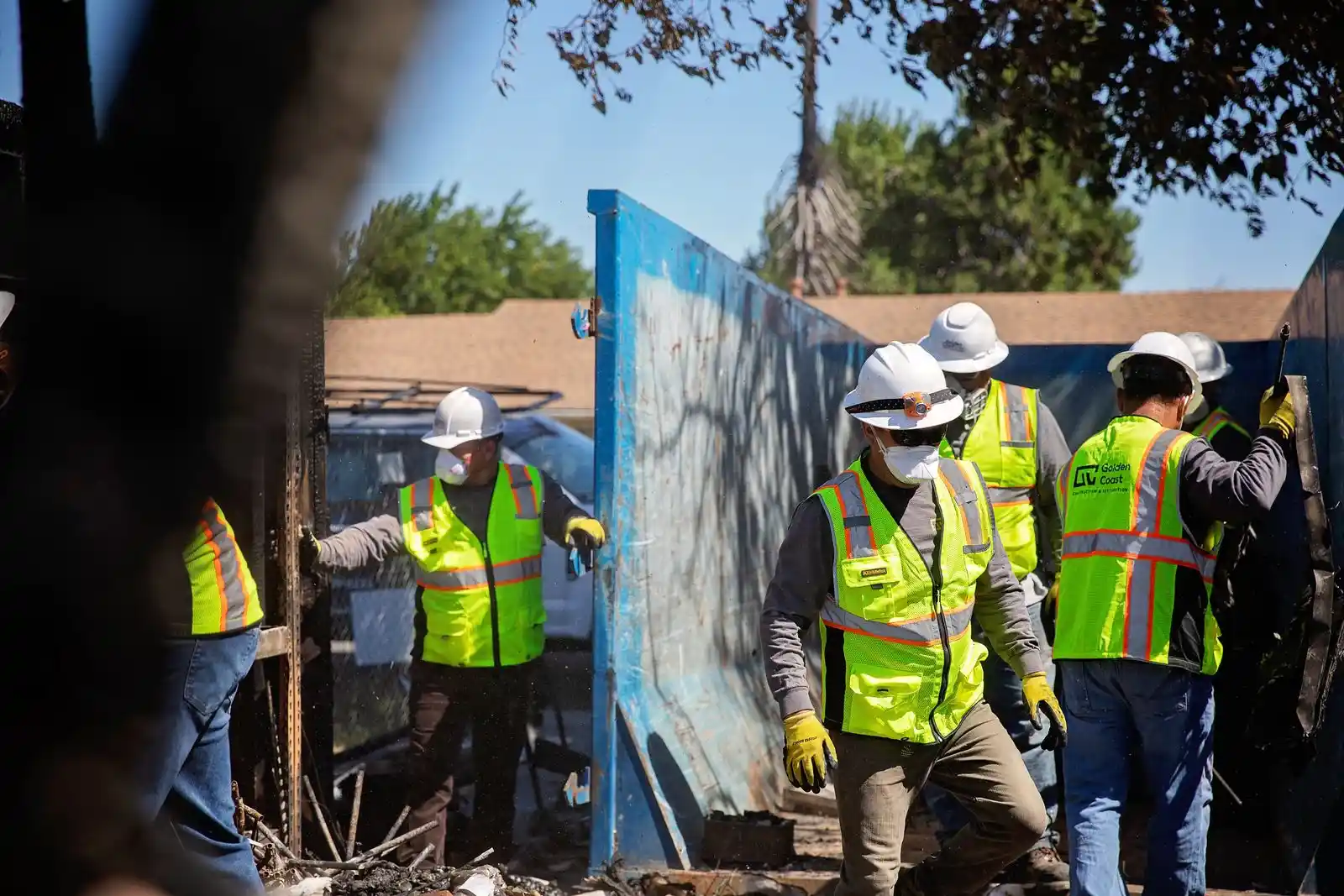
Fire debris does not exempt a building from asbestos rules. EPA regulates any demolition or renovation at a commercial, industrial or institutional building under the Asbestos NESHAP, and at minimum a thorough asbestos inspection is required before the affected work begins. The regulated-material thresholds are 160 square feet, 260 linear feet, or 35 cubic feet where area or length could not previously be measured.
Demolition notification generally applies whether or not asbestos is found. Standard regulated work ordinarily requires at least 10 working days’ advance notice, which is a real scheduling item people miss. Emergency renovation and government-ordered demolition provisions can shorten that notice, but they do not remove the asbestos controls. Placer County sits in a non-delegated district, so applicable federal notification goes to EPA, with CARB potentially receiving a copy.
The City’s commercial interior demolition checklist, dated February 25, 2025, requires an asbestos NESHAP declaration, a second notification form if the declaration triggers one, the commercial air-quality questionnaire, the CUPA form, stamped demolition plans, and construction and demolition waste-management documentation.
Required inspections and getting back to legal occupancy
After permit issuance, the job moves from paper to the field, and inspections set the pace. Building inspections may generally be requested by 11:30 p.m. for the following business day, through the OPS portal online or by phone. Fire Department inspection requests are processed separately, and the City states fire inspections will be performed within two business days of the request.
On a commercial fire rebuild, the inspections you schedule commonly include underground plumbing and electrical, footing and foundation where structural work reaches that far, rough framing and shear, rough mechanical, electrical and plumbing, insulation and drywall nailing, fire sprinkler rough and hydrostatic testing, fire alarm testing, and the final inspection. Special inspections by a third-party agency apply where the Special Inspection and Testing Agreement requires them, and those reports go into the permit record. Keep the approved plans on site, since that is the set an inspector works from. Sequence matters. Cover a wall before the rough inspections are signed off and someone opens it again.
Commercial occupancy requires Building Division approval and a Certificate of Occupancy. Until that is issued, a structure posted unsafe may only be entered for permitted repair, demolition or removal. Unpermitted work has a way of surfacing later, during a sale, a refinance, or a future tenant’s own application.
Two municipal code provisions matter to an owner sitting on a boarded building. Roseville’s code provides that a boarded building generally must be repaired and rehabilitated for occupancy within 120 days, with an exception where an active building permit is in place and the owner is diligently progressing with repairs. Separately, if the Building Official issues a dangerous-building notice and order, that order may require permits and physical commencement of work within a period not exceeding 60 days. That 60-day clock is not something every fire automatically starts. It applies when the City issues the notice. The practical takeaway is the same either way: an active permit and visible progress on site is what keeps you in good standing.
Permit fees: what the City can and cannot tell you up front
Permit fees depend on valuation and scope, and they change. The City states it takes up to 15 business days to prepare a requested project fee estimate, so request one early rather than assuming. Plan-review fees must be received before review begins, and while initial submittal fees include three review cycles, additional cycles may be charged separately. A ground-up rebuild can also pull in Engineering and utility-related fees that a tenant improvement never touches. Budget for that possibility. If a contractor quotes you total permit fees sight-unseen, treat it as a reason to slow down.
How to choose among contractors for a permitted commercial fire rebuild
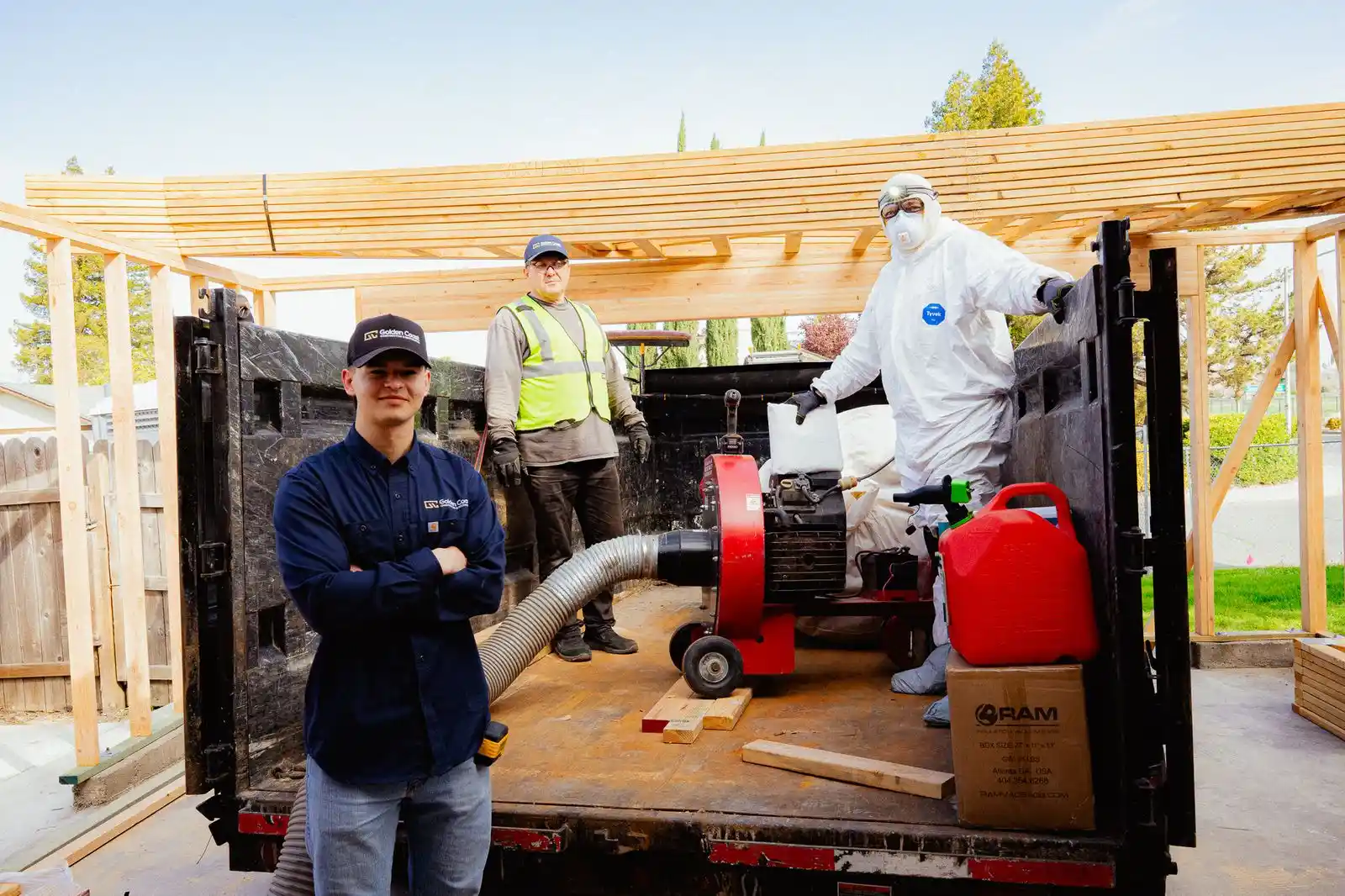
Start by verifying the legal business name, license classification and current status through CSLB’s official license-check service online. CSLB licenses and regulates California’s construction industry, and the lookup takes a minute. Contractors who work in this space expect that question and will hand you the license number without being asked.
Beyond the license, a commercial fire rebuild has coordination problems a general remodeler does not face daily. Demolition and rebuild scope has to stay aligned with the insurer’s documented scope, or you fund the gap. Architectural, structural, mechanical, electrical and fire-protection plans have to describe one building. Fire-system permits are separate and need sequencing against the inspection schedule. Hidden damage found after demolition needs a written change process, not a handshake. Milestone inspections and a signed completion record are your paper trail if anything is questioned later.
Get three estimates. And be skeptical of any of the contractors who guarantee City approval or a permit issuance date.
Roseville commercial rebuild permit checklist
Have this in hand before you contact the building department:
- Parcel address, occupancy group, construction type, sprinkler status
- Square footage affected, and the areas involved
- Structural engineer’s site assessment report
- Insurance scope of loss and supporting documents
- Asbestos and lead testing results
- Your proposed scope classification (repair, demolition, addition, or ground-up)
- The current-revision City checklist and forms, downloaded that week
- OPS portal registration and plan-review fees ready to pay
Bring the classification question to the City of Roseville first, before plans are produced.
Frequently Asked Questions
Do I need a building permit to repair commercial fire damage in Roseville?
Yes. A city permit is required, and the City’s building-permit handout specifically lists fire damage repair as work requiring one, along with demolition, renovation, roof framing and new construction.
Can demolition or board-up start before the rebuild permit is issued?
Board-up, tarping and shoring secure the property and can proceed once the scene is released. Demolition is different: it needs its own application, stamped demolition plans and asbestos documentation before material is disturbed.
Does Roseville require separate fire sprinkler and alarm permits?
Yes. Fire sprinkler, fire alarm and hood suppression work requires separate Fire Department permits, submitted through the Building Division on their own checklists, with their own inspections.
How long does commercial plan review take?
The City’s posted targets are 15 business days for the first cycle and 10 business days for each cycle after, with at least two cycles expected. Those are review targets, not total project time.
Can I file the whole application online?
Plans and technical documents are submitted digitally through the OPS portal. In-person submittal is available by appointment at the permit center, but the packet still has to be digital. Check current hours and phone contacts on the City’s site before you visit.
When can tenants or employees return to the building?
After Building Division approval and a Certificate of Occupancy. Until then, a building posted unsafe may only be entered for permitted repair, demolition or removal.
Talking it through with someone who has done it before
If you want a second read on where your building falls, we will come look at it. Golden Coast Construction & Restoration keeps a permanent office in Roseville serving the Sacramento metropolitan area, holds California General Contractor license CSLB #838443 (verifiable through CSLB’s license check), is IICRC-certified, and runs 24/7 emergency board-up. We work directly with insurance adjusters and bill on milestone payments.
The assessment has to happen on site. Permit classification, scope and cost all follow from what a structural walk-through actually finds, and nobody can price a commercial fire rebuild honestly without one. For the authoritative, current forms and fee schedules, visit the City of Roseville’s Development Services pages. We would rather you file correctly than call us.