


Key Takeaway
Rural Placer County rebuild requirements after a fire mean a new building permit and full plans meeting the 2025 California Building Standards Code, effective January 1, 2026, including Class A roofs, ember-resistant vents, and sprinklers. Requirements are set parcel by parcel based on zoning, fire hazard zone, septic, well, and how much original structure survived. Placer County Building Services issues the final project classification, not your contractor.
Rebuilding a fire-destroyed home in unincorporated rural Placer County normally requires a new building permit and complete plans meeting the codes in effect the day you apply. The specifics are decided parcel by parcel: zoning, fire hazard zone, driveway access, septic, well, and how much of the original structure survived. One distinction to hold onto: restoration means cleaning, drying, and repairing what survived. Reconstruction is a permitted rebuild under today’s code. The county decides which one you’re in.
Start here: who has jurisdiction over your parcel?

A rural mailing address doesn’t settle this. Placer County Building Services permits work in unincorporated areas, while parcels inside Auburn, Colfax, Lincoln, Rocklin, or Roseville go through that city. Find your APN, your Fire Hazard Severity Zone, and your serving fire district, then pull prior permits and Environmental Health records. Much of that information sits on official government websites, and the Community Development Resource Agency counter in Auburn, CA 95603 can confirm it for your parcel. That same counter handles subdivisions for developers and single-lot work for landowners, so say up front that yours is a residential fire loss.
Repair, remodel, or full rebuild?
The county’s posted “Rebuild Versus Remodel” policy classifies the job by how much original foundation, slab, framed floor, and walls remain, with thresholds turning on more than 50% retained walls or framed floor depending on construction type. That policy carries a 2008 effective date, so ask Building Services for a written project-specific determination. A rebuild means a new permit, full plan sets, current code, and formal plan review. The call is the county’s, not your contractor’s, and a late answer forces redesigns that add cost.
Same footprint, foundation, and zoning
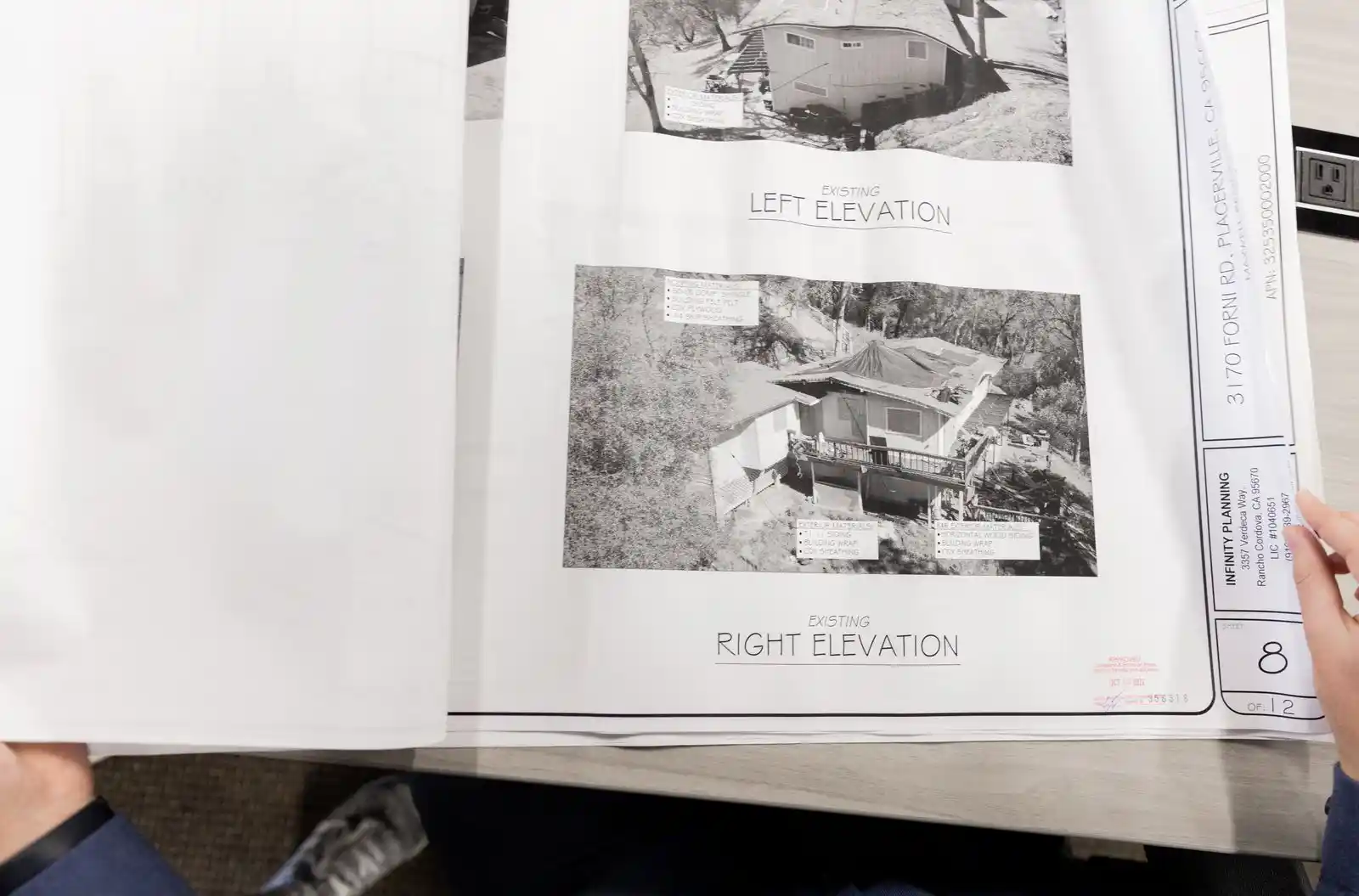
Three separate questions get blurred. Same footprint is zoning. Reusing the old foundation is an engineering evaluation plus county approval. Whether it counts as a remodel is the county’s classification. Placer County Code 17.60.120 allows reconstruction of a building that housed a nonconforming use by minor use permit if rebuilt within 24 months of the damage and with no greater floor area. That covers nonconforming uses, not every older setback. Get the zoning determination in writing, because verbal information doesn’t survive plan check.
Which departments review a rural rebuild?
Permit applications for a rural rebuild get routed to several reviewers at once.
| Review area | What it covers |
|---|---|
| Building | Structure, electrical, plumbing, mechanical, energy, CALGreen |
| Planning | Use, setbacks, height, footprint, nonconforming status |
| Fire / WUI | Materials, sprinklers, access, water supply, defensible space |
| Environmental Health | Septic, well, potable water, fire-debris clearance |
| Public Works | Encroachment permit for work in a county road easement |
| Air district / EPA | Rule 228 dust control, asbestos notification |
Covered projects also need a CALGreen Construction Waste Management Plan (65% diversion) before permit issuance. Fees are published on the county’s site.
What the code in effect Jan. 1, 2026 requires

The 2025 California Building Standards Code took effect January 1, 2026 and applies to permit applications submitted on or after that date. It created a standalone California Wildland-Urban Interface Code (Title 24, Part 7) consolidating the old Chapter 7A and R337 material, so county handouts citing those retired section numbers are behind. Expect Class A roof assemblies, ember-resistant vents, and compliant siding, eaves, underfloor areas, windows, exterior glazed doors, and decks, with listed products named on the plans. Defensible space generally extends 100 feet or to the property line, whichever is closer, and the fire district reviews it as a safety condition of the rebuild.
California has required sprinklers in new one- and two-family homes since January 1, 2011, and the serving fire authority signs off before the permit issues. An existing driveway is neither automatically approved nor automatically disqualified: width, grade, all-weather surface, gates, bridges, culverts, turnouts, turnarounds, and address visibility all get reviewed. Those are life safety rules, not paperwork.
Rural housing on a well and septic draws reviews an in-town lot never sees. A crushed or cracked tank must be replaced under permit, and adding a bedroom can change required capacity. A private well may need a bacteriological analysis and a four-hour yield test by a licensed driller or pump contractor. Once the county classifies the project as new construction, confirm 2025 Energy Code solar and battery-ready requirements (services over 125 amps).
What protects you when hiring
CSLB recommends at least three bids and verifying licenses for all contractors before you sign. A California home-improvement down payment cannot exceed 10% of the contract price or $1,000, whichever is less, and progress payments should match work completed or materials delivered. A standard qualifying contract carries a three-day right to cancel; CSLB states contracts in declared disaster areas may carry seven business days, so confirm which applies to yours. CSLB currently treats disaster reconstruction as home-improvement work requiring a fixed-price contract, not open-ended cost-plus. The California Department of Insurance advises getting your full policy and declarations page (insurers must provide a copy within 30 days of request) and checking for Building Code Upgrade coverage. No one can give you an honest cost sight-unseen. A firm number over the phone, or a push to sign by Friday, is a red flag.
Frequently Asked Questions
How close can you build to your property line?
Setbacks come from your parcel’s zoning district, not a countywide number.
What can you build without a permit in California?
Limited exemptions exist for some small detached accessory structures and certain like-for-like repairs. A fire rebuild isn’t one of them.
Do you need a permit for a 10×12 shed?
A detached accessory structure under the county’s exemption size may not need a building permit, but zoning, setbacks, and Class A roofing can still apply.
What happens if you don’t pull a permit?
Stop-work notices, investigation fees, retroactive permitting, and trouble at resale or on your insurance claim.
Getting a straight answer for your property
Residents rebuilding after a wildfire are often doing it from temporary housing an hour or more from the parcel, which is one more reason to have every determination in writing. Golden Coast Construction & Restoration works from a permanent Roseville office serving Placer County residents and the surrounding community, licensed in California under CSLB #838443 and IICRC-certified, with 24/7 emergency board-up, asbestos and lead testing where warranted, and payments tied to completed milestones. An on-site assessment documents what survived, what the county will likely treat as reconstruction, and which fire safety clearances your parcel needs before plans are drawn. Final requirements are set by Placer County and your fire authority. No contractor can promise otherwise.


