

Key Takeaway
Smoke-damage basements require immediate assessment even when flames never reached them, because residue settles into exposed framing, insulation, concrete, and HVAC components within 24 to 72 hours and becomes significantly harder to remove. Keep the furnace off, avoid dry sweeping, and photograph all affected surfaces before touching anything. A professional inspection determines whether the work is restoration, reconstruction, or both.
Once fire officials have cleared the property for entry, photograph the damage, keep any contaminated furnace or air handler switched off, and arrange an assessment if you see visible soot, smell a persistent smoke odor, find wet material, notice utility damage, or suspect smoke inside walls and cavities. If you’re a homeowner trying to figure out your next move after a house fire, this is for you. Smoke in a basement isn’t only a smell problem. Residue can settle on exposed framing, masonry, insulation, stored belongings, floors, and the furnace, and it can lead to lingering smoke odor and corrosion if it sits. Smoke often travels down into a basement during a fire, even when the flames never reached it.
Don’t enter the basement until it’s been cleared
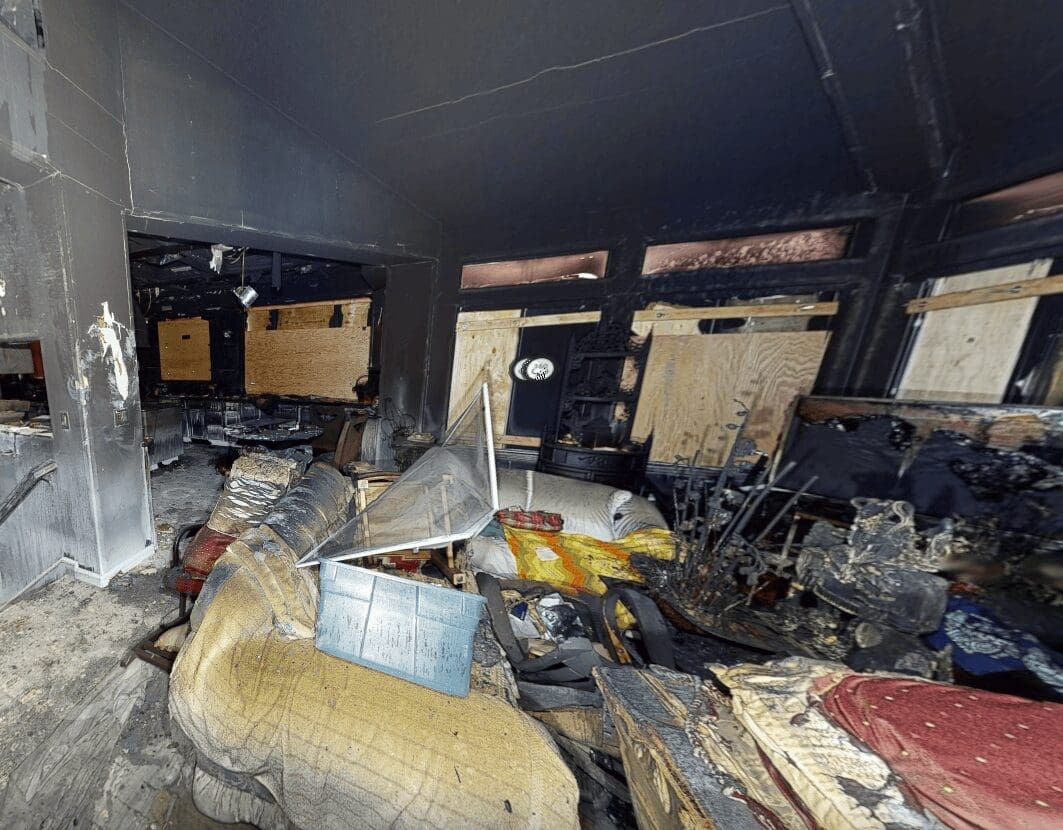
Before any cleanup, the basement has to be safe to enter. Wait for the fire department or your local authority to clear the property if there’s visible structural or fire damage. FEMA’s residential smoke guidance treats visible structural or fire damage as a separate category that calls for professional help, apart from light, moderate, or heavy smoke residue.
Hold off if you see any of these:
- Structural damage to walls, beams, or the floor above
- Gas or electrical hazards
- Damaged stairs or ceilings
- Standing water near electrical equipment
- An unsafe-building placard posted by officials
Smoke and soot exposure can also cause respiratory problems and eye irritation, which are real safety concerns for anyone re-entering too soon. Waiting isn’t lost time. It’s the step that keeps you out of a space that may still be dangerous.
Why smoke damage in basements is hard to find
The visible walls may not be your main problem. Smoke residue and odor slip into places you don’t normally look, and a basement has plenty of them. Smoke particles embed deeply into concrete, drywall, wood, and insulation, and porous materials trap the residue and the smell. Common hiding spots include:
- Exposed floor joists and the underside of the subfloor
- Unfinished wood framing and concrete or block walls
- Insulation and finished wall cavities
- Carpet padding and the floors beneath it
- Boxed storage, cardboard, and textiles
- Furnace components and return-air pathways
Basement fires and attic fires both move smoke far from the point of ignition, so the damage you smell may have started well away from where you’re standing. Smoke doesn’t always start in the basement either. It can migrate down from another floor or travel through the HVAC system, and HVAC systems can spread soot and airborne particles throughout a building, sometimes reaching multiple rooms at once. Older homes tend to absorb smoke and moisture more aggressively, so the smoke odor can run deeper than it first appears.
Dry smoke, wet smoke, and four conditions that change the cleanup plan
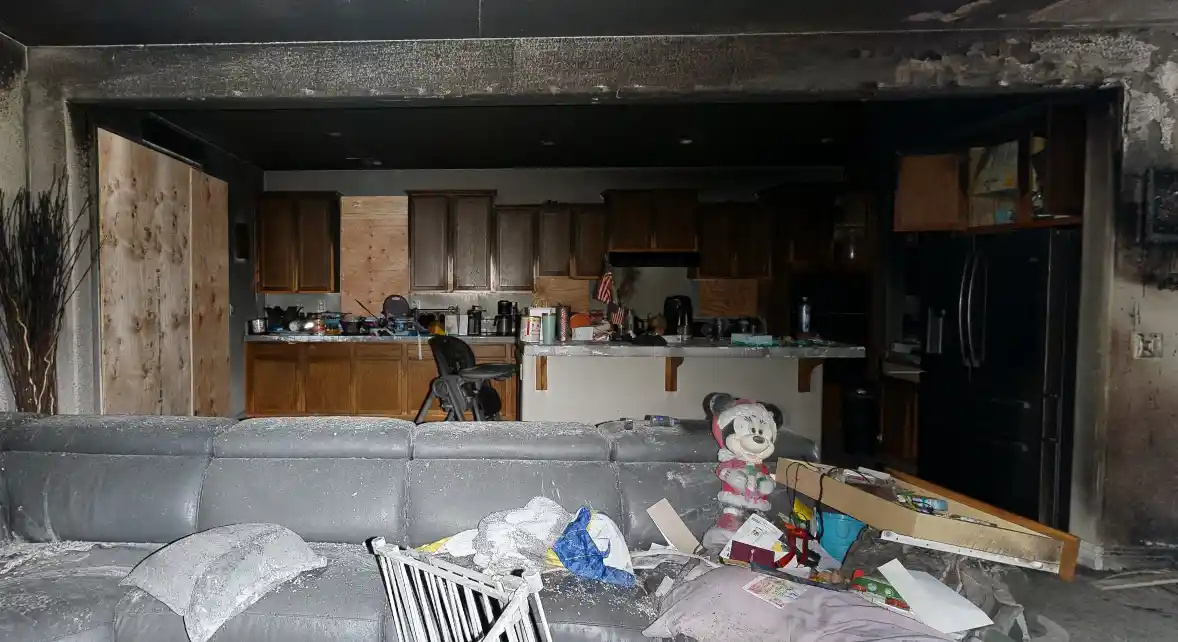
FEMA sorts residential smoke into five conditions: none, light, moderate, heavy, and a separate category for visible fire damage. Light can mean a noticeable smoke odor with no visible soot. Moderate and heavy involve visible residue on surfaces, airborne smoke particles, or both. Understanding where you fall shapes everything that follows.
In practical terms, four conditions change the plan:
- Smoke odor with no visible residue. Often a lighter condition, but the source still has to be found.
- Visible damage from soot or ash. Residue is present on surfaces and may be airborne.
- Fire-suppression water. Firefighting efforts add water, and that adds a drying and mold timeline.
- Direct heat, burn marks, or structural damage. This can push the work beyond cleaning.
Residue type matters too. Dry smoke from a hotter, faster fire leaves a fine, powdery soot. Wet smoke from a cooler, smoldering fire leaves a sticky, smeary residue that clings and resists cleaning. Smoldering fires are often the source of that stubborn film. Soot can discolor and corrode metals, plastics, and masonry, and a surface with a burn or scorch mark may need more than cleaning. That’s why the type of residue affects how each surface gets treated.
What not to do before the assessment
A few early mistakes make the job harder and the damage worse. Each of these protects you:
- Don’t run a contaminated furnace or air handler. EPA warns it spreads particles and recontaminates surfaces you’ve already cleaned.
- Don’t dry sweep. It launches fine smoke particles back into the air.
- Don’t use a regular household or shop vacuum. Use HEPA vacuums, which capture the fine particles ordinary vacuums put back into the air.
- Don’t carry dirty contents through clean rooms. You’ll track soot where it wasn’t.
- Don’t paint or seal over residue. The smoke odor gets trapped and comes back as permanent stains if left too long.
- Don’t use water on dry smoke first. It can smear and set the staining. A dry-cleaning sponge lifts loose soot before any wet cleaning.
- Don’t rent a consumer machine for ozone treatment. EPA notes ozone is a lung irritant and no substitute for removing the source.
- Don’t discard damaged items before documenting them. You may need them for your claim.
Basement inspection: porous materials versus hard surfaces

Walk the basement surface by surface rather than judging the whole room by one wall. On hard surfaces, a dry-cleaning sponge removes soot before any water, and loose residue comes up with a HEPA vacuum. Porous materials like insulation and carpet padding need a different call than hard surfaces such as concrete and sealed floors. Soot on metal surfaces is notoriously stubborn and can corrode quickly, so soot removal there is time-sensitive. The table below is a starting point. An honest decision for each surface needs an on-site look.
| Area / material | What to inspect | Likely decision |
|---|---|---|
| Exposed joists and subfloor | Residue, smoke odor, charring, rough unfinished surfaces | Clean, selectively seal after cleaning, or replace if damaged |
| Concrete / block walls | Loose soot, absorbed odor, existing moisture | Test a cleaning method; address moisture separately |
| Drywall, ceiling, and paneling | Staining, cavity odor, wet lower edges, soot on the ceiling | Clean, open cavities, or replace depending on impact |
| Insulation | Smoke loading, wetness, inaccessible contamination | Often removed when it can’t be effectively cleaned or dried |
| Carpet, padding, and floors | Soot, smoke odor, water saturation | Clean floors if appropriate; inspect padding separately |
| HVAC / furnace | Filters, returns, blower, coils, lined ducts | Professional inspection before restart |
| Wiring and electrical | Heat, burn marks, residue, water exposure | Qualified electrical assessment |
| Stored contents | Porosity, value, direct residue, water exposure | Clean, pack out, document, or replace |
Wood furniture and other common household items stored in a basement sit squarely in this gap. Some wipe clean with surface cleaning; others have absorbed smoke deep into the grain and need deep cleaning or replacement. Check your smoke alarms and smoke detectors while you’re down there too, since heat and residue can disable them, and working smoke detectors are part of your family’s safety as you move back in.
Water damage from firefighting and the 24 to 48 hour mold window
Water used to put out a fire runs downhill and collects in basements. It soaks carpet padding, drywall, insulation, framing, cabinets, floors, and stored items, and standing water raises the risk of mold. This water damage is often invisible from above. EPA advises drying wet areas and materials within 24 to 48 hours to reduce mold growth. Industrial air movers and dehumidifiers do this faster and more completely than opening a window, though proper ventilation still helps. Moisture also hides behind drywall, inside cavities, and under flooring, so the check has to go deeper than the surfaces you can see. This is water cleanup as part of fire recovery, not a separate water-damage job.
Initial assessment: how professional smoke damage restoration is scoped
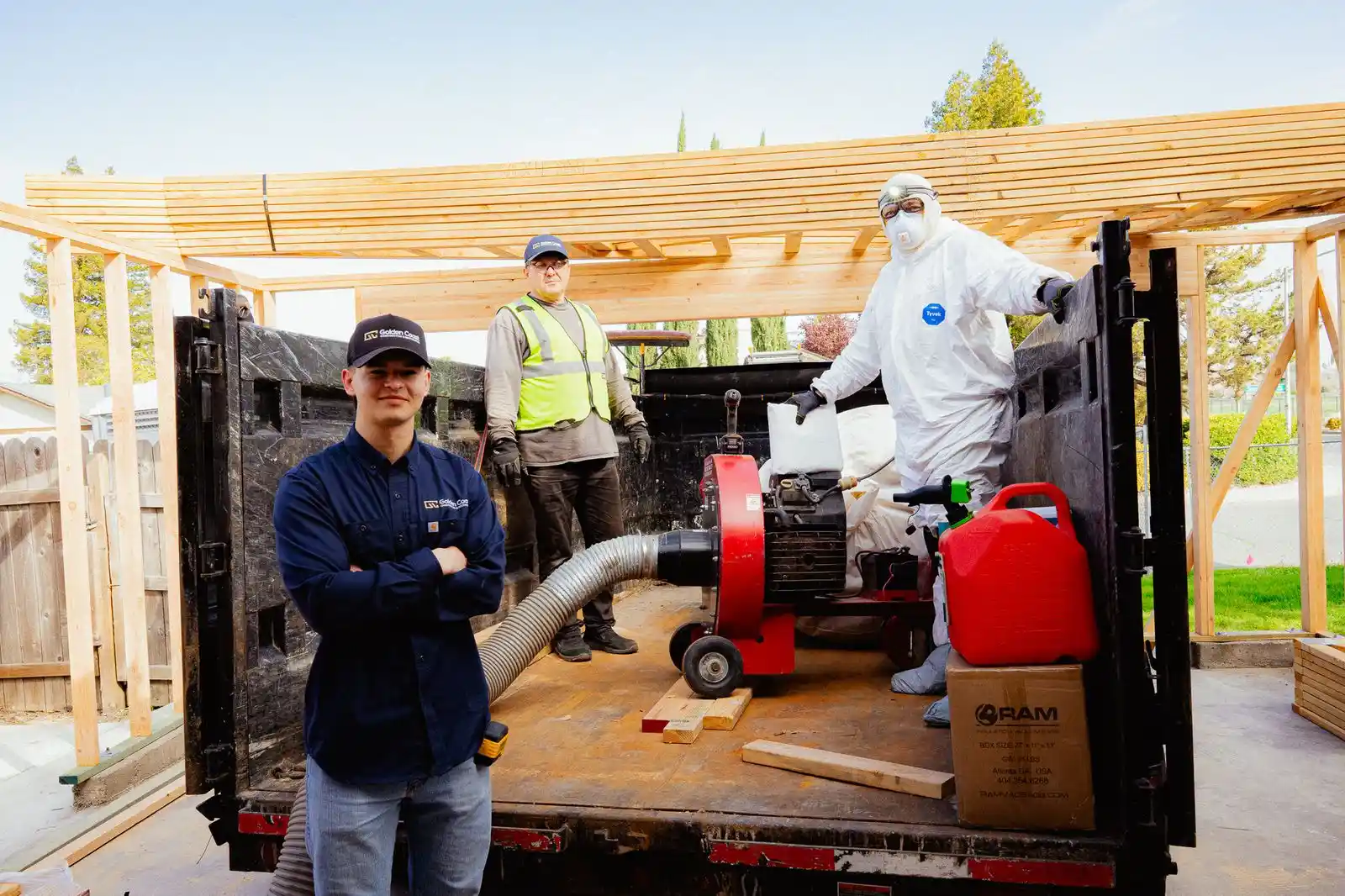
A specialized contractor works the problem in order rather than reaching straight for deodorizer. Smoke damage restoration follows a sequence because skipping steps leaves odor behind. Restoration professionals with the proper equipment and special equipment for air quality can clean affected areas that a general crew would miss:
- Initial assessment and documentation of affected materials
- Containment to protect clean areas, with proper PPE (N95 or P100 respirator, eye protection, gloves)
- HEPA air filtration using HEPA filters
- Dry removal of loose residue on hard surfaces
- Material-specific deep cleaning
- Contents inventory and pack-out where needed
- Structural drying after any suppression water
- Source removal before any odor treatment
- Smoke odor treatment last (hydroxyl generators break down odor molecules, and thorough cleaning can remove up to roughly 95% of smoke odor)
- Final inspection and documentation
Timing matters here as fact, not pressure: soot and airborne particles left in place for 24 to 72 hours get harder to remove, and delay raises the cost of the work. Getting professional help early can make a significant difference in what gets saved.
When smoke cleanup becomes reconstruction
There’s a real line between two kinds of work, and it protects you to know which one you’re in. Restoration is cleaning, deodorizing, drying, and salvaging what can be saved, returning the house to its pre fire condition where possible. Reconstruction is replacing damaged framing, drywall, insulation, finishes, wiring, or major assemblies after genuine heat, burn, or structural damage. If the roof or wood framing took real heat, you are likely looking at reconstruction, not cleaning. The first edition of ANSI/IICRC S700, published in 2025, separates fire and smoke restoration from reconstruction, which it does not comprehensively cover. The two have different scopes, timelines, and expectations, so no one should use “restoration” as a catch-all word for a rebuild.
How to document basement smoke damage for your insurance company
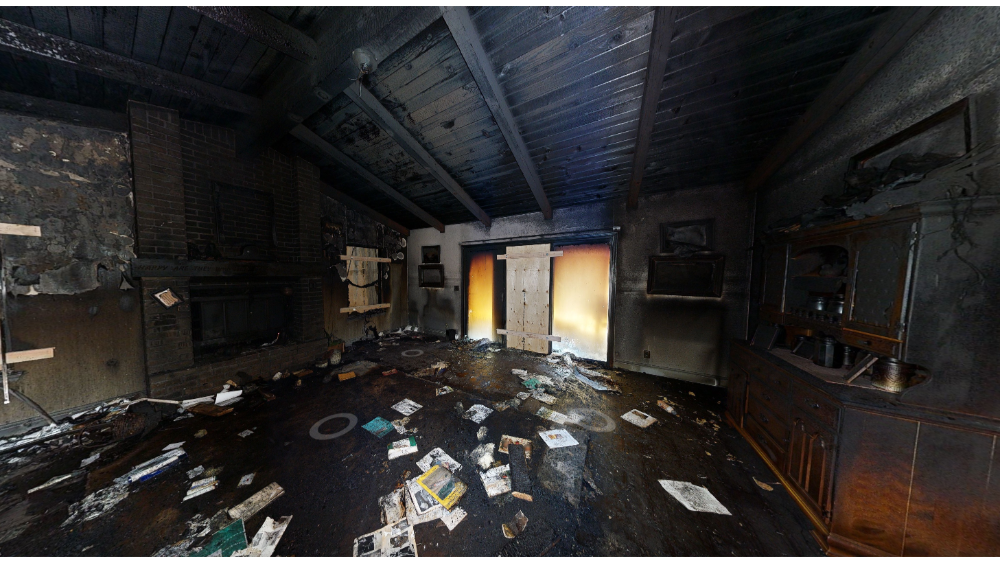
Most homeowners policies cover fire and smoke damage, though coverage depends on your policy language and the facts of the loss. Adjusters can miss hidden smoke damage, so document the physical scope yourself before you contact your insurance company:
- Take photos and video of floors, walls, ceiling, and contents before any cleaning begins
- Build a room-by-room and contents inventory
- Note HVAC systems, appliances, and utility observations
- Record moisture readings and drying records when relevant
- Keep receipts for emergency measures like board-up, drying, and any temporary housing you need
- Keep a log of your claim communication with the insurance company
Don’t make extensive permanent repairs or throw away damaged items before the adjuster has assessed the loss. A good contractor documents the scope of the damage. The contractor doesn’t decide your coverage, and neither should you let them.
How to choose a fire damage restoration contractor, and reach Golden Coast
For visible soot or heavy contamination, a specialist beats a general handyman. Look for fire and smoke damage specialization, a verifiable license where your state requires one, and IICRC certification. Expect a written, itemized scope, a clear split between restoration and reconstruction, documentation for your adjuster, and milestone-based payments. In most cases, two things are red flags: pressure to sign right away (“sign by Friday”), and a firm price given without anyone seeing the property.
Golden Coast Construction & Restoration is a dedicated fire and smoke damage restoration specialist, IICRC-certified, with permanent local offices and 24/7 emergency board-up. We bill through by-the-book milestone payments and work directly with insurance adjusters. For readers near Pasadena, our local office serves Southern California, and California work is performed under California General Contractor license CSLB #838443. If you have visible soot, a strange smell that won’t lift, HVAC involvement, wet materials, or any structural impact, an on-site assessment is the honest next step.
Frequently Asked Questions
Can you live in a house with smoke damage?
It depends on the severity and the air quality. A basement that still smells smoky or has visible soot on its floors and surfaces should be assessed before you rely on it, and vulnerable people such as children, elderly individuals, pregnant people, and anyone with heart or lung conditions should stay away from residue. An honest answer really needs an inspection.
Is smoke damage covered by homeowners insurance?
Most policies cover fire and smoke damage, but coverage depends on your policy language and the facts of the loss. Document everything before cleaning, keep your receipts, and don’t let a contractor tell you what your insurance company will or won’t cover.
How long does it take for smoke to damage walls?
Soot and acidic residue begin staining and corroding within about 24 to 72 hours. The longer the residue sits, the harder and costlier it becomes to remove.
Can you paint over smoke-damaged walls?
No. Painting over residue traps the smoke odor, and it returns in humid conditions. Clean and seal the source first, then paint.