Key Takeaway
Smoke damaged appliances must be evaluated by a qualified professional before anyone powers them on, even if they look untouched. Soot residue is acidic and slightly conductive, meaning it can corrode circuit boards and cause shorts weeks after a fire. Gas-connected units need gas utility clearance before use. Four exposures matter: heat or flame, smoke entering openings, suppression water, and damage to the electrical or gas connection.
Don’t plug it in. Don’t flip it on to see whether it still works. A smoke-, heat-, or water-exposed appliance has to be evaluated by a qualified professional, along with the electrical or gas connection feeding it, before anyone powers it up. The same rule covers smoke exposed electronics. A television can look untouched and still hold residue on the circuit boards inside. Light residue on the outside can often be professionally cleaned and the unit kept. Internal soot, heat, firefighting water, or damaged wiring pushes a similar-looking device toward repair or replacement. “It works” and “it’s safe to use” are two different findings.
How does smoke damage electronics and appliances that never touched the flames?

Smoke doesn’t stay where the fire was. Microscopic particles travel through cooling vents, fan openings, door seals, and the gaps around control panels, then settle on boards and contacts. Heat degrades wire insulation with no mark on the housing. Water from hoses or sprinklers reaches units the flames never got near. The California Department of Insurance’s 2026 Smoke Damage Claims and Remediation Task Force report makes a point worth holding onto: these residues are particulate-bound, so they have to be physically removed. Smoke does not air out. Residue is often acidic and slightly conductive, which is how it corrodes solder joints and other electronic components long after the visible fire damage elsewhere in the house has been repaired. Disturbed soot also affects indoor air quality, one of the health risks that keeps this work with trained crews. Four exposures matter: heat or flame, smoke entering openings, suppression water, and damage to the electrical, gas, or vent connection.
If it still turns on, is it safe? The safety risks of powering up
A function test answers one question and skips four. It says nothing about heat inside the housing, moisture trapped in a cavity, conductive residue on a board, or whether the wiring behind the unit is sound. Residue bridging internal circuits can cause a short weeks later, and energizing a wet device is dangerous right now. The CDC’s disaster guidance is blunt: never operate an electric appliance while standing in water, and don’t operate switches or create a spark if you suspect a gas leak. The American Red Cross tells homeowners to disconnect appliances and check for water damage before use. NEMA 70008-2026, published March 31, 2026, guides evaluation of fire- and heat-damaged electrical equipment and puts that work in the hands of qualified personnel following the manufacturer’s instructions. Avoid turning anything on until then.
What to do before you clean or move smoke damaged appliances and electronics

- Confirm the building is safe to enter.
- Leave power and gas off if officials or the utility shut them down. CAL FIRE advises keeping power off until the property is inspected and affected electrical systems are evaluated by a licensed technician. SoCalGas says gas shut off at the meter should stay off.
- Unplug what’s still connected, and don’t power-test it.
- Photograph each item where it sits, before it’s moved.
- Record brand, model, and serial numbers.
- Note heat, smoke, ash, and water exposure separately for each unit.
- Notify your insurance company.
- Don’t discard anything until the adjuster authorizes it. The California Department of Insurance is explicit on that point.
Los Angeles County’s post-wildfire guidance allows wiping the exterior of lightly affected small appliances, as long as no moisture gets inside. Visible soot at openings, heavy ash, or water exposure calls for professional service instead.
Clean, repair, or replace: how restoration decisions get made
You’ll hear about contents cleaning, controlled compressed air, ozone treatments, and thermal fogging. Those are real methods, applied by trained technicians under a written work plan. None of them substitutes for opening a unit and inspecting the components inside. ANSI/IICRC S700, first published in 2025, is the standard for professional fire and smoke damage restoration, covering assessment, cleaning, documentation, and contractor qualifications, though IICRC states it does not comprehensively address wildfires. Many appliances come back after service and testing; others will require replacement, and no credible source supports a blanket rule either way. We would rather tell you a unit isn’t worth saving than clean it and hand back a hazard.
| Observed condition | Immediate action | Who should evaluate it |
|---|---|---|
| Melted, warped, or visible charring | Don’t use it or clean inside it | Appliance technician or manufacturer; electrician for the connection |
| Soot at vents, fans, or controls | Keep it off and unplugged | Authorized appliance or electronics technician |
| TV or computer with soot or moisture | Don’t power it up | Electronics restoration technician |
| Firefighting or sprinkler water | Don’t energize it | Electrician and appliance technician |
| Gas-connected appliance | Leave gas service off | Gas utility and qualified gas professional |
| Light residue, exterior only | Document, then limited exterior cleaning | Fire restoration p
rofessional, per manufacturer guidance |
Item by item: where smoke and water get inside

Refrigerators, freezers, and the food items inside
Two decisions here, not one. Refrigerator and freezer seals aren’t airtight, so USDA FSIS says smoke fumes can reach food inside, and food items exposed to those fumes should be discarded. Familiar power-outage rules don’t make smoke-contaminated food safe. T
he cabinet itself may be serviceable after a technician inspects the compressor, wiring, and gasket.
Ovens, ranges, and gas kitchen appliances
Electric units are an appliance-technician and electrician question. Gas units are not. SoCalGas says a suspected gas appliance shouldn’t be used until it has been inspected, serviced, and found safe, and that the utility should restore service and relight pilots. A cleaning crew cannot give you gas clearance, and no honest one will claim to.
Washers, dryers, and a smoke smell that can linger long after
Lint paths and vent lines hold residue, so running a dryer before the smoke damage is treated drives that smell into fabrics and out through the duct. Suppression water pools in base pans and motor cavities you can’t see into. Document the vent run and the connection, not just the front panel.
Microwaves, small appliances, and smart home devices
Anything with a food-contact surface and porous plastic deserves a harder look, because soot settles into texture you can’t wipe out. Touch panels and control boards in smart home devices are where residue does quiet damage. Light exterior residue can be wiped down; soot at the vents, or a unit that got wet, goes to a technician.
Televisions, computers, and internal parts
Consumer electronics have more openings than appliances do: cooling fans, speaker grilles, ports, card slots. A device running during the fire pulled smoke through itself, so its internal parts usually carry more residue than one that was off. Cleaning is bench work, done by someone who can open the case and treat corrosion on connectors and metal parts. Don’t dry them with heat, and don’t test them by switching them on. Data is a separate question from hardware. A laptop that will never be safe to power up may still hold a drive a specialist can read, so set it aside instead of discarding it.
Who should inspect what
- Fire restoration professional: documents exposure, performs the cleaning that’s appropriate, coordinates contents handling and the work plan.
- Electrician: circuits, wiring, receptacles, panels, and whether power can safely be restored.
- Appliance or electronics technician: opens, tests, repairs, and documents the individual unit, per the qualified-personnel principle in NEMA 70008-2026.
- Gas utility and qualified gas professional: piping, pilots, combustion, venting, and gas clearance.
- Environmental consultant: site-specific wildfire contamination questions, plus asbestos or lead testing where warranted.
A company that claims all five of those roles is telling you something worth questioning.
Photographing damaged items: what your insurance coverage needs
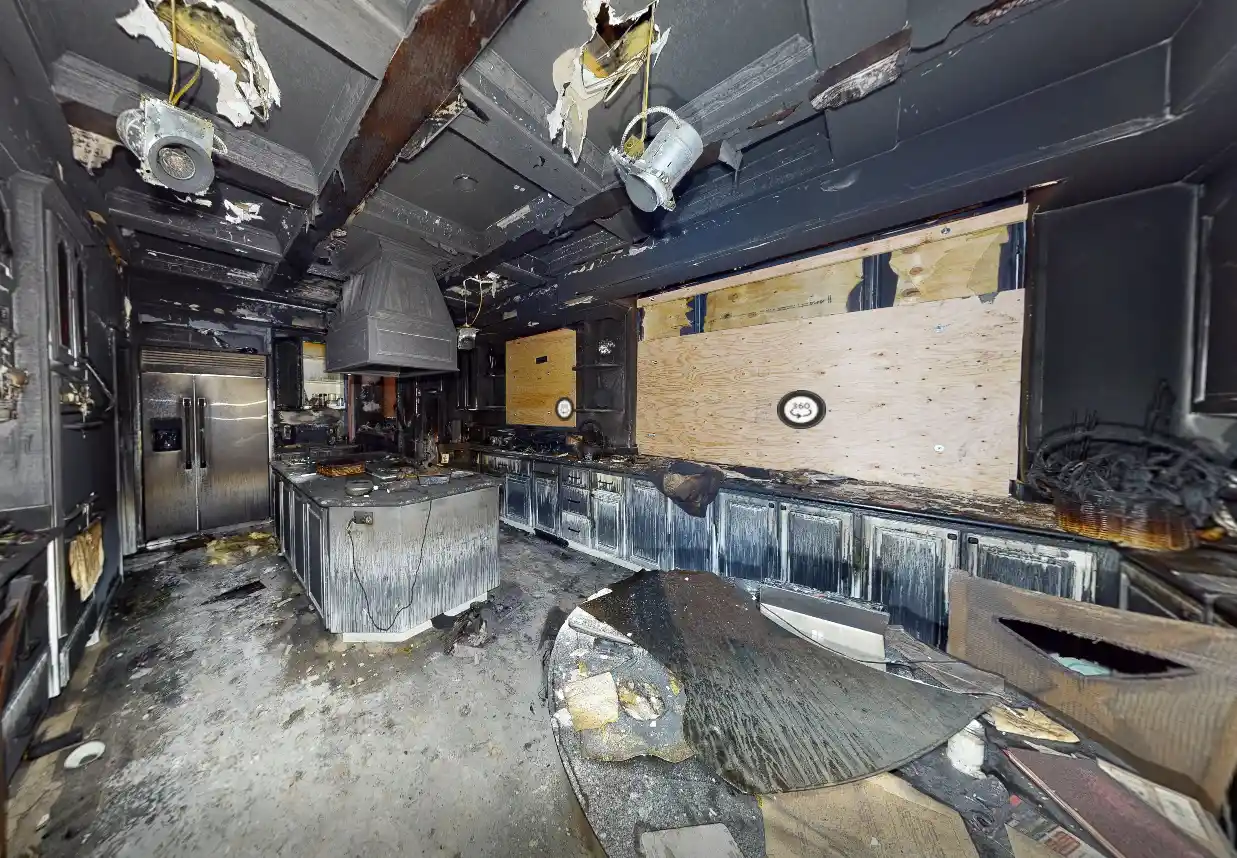
- A wide shot showing the item in place, in the affected room.
- Close-ups of residue, burned parts, cords, vents, seals, and control panels.
- Brand, model, and serial number for each item.
- Receipts, warranties, or older photos that establish age and ownership.
- Which of the four exposures applied.
- Written findings from the technician, electrician, or utility.
The California Department of Insurance advises including brand names and model numbers in your contents inventory and holding damaged items until the adjuster authorizes disposal. Proper documentation is often what separates a partial payment from full reimbursement under your policy. If it pays replacement cost, it covers what a comparable new unit costs today; actual cash value subtracts for age and wear. Sorting through all of it carries real emotional weight, and it’s fine to take that slowly.
Common mistakes that cause further damage
A few habits prevent damage while the claim is still open.
- Turning something on “just to see.”
- Spraying cleaner into vents or control panels.
- Running a household vacuum over fine soot or wildfire ash.
- Restoring gas service yourself.
- Running the dryer before the smoke damage is addressed.
- Throwing items out before they’re documented.
- Accepting a blanket clean-or-replace decision with no itemized basis.
A note for California homeowners after a wildfire

The Department of Insurance’s 2026 task force report counted more than 13,000 claims involving smoke-damaged standing homes after the January 2025 Los Angeles fires and documented inconsistent testing across them. CDI has told insurers that smoke damage claims can’t be summarily denied without an appropriate investigation, and that where professional testing is warranted, the insurer is expected to arrange and pay for it. Wildfire residue also falls outside the full scope of IICRC S700, so these calls rest on a thorough inspection of your specific property and on manufacturer guidance.
How a specialized fire damage restoration company fits into this
A fire-focused restorer documents each item inside the larger loss inventory, keeps contents restoration separate from reconstruction, and brings in the electrician, the utility, or an environmental specialist rather than pretending to be all of them. That produces a file an adjuster can act on and keeps the recovery process moving in one direction. Golden Coast Construction & Restoration is IICRC-certified and licensed in California under CSLB #838443, verifiable through the CSLB license-check system, and works directly with adjusters, with QA inspections at milestones, by-the-book milestone payments, and a signed certificate of completion. No one can honestly rule on your electronics sight-unseen; that takes a careful assessment in person. Anyone quoting a firm number or pressing you to sign this week is a red flag. Our Pasadena office serves Los Angeles and the surrounding area with 24/7 emergency board-up, and an on-site walkthrough is where the answer starts for what you can recover safely.
Frequently asked questions
What is the number one appliance that causes house fires?
NFPA identifies cooking equipment as the leading cause of home structure fires, with unattended cooking the most common factor.
Can smoke damaged electronics be cleaned and reused?
Sometimes. A technician can clean the housing and internal components, then test the device, and the manufacturer’s position on continued use after fire exposure matters to that call. What isn’t safe is settling it yourself by plugging it in.
Can smoke damage be reversed?
Some of it. Residue is particulate and can be physically removed by trained technicians. Porous materials and lingering odor are the hard cases.
Can you live in a house with smoke damage?
That depends on how far the contamination spread and whether the structure and its systems have been cleared. No one can answer it honestly from a photo.