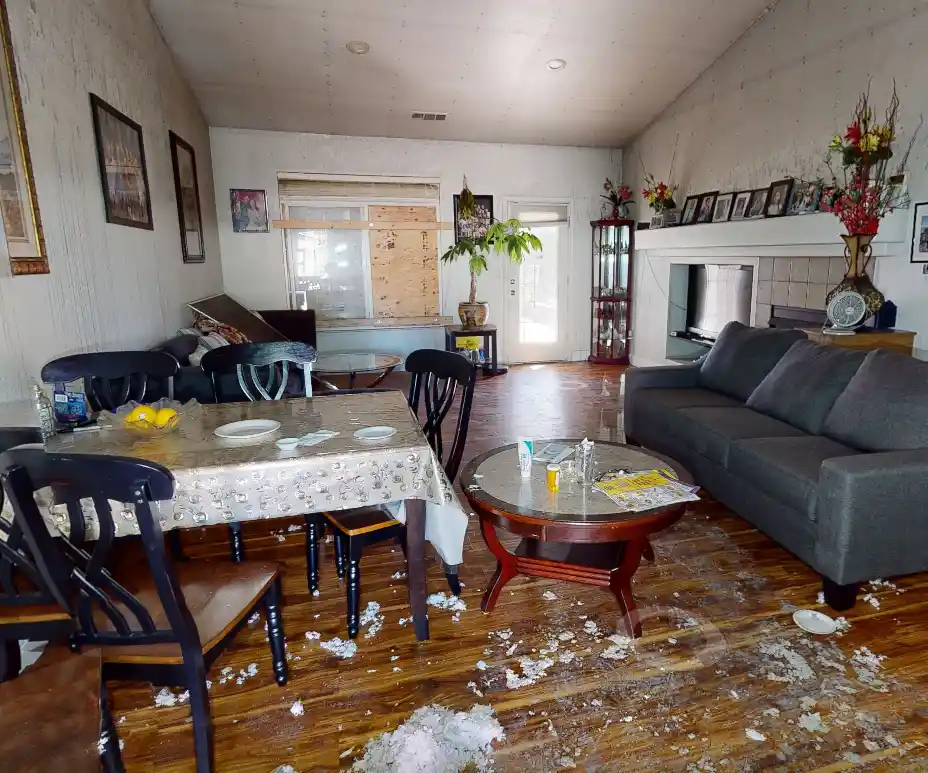
Key Takeaway
Soot on hardwood floors must be removed dry first: HEPA-vacuum loose particles, then lift remaining residue with a dry chemical sponge before any liquid touches the wood. A wet mop turns dry soot into a smear that soaks into seams and open grain. If floors are part of an insured loss, photograph everything before you clean. Sticky, widespread, or returning residue signals a professional assessment is needed.
Standing over black-streaked hardwood floors, the instinct is to reach for a mop. Water is what turns loose soot into a smear that soaks into seams and open grain. If this is an insured loss, photograph the floors first. Then keep foot traffic off them, get rid of the loose particles with a true HEPA vacuum, and only then spot-test a cleaner matched to that floor’s finish, using as little liquid as you can. Dry particulate removal first and controlled damp cleaning second is the sequence the current IICRC-led wildfire restoration guidance describes for hard surfaces.
Two distinctions carry the rest of this article. Soot sits on top of your floors; char and heat damage are damage to the wood itself, and no amount of cleaning will fix them. Cleaning, refinishing, and replacing hardwood are three different jobs with three different scopes.
Before You Start Cleaning: What to Do First

- Confirm the building has been cleared for entry. Structural, electrical, and air-quality concerns come first.
- Photograph everything before you touch it: the floors, the room, the pattern of residue. The California Department of Insurance advises homeowners to keep a claim diary and document communications as the claim moves.
- Ask your insurer whether they want to inspect before cleanup. Cleaning first can remove the evidence your claim depends on.
- Keep people and pets off the floors. Soot tracks on shoes and paws into rooms that were never affected.
- Wear gloves, long sleeves, long pants, closed shoes, and an N95 for ash cleanup, as the EPA recommends; Los Angeles County adds eye protection. A properly fitted NIOSH-approved N95 filters at least 95% of airborne particles but does nothing against gases or vapors. Children, older adults, and anyone with heart or lung disease should sit cleanup out.
Is It Soot, a Stain, or an Actual Burn?
Fire residue varies with what burned, how hot it got, and how far the smoke traveled, which is why the first edition of ANSI/IICRC S700 (2025) puts assessment ahead of method selection for building fires.
| What you see | What it usually is | Likely next step |
|---|---|---|
| Loose black or gray powder | Surface residue | HEPA particulate removal |
| Sticky or greasy film | Adhered combustion residue | Method testing, usually professional |
| Dark mark under an intact-looking surface | Stain in the finish or wood grain | Floor assessment, possible refinishing |
| Blistered, softened, dull or hazy finish | Heat or chemical damage | Repair or refinishing |
| Rough, cracked, blackened wood | Char | Board or structural evaluation |
| Raised edges, cupping, buckling | Moisture in or under the boards | Drying and moisture assessment |
A clean white cloth is the most helpful tool you have here. Residue that lifts onto it is deposited soot. A stain that stays put has moved into the finish or the wood. Bare or worn spots absorb residue fast, which is where a surface problem becomes a mark you cannot wipe away. Irreversibly burned material gets replaced, not cleaned.
How to Remove Soot From Hardwood Floors, Step by Step

This sequence is for light, loose residue on intact sealed hardwood. If your floors don’t match that description, skip to the sections below.
- Work top down. Ceilings and walls first, floors last, and move furniture out so residue isn’t trapped underneath it.
- HEPA-vacuum the loose particles. The EPA defines a HEPA vacuum as one built so all exhaust air passes through the filter with no leakage around it, capturing 99.97% of 0.3-micron particles. A HEPA-labeled filter dropped into an unsealed shop vac is not one. CDC/NIOSH warns that household and shop vacuums can blow fine ash back into the room, and warns against dry sweeping entirely.
- Don’t grind the attachment through the deposit. Hover and lift. Brushing soot into the grain and wood fibers is how a cleaning job becomes a refinishing job.
- Identify the finish: a polyurethane finish, factory aluminum-oxide, wax, penetrating oil, a worn site finish, or bare wood. The National Wood Flooring Association says to follow the flooring or finish manufacturer’s instructions, and that when the finish is unknown, a wood-flooring professional should identify it before a cleaner is chosen.
- Spot-test a small amount in a hidden corner, under a rug edge or behind a door. Give it several hours, then look in good light.
- Damp microfiber only. Wring the mop head until it is barely damp. No standing liquid, no soaking, no spills left to sit. Excess water and too much cleaner both damage wood flooring.
- Buff the section dry with dry microfiber cloths or clean rags, then check it with a white wipe.
- Stop if the finish dulls, softens, lightens, or residue keeps transferring. That’s the floor telling you it needs an assessment.
Using a Dry Sponge on Sooty Hardwood Floors
Before any liquid touches the wood, try a dry sponge on what the vacuum left behind. This is the vulcanized rubber dry chemical sponge restorers use, and it absorbs dry residue into its own surface rather than dissolving it. Use light strokes, all in one direction, with no cleaner and no water. Wiping back and forth pushes soot around and can create a gray haze across the boards. As the face loads up with black, cut or peel it back to expose clean rubber and repeat. When the sponge stops picking anything up and a stain remains, that residue is no longer on the surface, and scrubbing harder will only damage the finish.
What Not to Use on Wood Floors: Vinegar, Hydrogen Peroxide, Dawn, and Steam
Several of these show up on other cleaning pages. The risk is finish compatibility, not superstition.
- Dry broom or unsealed shop vacuum: makes fine particles airborne again.
- Soaking wet mop or steam mop: drives moisture and residue into seams and under boards.
- Abrasive pads and melamine sponges: scratch and dull the finish.
- Vinegar: acidic, and can etch some finishes. Diluted in water it is still not a universal wood floor solution.
- Hydrogen peroxide: peroxide bleaches. Straight or in a paste with baking soda, it can lighten the grain unevenly and leave a pale patch you can’t match. On bare or worn wood, that’s permanent.
- Bleach, paint thinner, rubbing alcohol, strong degreasers: too aggressive for a finish you haven’t identified.
- Dish soap: leaves a film that dulls the shine and interferes with future recoating.
NWFA guidance is specific on two cases: oiled floors may need their own oils or soaps, and waxed floors should not be cleaned with water-based products at all.
What About Engineered Wood and Laminate Flooring?

Engineered hardwood has a thin wear layer, so it may allow one light sanding or none. The manufacturer’s wear-layer specification decides, not a contractor’s guess. Laminate is a printed photographic layer over fiberboard. You cannot sand it, and it swells when wet. Soot that has reached the seams or core generally means replacing the affected planks.
When Cleaning Isn’t Enough: Refinishing, Replacement, or Rebuild
Think of it as rungs on a ladder, each more aggressive than the last, and none of them automatic:
- HEPA vacuuming and controlled cleaning: removes loose and adhered surface residue.
- Seam detailing: addresses residue caught in gaps and along baseboards.
- Screening and recoating: for limited finish damage where the floors allow it.
- Sanding and refinishing: removes the damaged polyurethane or other finish and a controlled depth of wood.
- Board replacement: for localized char, deep staining, or moisture damage. New boards need stain or dye matched to blend with the rest of the floor.
- Reconstruction: when fire damaged the floor assembly, subfloor, or framing.
Cleaning and refinishing are restoration. Swapping a few burned boards is localized repair. A rebuild is a different job with a different scope. One caution before anyone starts to sand: the EPA advises assuming paint in homes built before 1978 contains lead unless testing shows otherwise. The concern is dust from adjacent painted baseboards, thresholds, and stairs disturbed during the work.
Smoke Odor and Fire-Suppression Water Under the Boards

A smoky smell that returns after the visible residue is gone usually isn’t coming from the floor surface. It sits in seams, the subfloor, baseboards, wall cavities, contents, or the HVAC system. That points to a wider residue assessment rather than another pass with a cleaner.
If firefighting water reached the floors, NWFA guidance notes damage ranges from minor cupping to severe buckling and has to be evaluated case by case. Mold can begin growing on wet materials within 24 to 48 hours, and EPA materials use a 48-hour drying target for that reason. Don’t cover damp floorboards with plastic wrap or sheeting to keep traffic off, because it traps moisture against the wood. Hardwood should never be sealed or refinished while trapped moisture remains underneath.
If the Soot Came From a Southern California Wildfire
The IICRC-led technical guide for wildfire restoration (December 2025, hosted by the California Department of Insurance) identifies soot, char, ash, volatile and semivolatile compounds, and metals as potential combustion byproducts. Whether testing is warranted depends on the specific fire, site conditions, visible residue, proximity to burned structures, occupant health concerns, and insurer requirements, not a universal panel. Follow Los Angeles County public-health guidance for ash cleanup. CDI Bulletin 2025-7 directs insurers toward a thorough, fair, and objective investigation of smoke damage claims. These rules are actively changing, so check current CDI guidance.
When to Call a Licensed Fire Restoration Company

Ask for an on-site assessment when residue is sticky, widespread, or keeps coming back; when soot has reached seams, vents, or adjoining rooms; when the floors are waxed, oiled, unfinished, historic, engineered, or laminate; when there’s char, blistered finish, lingering odor, or suppression water; when sanding, demolition, lead, or asbestos may be involved; or when the floors are part of an insurance claim.
A fire loss gets assessed as a whole building, not as a black stain on one floor. That’s the practical difference between a specialized restorer and a handyman. Golden Coast Construction & Restoration is IICRC-certified and licensed as a California General Contractor, CSLB #838443, which you can verify yourself on the CSLB website. Our Pasadena office covers the Los Angeles area with 24/7 emergency board-up, documentation that works with your adjuster, QA inspections at milestones, asbestos and lead testing where warranted, and the ability to carry a project from mitigation through reconstruction.
Two protections worth knowing in California: the CSLB recommends three written bids for significant repair work, and caps the down payment on a home improvement contract at 10% or $1,000, whichever is less. You generally have three days to cancel a qualifying contract, though exceptions exist, so check CSLB’s contract guidance. Nobody can honestly price your floors without seeing them, and a firm quote sight-unseen is a red flag.
Frequently Asked Questions
How can I remove soot from my hardwood floors?
Clean ceilings and walls first, then HEPA-vacuum the loose particles without grinding an attachment into the deposit. Lift what remains with a dry sponge, then use a cleaner approved for your finish on a damp microfiber pad and dry the section right away.
Can I just mop soot off hardwood floors?
Not as a first step. A wet mop turns dry soot into a liquid smear that runs into seams and open grain, and soaking the boards can cup them. Damp mopping makes sense only after the dry residue is gone.
Does soot stain hardwood permanently?
It depends on whether it stayed on the finish or reached open grain, seams, worn spots, or bare wood. Deposited residue usually lifts; a penetrated stain may need screening or refinishing, and char cannot be cleaned out at all.
Does Dawn dish soap remove soot?
Dish soap can cut greasy residue, but on wood it risks a film that dulls the surface and interferes with future recoating. It isn’t a manufacturer-approved cleaner for most finishes.
What is the black stuff on my hardwood floors?
Loose soot, sticky combustion residue, a stain in the finish, heat damage, char, or wood darkened by suppression water. Wipe it with a clean white cloth: residue that transfers is deposited soot, and a mark that stays is in the finish or the wood.