


Key Takeaway
The Walnut Creek building department, run by the City’s Community Development Department, handles all fire-damage permits through its online portal only – no paper or email applications are accepted. Plan review for simple projects takes roughly 3 to 7 days; complex reconstruction runs 8 to 28 business days or longer. Confirm jurisdiction first, since some Walnut Creek mailing addresses fall under Contra Costa County instead.
If your fire-damaged property sits inside Walnut Creek city limits, your building, repair, demolition, and reconstruction permits go through the City of Walnut Creek’s online permit portal, run by the Community Development Department. The City no longer accepts paper or emailed building permit applications; only online submissions are accepted. But first, confirm jurisdiction: some homes with a Walnut Creek mailing address actually sit in unincorporated Contra Costa County and use the County’s system instead. Getting that wrong wastes time you don’t have right now. Building Division staff can answer code questions at 925-943-5834 or BuildingTech@walnutcreekca.gov, and the public counter is located on the second floor of City Hall, 1666 North Main Street. One protective note: the City never requests permit payment by phone or email.
What to do before permanent repairs begin
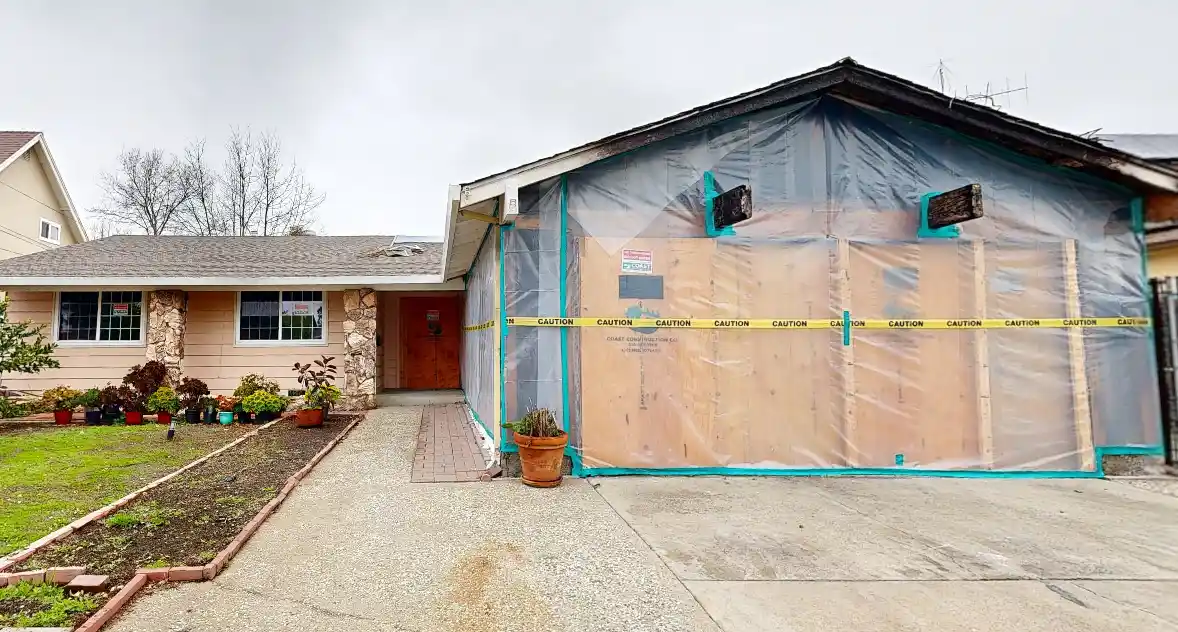
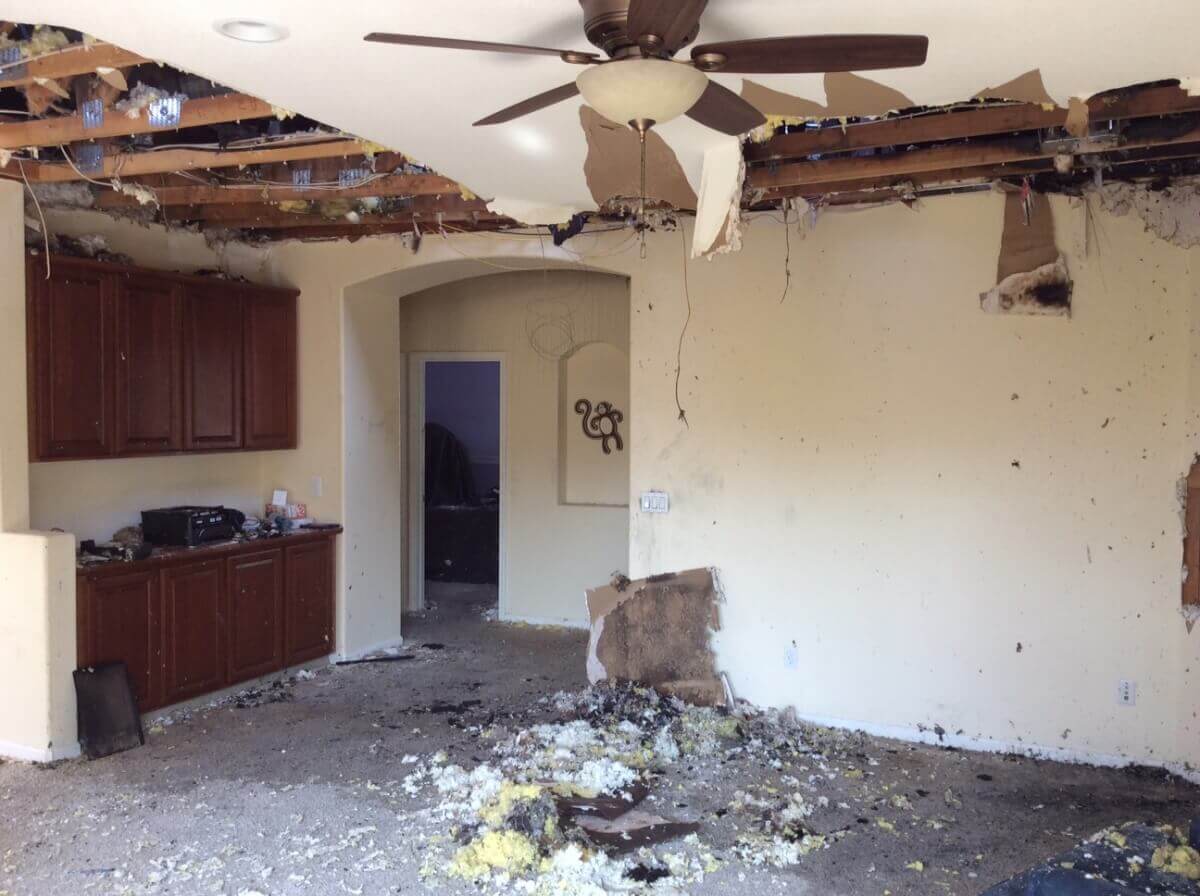
A fire is one of the hardest days a homeowner faces, so take the first steps in a calm order. Follow any access restrictions set by the fire department and Building Official. Photograph and document every damaged area, notify your insurer, then secure the home against weather and intruders with board-up and roof tarping. Walnut Creek’s code does allow urgently necessary emergency work when getting a permit first isn’t practical, but the permit must still be obtained as soon as possible. Emergency stabilization is not a blanket exemption, and permanent repairs should never be folded into “emergency work.” The California Department of Insurance advises taking reasonable temporary measures, saving receipts, and holding off on extensive permanent repairs until the adjuster has assessed the damage.
Which fire-damage permits do you need?
Restoration (cleaning, mitigation, salvage, and repair) is not the same as rebuilding (reconstruction after major or total loss). The types of permits you need depend on what the fire actually damaged. Additions to the footprint or changes to structures carry their own requirements.
| Scope | Likely path |
|---|---|
| Smoke/soot and contents cleaning, no construction | A building permit may not be required |
| Damaged wiring, plumbing, HVAC, roof, or finishes | Building and/or trade permits |
| Structural framing or foundation repair | Building permit with plans; engineering may be required |
| Removal of a damaged section | Partial demolition plus repair permit |
| Complete structure removal | Demolition permit |
| Major or total loss | New construction/reconstruction permit package |
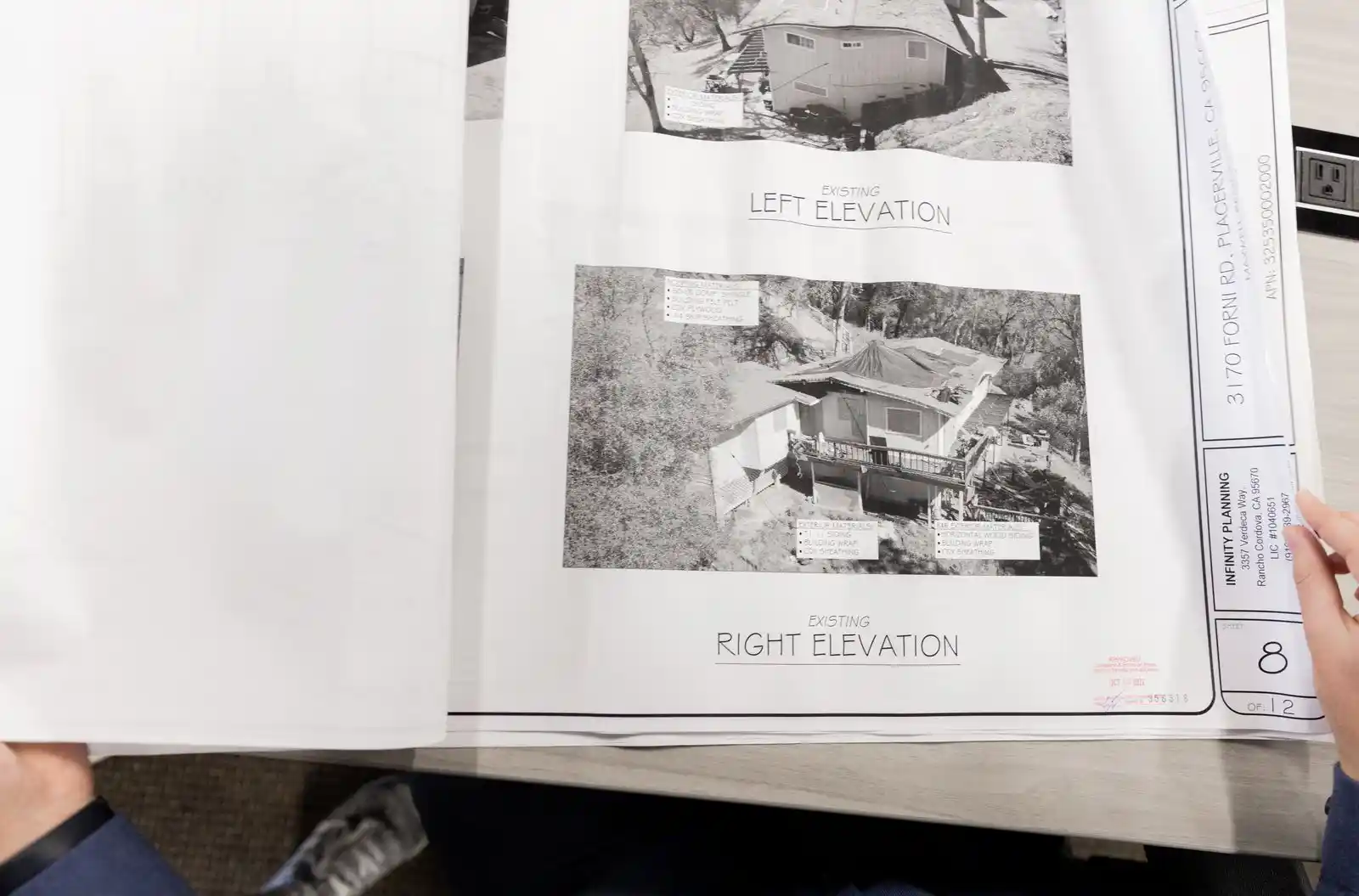
Describe the full scope to Building staff rather than guessing. The Building Official may require plans prepared by a California-licensed architect or engineer, though not every project needs one. If your repair or rebuild changes the footprint, use, or exterior in a protected area, planning permits may also apply, and the City’s Planning Division reviews those against Walnut Creek’s zoning ordinances and the General Plan before building review proceeds.
The Walnut Creek permitting process: planning, codes, review, and inspections

To apply, register an online account, enter the property and scope, upload plans and supporting forms, and identify whether a licensed contractor or an owner-builder is responsible. Building permit applications submitted on or after January 1, 2026 must meet the 2025 California Building Standards Codes (Building, Residential, Electrical, Plumbing, Mechanical, Energy, Green Building, Fire, and Wildland-Urban Interface), plus Walnut Creek’s local amendments. The state updates these codes every three years. Plan review confirms the work meets building code and safety standards. The City publishes roughly 3 to 7 days for simple over-the-counter reviews and generally 8 to 28 business days for a first plan review, with complex reconstruction and resubmittals taking longer. There’s no guaranteed approval date, and understanding this timeline helps you plan the rest of your recovery.
Inspections can be requested online, by email, or by phone. Requests made by midnight are typically scheduled the next day (not guaranteed), and online requests can be made up to five days ahead; confirm your window between 8:00 and 8:30 a.m. Typical stages run from footing and foundation through framing and rough trades, lath and drywall, energy, and final. Keep work exposed until it’s approved, and never cover framing or wiring early. Construction is prohibited on state and national holidays. Fees are set by the City and based on the scope and valuation of the work; the current schedule is posted on the City’s website, so visit the portal to review them before you apply.
Other agencies and the insurance connection
A fire project often touches more than the City. The Contra Costa County Fire Protection District reviews alterations, water supply, access, and fire-protection systems, and now works under the 2025 California Fire Code; verify any sprinkler requirement with the District for your actual scope rather than relying on a fixed threshold. The Bay Area Air Quality Management District requires notification at least 10 business days before any demolition (a 72-hour expedited option exists for residential buildings of four or fewer units, with an extra fee), with asbestos thresholds of 100 square feet, 100 linear feet, or 35 cubic feet. For pre-1978 homes, EPA Renovation, Repair and Painting rules apply when painted surfaces are disturbed. Asbestos and lead testing may be warranted before damaged materials are touched, for your family’s health and safety. For insurance, keep approved plans, correction notices, and receipts; code upgrades may be covered under ordinance-or-law coverage, so ask your insurer to confirm it in writing. When you contact these agencies, ask for written confirmation of any requirement that affects your scope. Any comments or input a reviewer notes on your plans should be addressed before resubmittal.
What protects you when hiring a contractor

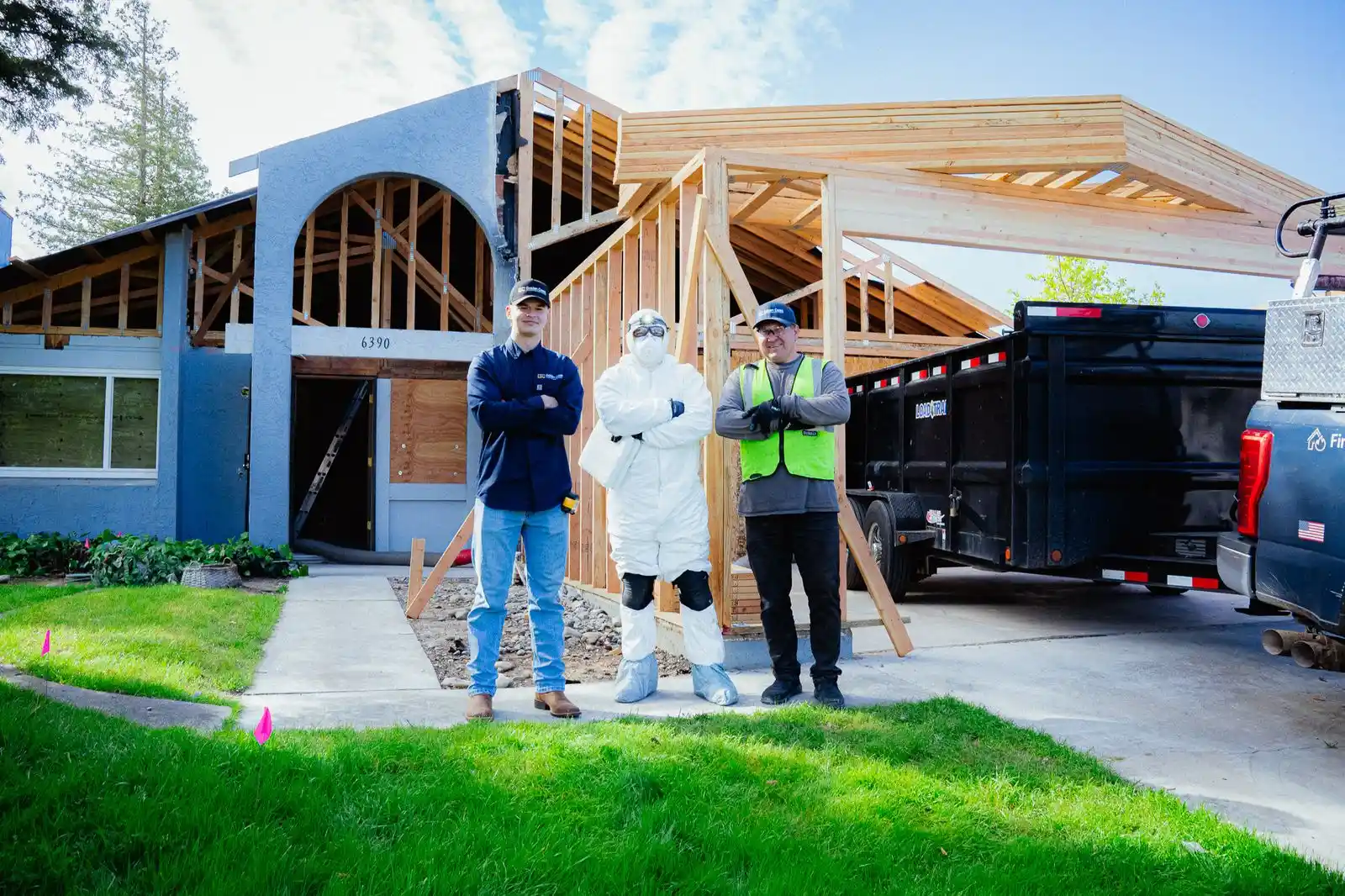
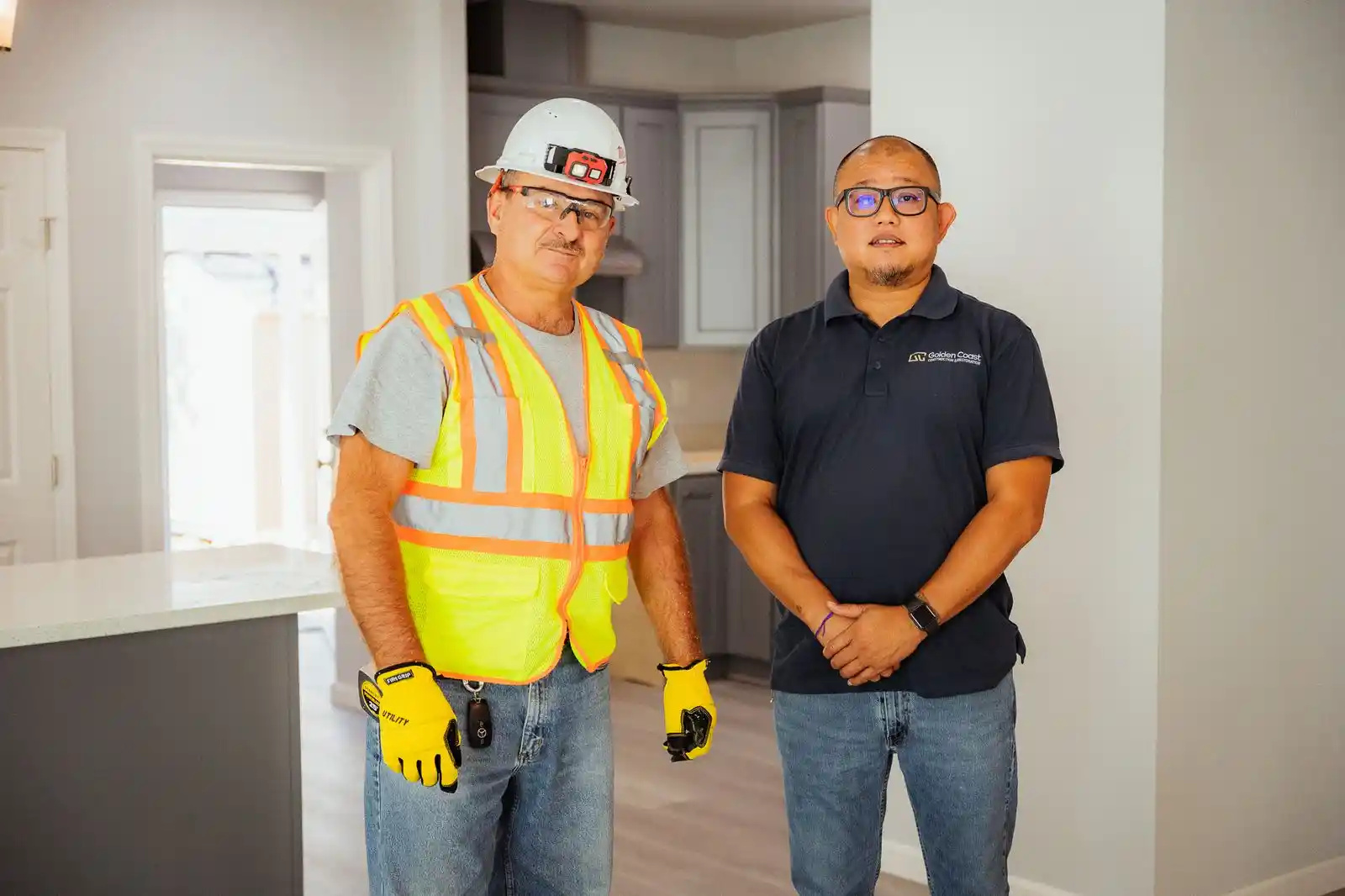
Verify any contractor’s license status through the official CSLB lookup. Put permit responsibility in writing. Under California law, the down payment can’t exceed 10% or $1,000, whichever is less, and progress payments should track completed work. You generally have a three-business-day right to cancel (five business days if you’re 65 or older), subject to exceptions including qualifying emergency service-and-repair contracts. These policies exist to protect you, not the contractor. Never pay through unofficial channels. A licensed fire restorer protects you better than a handyman or going it alone through IICRC-certified recovery, correct documentation, and code-compliant repairs that follow California Building Code guidelines. Golden Coast Construction & Restoration is a California general contractor (CSLB #838443), IICRC-certified, serving Northern California from its Roseville office, with 24/7 emergency board-up and one accountable contractor from stabilization through reconstruction. An honest figure requires an on-site assessment; anyone quoting a firm price sight-unseen is a red flag.
Frequently Asked Questions
Do I need a permit to repair fire damage in Walnut Creek?
Most structural, electrical, plumbing, mechanical, roof, and finish repairs do. Non-construction smoke and soot cleaning may not. Describe the full scope to Building staff for accurate information. Applicants who describe everything up front avoid surprises later.
How long does a Walnut Creek building permit take?
Roughly 3 to 7 days for simple over-the-counter reviews, and generally 8 to 28 business days for a first plan review. Complex reconstruction takes longer, with no guaranteed approval date.
How do I know whether the City or Contra Costa County has jurisdiction?
A Walnut Creek mailing address doesn’t prove you’re in city limits. Check the County’s CCMAP mapping tool, and use the County permit information line for unincorporated areas.
Will my fire-damaged home need to meet the 2025 California Building Code?
Building permit applications submitted on or after January 1, 2026 must meet the 2025 California Building Standards Codes. The state updates these codes every three years, so the title and edition in force depend on when you apply, not when the fire happened.
Are asbestos and lead tests required before damaged materials are removed?
They may be warranted for safety. The Air District requires notification before demolition, and pre-1978 homes fall under EPA lead-paint rules.