Key Takeaway
Washington rebuild code requirements apply to the work you perform, not automatically to the entire house. The 2021 Washington State Building Code, effective March 15, 2024, governs fire rebuilds statewide, with local amendments on top. A full demolition and rebuild is treated like new construction, while limited repairs follow a narrower scope. Your local building official, not your adjuster or contractor, determines which pathway applies.
The short answer: the work you actually do has to meet the current Washington State Building Code, but lawful portions of the house you leave untouched generally don’t have to be upgraded. If the home comes down and a new one goes up, that project is reviewed much more like new construction. Washington’s current rules are the 2021 state codes, with an effective date of March 15, 2024 statewide, plus Washington-specific amendments and any local amendments your city adopted. And the person who decides which pathway your project falls into is your local building official, not your insurance adjuster and not your contractor.
This is written for a Washington homeowner standing in front of a fire-damaged house, somewhere between the adjuster’s visit and choosing who does the work. Here’s what applies, what usually stays, how building permits tend to go, and who pays when code drives the cost up.
Does everything have to be brought up to current building codes after a fire?

No, not automatically. Washington’s provisions for existing buildings, including the Washington State Energy Code at WAC 51-11R, say that unaltered portions of a lawfully existing building generally do not have to be brought into compliance. Repairs, alterations, additions, and changes of occupancy are each handled under their own sections. Compliance follows the scope of work.
There’s one boundary that always applies: the work can’t leave the home less safe or less compliant than it was before. Renton’s building administration code (RMC 4-5-060) puts interpretation and enforcement of all of this in the hands of the building official, who reviews your plans and classifies the work. The honest answer for your house depends on what survived the fire, and nobody can tell you that from a phone call.
Repair, partial reconstruction, or full rebuild: which one is this?
Almost everything else in this article depends on this one question. There are three general pathways.
| Project path | How building codes generally apply |
|---|---|
| Limited fire repair | Mainly to the work being repaired or replaced |
| Partial structural reconstruction | Affected assemblies and newly installed systems meet current structural requirements; sound, untouched areas may remain |
| Demolition and full rebuild | Designed and reviewed substantially as new construction |
Be careful with any source that gives you a clean damage-percentage rule for a detached house. There isn’t a universal one. Classification depends on what structure is retained, the scope you’re permitted for, local provisions, and the building official’s determination.
Worth separating two words people use interchangeably: restoration (cleaning, mitigation, drying, salvage, and repair) is not the same project as reconstruction after major or total loss. They carry different scopes, different documentation, and different code treatment. We cover that distinction in more depth in our guide to repair versus rebuilding after a house fire. No one can classify your project from photos. It takes someone on site and a read from the local building department.
Which building codes apply to a Washington State rebuild in 2026?
Here’s where competing articles get it wrong most often. The current Washington State Building Code is the 2021 edition, with an effective date of March 15, 2024. The year in the code’s title and the year it took effect are different years, so “2021 code” is current, not outdated.
Who adopts the rules: the State Building Code Council (SBCC)
You’ll sometimes see it called the Washington Building Code Council; the official name is the State Building Code Council. The SBCC adopts model codes, writes state-specific amendments, and reviews proposed code changes on a set cycle for everything from houses to multi-family buildings. What it sets are minimum performance standards. Local governments enforce them, and local adoption of additional amendments happens at the city or county level.
Looking ahead, the council currently lists May 3, 2027 as the intended implementation date for the 2024 model codes. Treat that as scheduled, not settled, and confirm it at sbcc.wa.gov if your project timeline runs long. The current codes stay in force until it happens.
Adopted codes: the International Building Code, the International Residential Code, and Washington State amendments
Washington State starts with model codes published by the International Code Council: the International Building Code, the International Residential Code, the International Fire Code, the International Mechanical Code, and the International Existing Building Code, along with the Uniform Plumbing Code. The council then amends those codes through chapters of the Washington Administrative Code. Those Washington State amendments, plus the model text, are what your plans are checked against. Cities and counties enforce the result.
| Adopted code | Washington chapter | Effective date |
|---|---|---|
| International Building Code | WAC 51-50 | March 15, 2024 |
| International Residential Code | WAC 51-51 | March 15, 2024 |
| International Mechanical Code | WAC 51-52 | March 15, 2024 |
| International Fire Code | WAC 51-54A | March 15, 2024 |
| Uniform Plumbing Code | WAC 51-56 | March 15, 2024 |
| Washington State Energy Code, Residential | WAC 51-11R | March 15, 2024 |
The International Residential Code covers detached one- and two-family dwellings and qualifying townhouses up to three stories above grade, which is most single-family rebuilds. Multi-family residential buildings, mixed-use buildings, and assembly uses such as religious institutions fall under the International Building Code instead.
Fire protection, egress requirements, and electrical work
Fire protection features such as separation walls, alarms, and access are shaped by the International Fire Code and the residential provisions together. Egress requirements for bedroom windows and exit paths come from the same set of rules, and they get checked closely on a rebuild.
Electrical is administered separately from the rest of the state building code. Washington adopted the 2023 National Electrical Code with state amendments, effective April 1, 2024, and L&I handles electrical permits and inspections in most places. Some cities run their own electrical programs, so check yours.
What usually stays, and what gets looked at as new
Anything retained has to be shown safe and suitable for the approved design. Under Renton’s code, the building official can require engineering reports, structural calculations, or a registered design professional such as a structural engineer when the situation warrants it. That’s a protection for you, not a hurdle.
Areas commonly reviewed after a fire:
- Framing and foundation, including heat-exposed members
- Electrical wiring and service equipment
- Plumbing and mechanical systems
- Insulation and windows
- Ventilation
- Egress from bedrooms and living areas
- Smoke and carbon-monoxide alarms
- Fire separation between the house and an attached garage
Reviewed does not mean replaced. A foundation can sometimes be reused and sometimes can’t, and that answer comes from an engineer’s evaluation of heat exposure, cracking, and suitability for the new design. Western Washington sits in the influence of the Cascadia subduction zone, so the seismic design category assigned to your lot also shapes foundation design and structural connections. Concealed damage behind finishes is common after a fire, which is one reason plan review and inspections exist. More on this in can a foundation be reused after a house fire.
How the Washington State Energy Code treats repairs, alterations, and existing buildings
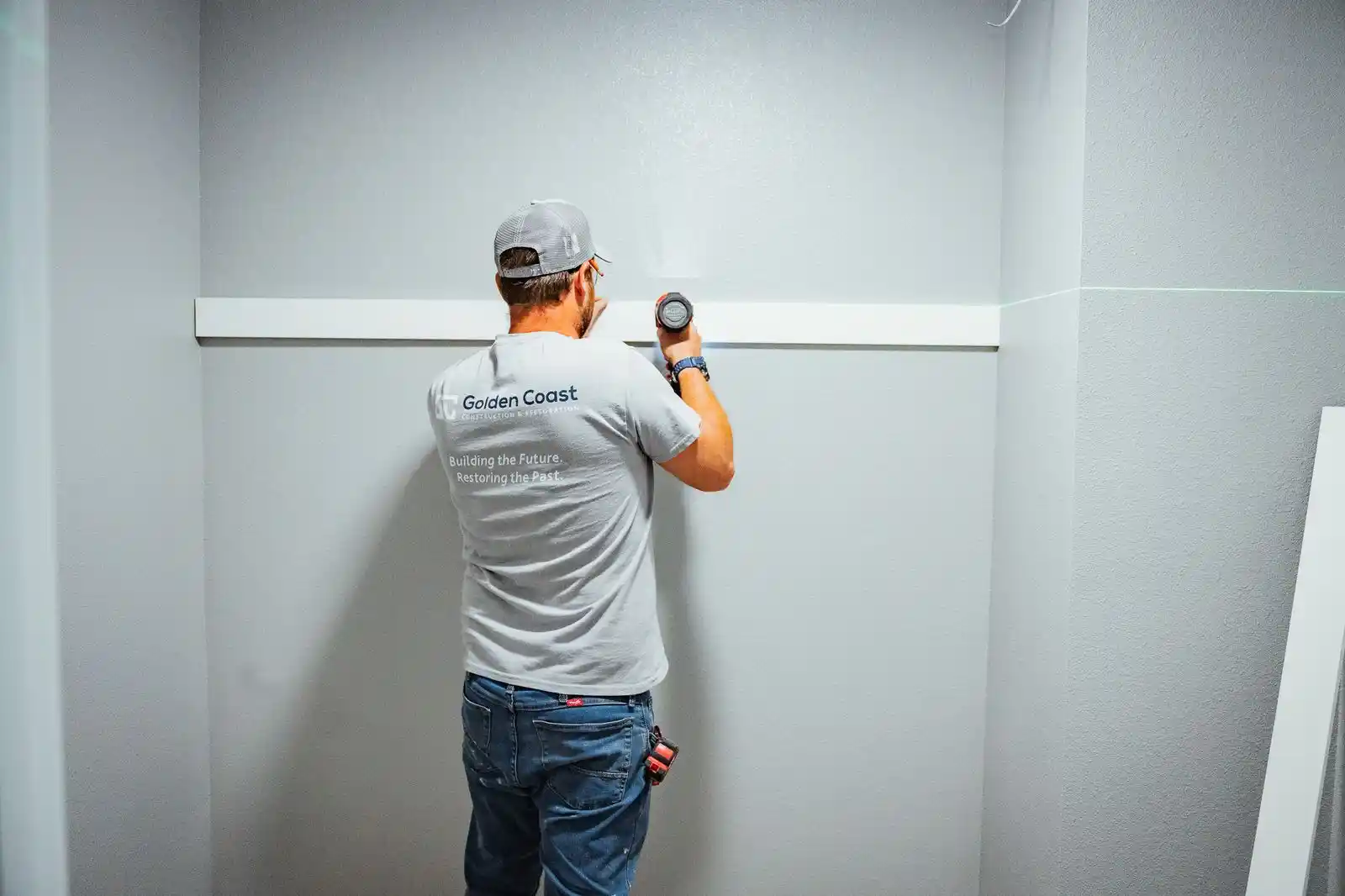
This is the section that answers the “if we open the walls, do we have to insulate the whole house?” worry. Under WAC 51-11R-50400, the residential energy code treats repairs, alterations, and new construction differently. Nondamaged work that’s necessary to complete a repair may be counted as part of the repair. For alterations, the altered assemblies and newly installed systems come up to current requirements while unaltered areas do not get dragged in.
Where exterior walls are opened and cavities exposed, the exception for existing buildings at WAC 51-11R-50300 allows a minimum of R-15 in 2×4 framed walls and R-21 in 2×6 framed walls. Replacement windows must meet current fenestration requirements. New heating, cooling, ducts, water heating, and lighting fall under their own sections. A complete rebuild follows the new-home pathway instead, where additional insulation, air sealing, and equipment choices belong early in the design process. Each cycle has moved the state toward more energy efficient construction, so a rebuilt house will meet a higher standard of energy efficiency than the one you lost.
Building permits, plan review, and inspections (Renton example)
Renton requires building permits for regulated construction, alteration, repair, demolition, and replacement of building systems. Ordinary repairs may be exempt, but structural fire repair or a rebuild is not ordinary maintenance. Work may not begin before permit issuance, and the permit has to be available at the site. Emergency securing and board-up of an unsafe structure is handled separately, and the building official has authority to order repair, vacation, or demolition based on the building’s condition.
What building permit applications for a fire rebuild usually include
- Permit application and site plan
- Floor plans, elevations, sections, and construction details
- Structural calculations or an engineering report
- Energy code documentation
- Water and sewer availability information
- Critical areas or geotechnical studies where applicable, since wetlands, slopes, and shorelines carry their own specific regulations
- Separate trade permits, unless folded into an approved new single-family combination permit
Ask about local amendments, expedited review, and pre-approved base plan options
- How will you classify this scope: repair, alteration, or new construction?
- Which local amendments apply to my property?
- Are there expedited review programs, or pre-approved plans that let neighbors rebuilding from the same plan move faster?
- What has to be inspected before walls are closed?
Recent legislation in Washington has created programs for pre-approved plans meant to speed residential housing permits, and some local jurisdictions run their own version. Whether a base plan suits your lot is a question for the counter.
For a Renton single-family home, an approved final building inspection stands in for a separate certificate of occupancy. If you’re outside Renton, call your own city or county building department. The building code is statewide; the counter is local.
Wildland-urban interface rules: what is actually in effect right now

Some pages still describe an active statewide wildland urban interface construction code in Washington State. That’s out of date. Effective April 17, 2026, all substantive sections of Chapter 51-55 WAC were placed in reserved status while statewide hazard mapping continues. There is no full statewide WUI construction code in force as of this writing, and an emergency rule can change that between code cycles, so confirm the current status before relying on any checklist.
Cities and counties may still have their own wildfire-related land-use, fire-access, defensible space, vegetation, or construction standards, so check your jurisdiction. Separately, Washington enacted a narrow provision letting certain qualifying fire-damaged buildings use the state building code rules in effect January 1, 2023, or those in place when the permit is submitted. Eligibility is limited, and only your building department can confirm whether it applies to you.
Asbestos and lead checks before demolition
This step comes before the excavator, not after. Renton sits in the Puget Sound Clean Air Agency’s jurisdiction, where an asbestos survey by an AHERA-certified building inspector is generally required before a house is demolished. Results have to be shared with anyone who might disturb the material and kept on site. Notification and removal requirements vary with the building and the materials involved.
Not every home contains hazardous materials. Testing is done where warranted, usually driven by the age of the house and what it was built with. See asbestos and lead testing before fire-damage demolition for how that process runs.
Who pays for code-required upgrades?

The Washington Office of the Insurance Commissioner says standard homeowners policies cover fire damage, and dwelling coverage applies to repairing or rebuilding the main structure, subject to policy terms and limits. What standard coverage may not automatically pay is the extra expense caused solely by newer building codes. OIC advises homeowners to check their policy for law and ordinance coverage, which addresses exactly that gap.
The practical protection is documentation. Code-driven items should appear as their own line items in the estimate, separate from upgrades you’re choosing because you want them. Returning the home to its former condition and improving it are two different conversations, and they should read that way on paper. OIC also notes a 30-day insurance company inspection period measured from when you file the claim. Our article on Washington law and ordinance coverage goes deeper.
How to check a contractor before you sign anything
Washington State requires construction contractors to register with the Washington Department of Labor & Industries, which means carrying a bond and liability insurance. Registration is the floor for the whole construction industry here, not a recommendation. General contractors can perform multiple types of construction and hire subcontractors; specialty contractors are limited to their registered specialty. That distinction matters on a rebuild, where structural, electrical, mechanical, and plumbing work all have to line up.
L&I recommends you:
- Verify active registration and check the bond, insurance, workers’ compensation, citations, and bond lawsuits
- Get three written bids
- Use a written contract with a defined scope
- Don’t pay in full before the work is complete
You get to choose your own contractor in Washington. Your insurance company may suggest one, but you’re not required to use them. OIC also warns homeowners to understand any assignment-of-benefits document before signing, since it can transfer claim authority. Two honest signals: nobody can give you a firm rebuild price sight-unseen, and pressure to sign by a deadline is a reason to slow down, not speed up. Here’s how to verify a Washington contractor through L&I.
How Golden Coast Construction & Restoration approaches a Washington fire rebuild

We do fire restoration and reconstruction, and only that. Our Renton office serves Washington State year-round, with 24/7 emergency board-up when a structure needs securing before anything else can happen. We’re IICRC-certified and registered as a contractor with Washington L&I.
On a rebuild, the value of one licensed general contractor is that structural, electrical, mechanical, plumbing, hazardous-material, and inspection requirements are coordinated by one party, so nothing falls between trades and nothing gets covered before the building department signs off. We arrange asbestos or lead testing where warranted, run QA inspections at project milestones, tie payments to those milestones rather than asking for money up front, work directly with your adjuster, and issue a signed certificate of completion at the end. If you’d like a look at what you’re facing, we’ll come out and walk the property with you.
Frequently Asked Questions
What can a homeowner do without building permits in Washington?
Ordinary repairs and finish work generally don’t require a permit. Structural fire repair, rebuilding, and replacement of building systems do. Renton and many jurisdictions require the permit to be issued and on site before work starts.
What is the most common building code violation?
Building officials most often flag work done without a permit, or work covered up before the required inspection. Both are avoidable and both are expensive to fix after the fact.
Will opening walls trigger new insulation requirements?
For the exposed cavities being altered, yes. The Washington State Energy Code exception for existing buildings allows a minimum of R-15 in 2×4 walls and R-21 in 2×6 walls. Areas you don’t touch aren’t pulled in.
Does insurance pay for upgrades required by current building codes?
Sometimes, and specifically when your policy includes law and ordinance coverage. Washington OIC advises checking for it, ideally before code-driven work is approved.
Can the existing foundation be reused after a fire?
Sometimes. It depends on heat exposure and whether it suits the approved design, and the building official may require engineering documentation to allow it. See our foundation reuse article for what that evaluation involves.