

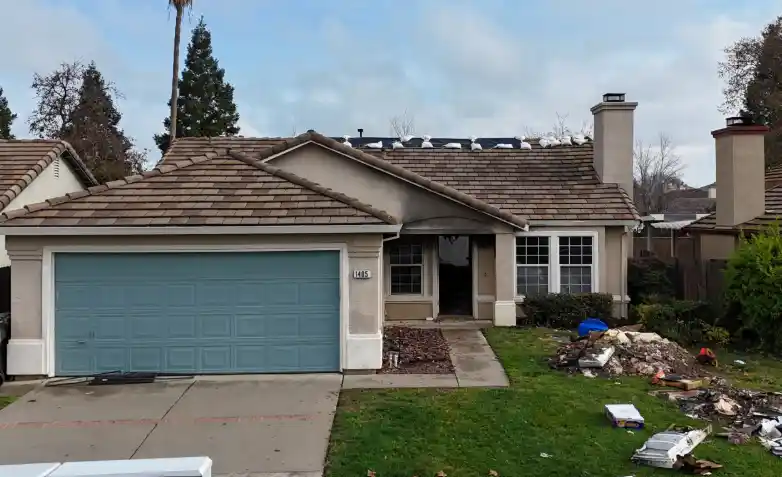
Key Takeaway
Wildfire recovery in Washington state begins with waiting for official reentry clearance, then documenting all damage before cleaning anything. Most standard homeowners policies cover wildfire losses including smoke, soot, and heat damage. Under 2026 rules, insurers must acknowledge a claim within 10 business days. Hire only a Washington L&I-registered fire restoration contractor and verify their bond and insurance before signing anything.
If you’re reading this after a wildfire, we’re sorry you’re here. Here is the honest short answer: wait until fire officials reopen your evacuation area before returning, document the damage before you clean anything, notify your insurer, and do only the work needed to prevent further damage without disturbing hazardous debris. Then have a Washington-registered fire restoration contractor assess the home so you know whether it can be restored or needs to be rebuilt. This guide walks you through that sequence in order. One distinction to hold onto: restoration means cleaning, drying, and repairing a home that’s still standing; rebuilding means reconstruction after major structural or total loss.
Are You Safe to Return? Reentry After a Washington Wildfire
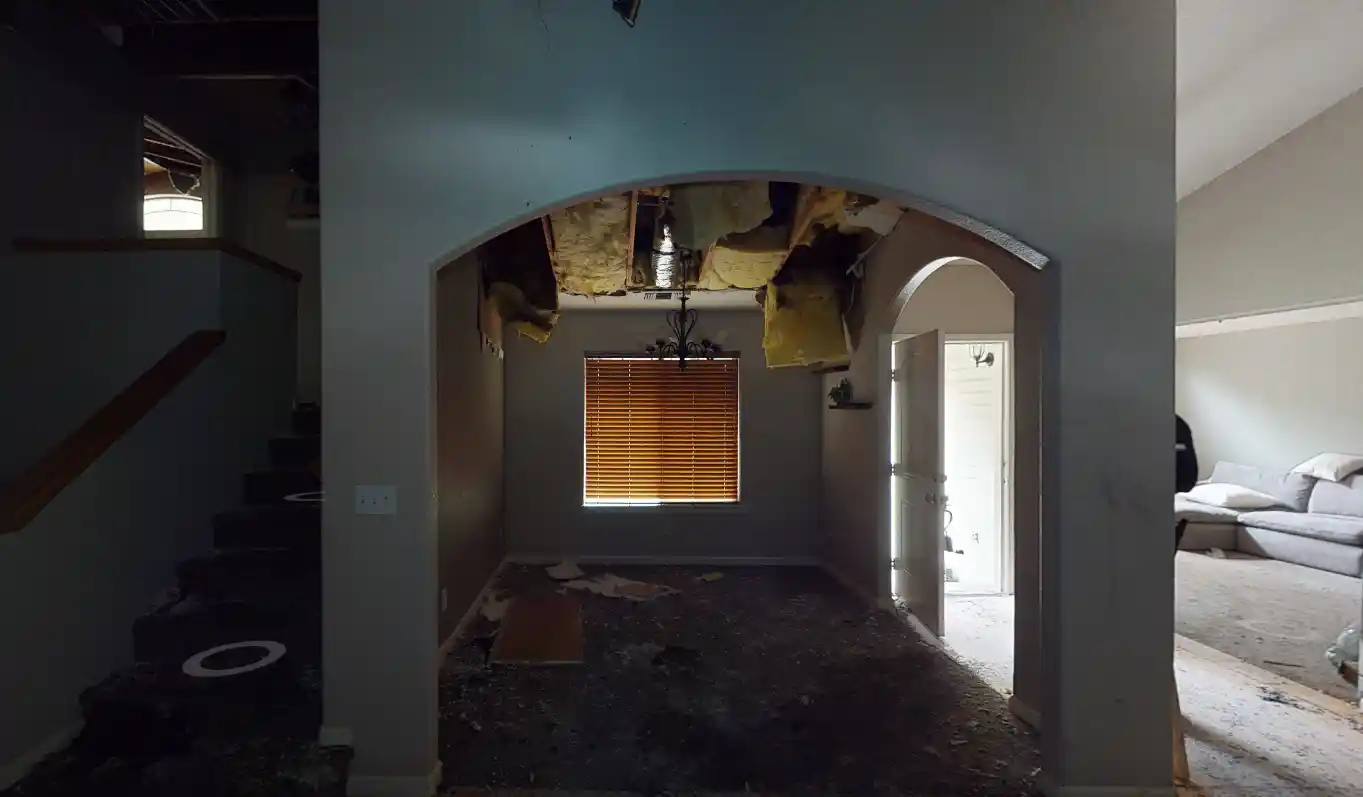
Return only after fire officials reopen the evacuation area. Many of Washington’s most destructive wildfires have burned through Central and Eastern communities, including large areas of Okanogan County and Spokane County, and the dangers they leave behind can harm families and pets long after the flames are out. The Washington State Department of Health warns that burned properties can hide real hazards:
- Unstable structures and weakened trees
- Downed power lines and damaged propane tanks
- Ash that can contain lead, arsenic, and asbestos
- Chemicals from burned household products and building materials
Structural-fire ash is generally more hazardous than ash from vegetation alone. Burned soils also lose their ability to absorb water, which raises the risk of flash flooding and mudslides in the weeks after a fire. A warming climate has lengthened the fire season across the landscape, so preparing properties before the next one matters. Keep children and pets well away until the ground is cleared.
The First Steps That Protect Your Insurance Claim
Before you disturb anything, document it. Take photos and video of every room and the exterior. Keep damaged items until your adjuster agrees they can go. Save receipts for lodging, meals, tarps, and board-up materials, and start a simple log of every call with your insurer. Notify the company promptly and ask what documentation or approval it needs before you move debris or contents. Do only the work required to prevent further damage until the full scope is agreed on. For the deeper claim walkthrough, see our Washington wildfire insurance claims guide.
Secure the Property Without Locking In the Final Scope

Emergency stabilization protects what’s left: board-up, roof tarping, temporary shoring where it’s authorized, and extraction and drying after fire-suppression water. That water matters. The EPA advises drying or removing wet materials within 24 to 48 hours to reduce mold growth, which is why drying belongs to fire recovery, not a separate service. Under Washington rules effective October 18, 2026, when your policy requires you to protect the property, the insurer must approve your submitted mitigation scope (or provide one) within five business days of receiving it (WAC 284-30-330). Stabilization is not the final restoration or rebuild.
What a Complete Wildfire Assessment Should Cover
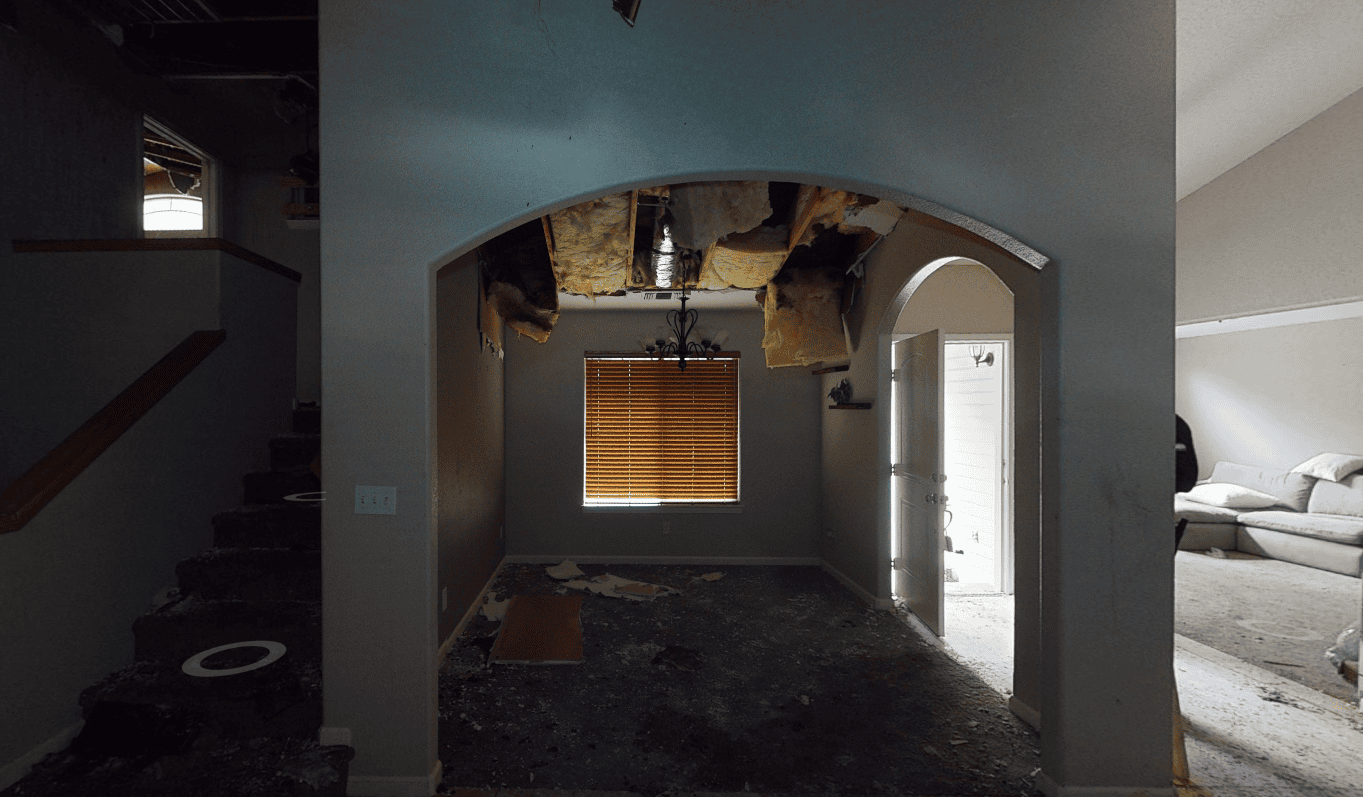
A proper on-site assessment looks past the obvious. It should examine structural damage, smoke and soot migration, HVAC systems and concealed wall cavities, contents and textiles, fire-suppression water with moisture readings, and contaminants like asbestos, lead, and ash. Where relevant, it also checks utilities, wells, and septic. Only an on-site inspection can determine the true scope. No one can quote this honestly from photographs.
Restoration, Repair, or Rebuilding?

| Condition | Likely recovery path |
|---|---|
| Odor or light residue, no structural damage | Assessment and targeted restoration |
| Visible soot or ash, wet materials, affected HVAC or contents | Professional restoration and selective removal |
| Damaged framing, roof, electrical, or building envelope | Structural repair plus restoration |
| Major structural loss or total loss | Debris clearance, design, permits, reconstruction |
The correct path is confirmed only on site. The first edition of the ANSI/IICRC S700 standard (2025) is a useful qualification signal for fire and smoke restoration, but IICRC itself says it does not comprehensively cover wildfire environmental hazards and does not cover reconstruction.
How Washington Insurance Handles Wildfire Recovery
Standard homeowners policies include fire, and wildfire losses are handled like other fire losses. Most policies also cover heat, smoke, soot, and fumes, though your policy language and limits control (Washington OIC). Related mudflows, flooding, landslides, and earthquakes generally aren’t covered without added coverage. You have the right to choose your own contractor. Under the updated 2026 rules, your insurer must acknowledge a claim within 10 business days, and within 30 calendar days accept it, deny it, or give written reasons it needs more time, with continued written updates every 30 calendar days (WAC 284-30). These are process deadlines, not a promise of final payment. The OIC can help if a claim stalls.
Debris, Asbestos, Lead, and Contaminated Ash

Don’t disturb suspect debris. An N95 does not protect against asbestos, so suspect materials should be evaluated before any demolition or renovation disturbs them (Washington DOH), and local clean-air agencies may add testing and disposal rules. Homes built before 1978 trigger Washington lead-safe RRP requirements when painted surfaces are disturbed. Skip household and shop vacuums on ash; the EPA advises HEPA vacuuming or damp methods. Testing and removal of hazardous materials may be covered when they result from the covered loss, but confirm coverage and sublimits first. See our debris and hazmat guide.
How to Hire and Verify a Washington Fire Restoration Contractor
Before you sign anything, verify the contractor’s registration, bond, liability insurance, and workers’ comp through L&I’s Verify tool. L&I recommends getting three written bids and comparing scope, not price alone. A contractor must give you Washington’s Model Disclosure Statement before any residential project of $1,000 or more (RCW 18.27.114). Current bonds are $30,000 for general contractors and $15,000 for specialty. Use a written contract with a change-order process and milestone payments tied to completed, inspected work, never full payment up front, and request lien releases before final payment. One Washington caution: do not assume a blanket three-day right to cancel. Read the cancellation language, and get legal guidance if the contract was solicited at your temporary residence. Pressure to “sign now” is a red flag. As a last resort, Washington’s Homeowner Recovery Fund may pay up to $25,000 per contractor per parcel if you apply within 90 days of a qualifying judgment, though payment isn’t guaranteed.
Rebuilding After a Major or Total Loss

Your local city or county building department controls permits; electrical inspection may run through L&I or the local jurisdiction. Confirm requirements before demolition. Washington’s statewide Wildland-Urban Interface provisions are currently reserved pending state hazard maps, though local jurisdictions may adopt them, so don’t assume one statewide rule applies. Expect inspections at defined milestones and a certificate of completion. On acreage, erosion control and replanting native vegetation help the land and its natural resources recover, and landowners on tribal lands such as the Colville Indian Reservation should confirm which authority reviews their rebuild. See our rebuilding guide.
Wildfire Recovery in Washington State: Post-Fire Recovery Resources and Long-Term Recovery Support
Current as of October 29, 2026: Washington state assistance is open for certain qualifying Central and Eastern Washington wildfire losses. Federal FEMA Individual Assistance is not currently open per the state wildfire-assistance page. Verify before relying on this.
Evergreen help: call Washington 211 for local support, temporary housing, shelter, and evacuation resources. Eligible households may qualify for state Disaster Cash Assistance. The Department of Revenue offers tax filing extensions and a Destroyed Property form for property owners, and affected workers may qualify for unemployment assistance. Aid for wildfire survivors is often a collaborative effort coordinated through state agencies, community leaders, and non-profit organizations, and long-term recovery groups in many neighborhoods help families bridge the gaps that insurance and short-term funds leave behind. These groups build partnerships and tools, share education, and connect residents to recovery resources through a central website; if a disaster declaration opens a grant or a wildfire recovery fund, those funds and application steps are posted on the same state page, so visit it for the current status before you begin a request. Small businesses rebuilding after a fire should ask about low-interest disaster loans as well. Donations to these organizations help the long-term recovery efforts, and anyone who wants to contribute or join the work can reach a local group through 211. The recovery process rarely moves in a straight line, and it’s normal for the long process of rebuilding a life to stretch well past the first season.
Why a Specialized Fire-Recovery Contractor Protects You
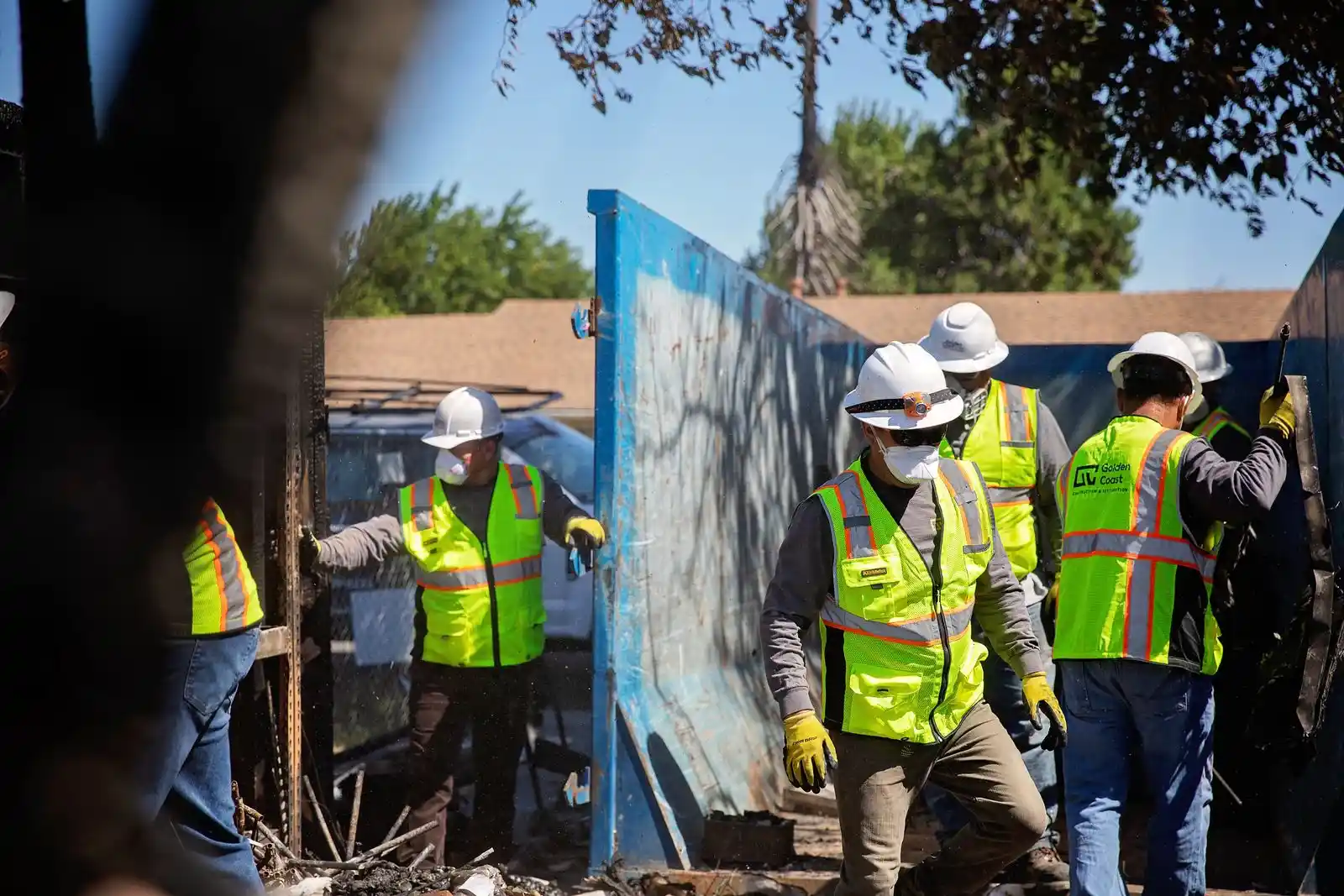
A fire-focused, Washington-registered contractor protects you in ways a handyman or an unvetted crew can’t. You get a fire-specific assessment, IICRC-certified staff (with the honest limits of S700 noted above), documentation your adjuster can review, structural drying handled as part of fire-suppression cleanup, hazardous-material testing where warranted, and correct scoping that keeps restoration and reconstruction distinct. Written scopes, milestone inspections, and completion documentation keep the money honest. This expertise and coordination are what responsible, by-the-book recovery is built on. Golden Coast Construction & Restoration works this full arc from a permanent Renton-area office, with 24/7 emergency board-up and Washington L&I registration you can verify. We’ve helped homeowners and families across Washington communities move from the first board-up through a finished, inspected home, and we take seriously our part in the resilience of the places people have lost and rebuilt. An honest scope needs an on-site look; anyone quoting a firm price sight-unseen is a red flag. When you’re ready, contact us for an on-site assessment.
Frequently Asked Questions
Is Washington state getting help from FEMA?
As of the date above, federal Individual Assistance is not open per the state’s wildfire-assistance page, though state assistance is available for qualifying losses. Verify current status before relying on it.
How long does it take to recover from wildfires?
It varies widely. Light smoke cleanup can take weeks, while major structural repair or a full rebuild runs months, depending on permits, scope, and claim timing. Long-term recovery for survivors of a total loss often takes longer still. No honest promise fits every home.
Do I have three days to cancel a Washington fire restoration contract?
Not automatically. Washington has no blanket three-day cancellation right. Read the contract and get legal guidance if it was solicited off-premises.
Can fire-suppression water cause mold?
Yes. Water from firefighting soaks wall cavities and contents. Dry or remove wet materials within 24 to 48 hours to reduce mold risk.